
Tags
addiction and self-medication, ADHD and self-esteem, complex family relationships, Deborah J. Brasket, excerpt from the novel When Things Go Missing, growing up with ADHD, how ADHD affects the mind, novel about addiction and recovery, recovery and self-identity, When Things Go Missing
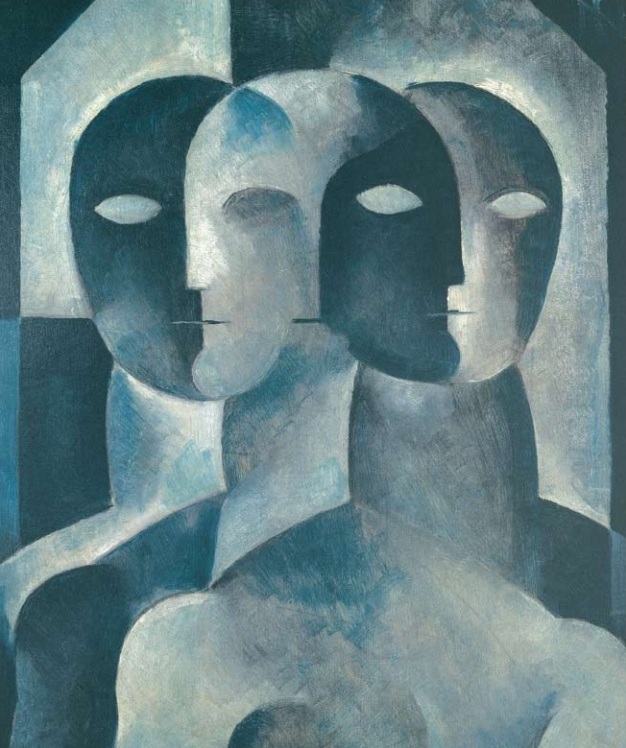
As part of my two-week celebration of the one-year anniversary of When Things Go Missing, I’m giving potential readers a peek into the minds of the the three main characters they will be inviting into their lives if they decide to do so.
And readers who’ve already lived a while with Kay, Cal, and Walter might enjoy a revisit.
There will be no spoilers. Each excerpt comes from an early chapter in the book.
In my last post, I introduced you to Kay, a young archeologist trying to piece together meaning, and why her mother mysteriously disappeared, through “absence and memory.” Her excerpt ended with this provocative insight:
“[L]eaning back on her heels in the pit, her brush still in her hand [Kay realizes} . . . how that magical summer [rock hunting in the river bed] would become a defining moment in both [her and her brother Cal’s] lives and lead them in such different directions—her to archeology, him to heroin—both searching incessantly for that mysterious something hidden at the core, when things cracked open fall apart.”
She continues: “She should have known . . . that Cal, once obsessed with something, would never curb his appetite for it. There were obvious hints she should have seen, like that tap-tap-tap of the hammer, no more, no less. He tapped the light switch three times before turning it off and on, touched the doorknob three times before opening or closing, kissed Kay three times before going to bed—first on the right eye, then the left eye, then the nose, always in that order. If she tried to run away before he could complete the cycle, he’d chase her down and deliver those missing kisses with a vengeance.
If Dad pulled him up by the elbow before he touched the door three times, he’d be in a fury the rest of the day, touching everything in sight three times as if to make up for it, but it never worked. The panic in his eyes then was something serious. This compulsive behavior—needing to do everything three times—only lasted a few years, but the addictive aspect of it never ended. In the end, it wasn’t the craving for the new and unexpected, the ultimate high, that was self-destructive. It was the inability to cease some comforting habit once started.“
So now it’s time to meet Cal, a young man who has struggled with compulsive behaviors and ADHD as a child, and as an adult used drugs as a way to self-medicate, to calm his body and over-active mind, and lift his spirits.
If you’ve suffered from any of this or know anyone who has, what he reveals about himself in his chapters will sound familiar. One reviewer wrote:
“Cal was my favorite [charcter]. His addiction may have driven him to the depths of shame, despair, and instability, but he is sweet and caring at heart. He not only embodies the hectic process of overcoming and recovering from addiction, but also the struggles of the modern male.” Keith Mbuya, 5-Star review from Readers’ Favorite.
Let’s let Cal describe what it was like.
Excerpts from This Is My Brain
Cal has just said goodbye to Kay, who had come home looking for a little comfort, “now that mom’s gone missing.”
“The sun is gone, leaving a dull glow smeared along the horizon. Cal stands on the front stoop of his parent’s home as dusk settles like ashes over the neighborhood rooftops. . . . A cold breeze swirls a few dead leaves around his feet, and a damp chill seeps into his skin, goosing it up. The fog will be rolling in soon. He doesn’t want to go in yet but has no excuse to stand here any longer. The house behind him crouches small and dark like a cave, offering shelter but filled with things he’d rather not face. The night before him grows darker, wide open, endless. He takes a long last drag on his cigarette, squeezes the tip, and drops what’s left into his shirt pocket to save for later. Then he turns toward the front door.
It feels weird walking into his parents’ house without knocking, even though he grew up here, even though he’s been living here off and on over the past ten years since he graduated from high school. He’s acutely conscious of the fact that this isn’t his home and never really has been, even when he was a kid. He sucks on the fact like a sore tooth, teasing it, testing it with his tongue. It’s like he was born homeless. Like from the day he was born, they were all waiting for him to move out again. The thought fills him with a peculiar sense of satisfaction: He doesn’t need a home, doesn’t need anything. Anyone. Ever.
Dad is nowhere in sight as he enters the house, thank God. With Kay gone, he’s probably in his bedroom, where he always goes when Cal’s up and about. Muted sounds of Fox News coming from behind the closed door confirm his suspicion. He grabs a Corona from the fridge and settles on the couch, feet crossed on the coffee table, an old chest his mom rescued from some dust heap and gussied up.
He used to go treasure hunting with her back in the day, before the bad times rolled in, searching through thrift stores and flea markets for under-appreciated treasure they could bring home. He really got into that, picking through the clutter and the piles of junk. Hours rolled by like minutes. He was good at it too—had a great eye his mom told him, the ability to see beneath the rust and tarnish what was bright and valuable. They talked about opening their own thrift store together someday. He always wanted to be his own boss, like Dad was when he opened his own welding shop before returning to the grind of the construction site.
Cal hated working for people, couldn’t stand being bossed around, made to feel like a fool or a fuckup. Like a kid again, under his dad’s thumb, nothing he did ever good enough.
But being his own boss, running his own business? He could do that.
When he got excited about something, his mind was razor-sharp. When he felt all that energy and passion running through him, he could stay on task for hours, days, like he did when he started that recycling business as a kid, going around collecting beer cans and soda bottles from the neighbors or stealing them from garbage cans. That was back in the 70’s when recycling was something new and exciting. Back when that littering campaign on TV featured some old Indian chief with a big tear running down his cheek while the stream behind him filled with trash. Recycling was something noble back then. Something you could wrap your heart around and feel good about.
Mom said Cal was an entrepreneur at heart, someone with vision and drive. A risk-taker, not afraid of leaping out ahead of everyone else. Like that Kinko guy she told him about who started all the copier places. He had ADHD like Cal too, which, contrary to popular belief, wasn’t only about an “attention deficit” but, on the flip side, about “attention overdrive” too, an uncanny ability to hyper-focus, to latch onto something and beat it to death or spin it into gold. Mom said it like she was proud of him, proud of a son who could latch onto something and not let go.
Only who knew back then what else he might latch onto and not be able to let go, even when he wanted? Who knew that addictive drive could take hold of your life and shake it loose of everything good and worthwhile you ever were or ever wanted to be? Who knew?
Dad was the one who ended his recycling career, embarrassed of a son digging through trash cans and bothering the neighbors. He seemed to hate everything about a son who was nothing but trouble, who could never sit still, never stop talking, never do anything right. The simplest thing Dad asked him to do fell apart under his stern gaze and turned to shit.
Mom and Dad, what a pair. One pumped him up; the other tore him down. Better to sit back and do nothing, he figures. Watch the world roll by, like now.
Later on in this chapter, we learn more about how ADHD affects Cal’s life and self-esteem:
“Cal’s always been the slob in the house, even worse than Kay, and she’s bad. Although truth be known, he can’t help it. He appears to be missing whatever’s needed to look after himself like that, another product of his ADHD. Attention deficit and hyperactivity all rolled into one like some superbug. It’s not something you outgrow either, like they once thought, or fix. You feel the buzz of the world, all pervasive, all around you, all the time.
It isn’t just the way he leaves his dishes, clothes, and tobacco pouches all over the place either. Or the way he dribbles food down his shirt, all over the coffee table, along the floor, and onto the walls he passes. Or the way everything he touches gets upturned, pushed sideways, knocked down, or screwed up. It’s everything. He can’t find anything he wants, loses track of time, never knows where he’s left something last, never remembers appointments. And it frustrates the hell out of him, living in constant chaos with his mom following him around, picking up after him. Like he’s some charity she has to champion, some fool she has to suffer.
Why is it these do-gooders sometimes make you feel worse than the guys kicking you in the balls?
[Paragraphs omitted]
Cal knows it’s the drugs. The drugs or ADHD—both, maybe. Either way, he’s certain other people’s minds and emotions don’t roller-coaster around in their head and gut the way they do in his. He’s used everything you can imagine for so long—heroin, coke, speed, meth, Vicodin, whatever’s handy, whatever’s available—it’s affected the way he thinks, scrambled everything in his brain. It’s like that public education commercial that shows someone frying eggs in a skillet and then slamming it against the wall: “This is your brain on drugs,” it says.
It’s like that. That’s me, Cal, my brain, smashed against a wall. And he takes a perverse kind of pleasure in that, in knowing that’s him. His brain. On drugs. All the time.
He turns on the shower in the bathroom and opens a window so he can smoke a bowl of weed, hoping like hell his dad doesn’t smell it or, if he does, hoping he ignores it because he doesn’t want to have to deal with it, with Cal, ever. And the truth is, sometimes he likes it like that, like now, when he can sit on the john and smoke his bowl in peace without interference. Heaven, right here, right now. Bliss in a bowl. Sweet.
If he had an unlimited supply of pot, he’d never have to shoot up again. It’s all he needs to feel better, see clearer, slow his brain enough to concentrate on stuff, to actually watch a whole goddamned show on TV without the irritating habit of flicking through the channels, letting the flickering images match the flickering thoughts in his head that won’t leave him alone, won’t give him any rest. If only he could figure out how to get a doctor to prescribe it for him. They passed that law last year making cannabis legal for people suffering from pain and arthritis and stuff like that. Hell, he was in pain all the time when he wasn’t using.
This occupies his thoughts for a long time until he crashes into the wall, having drifted asleep and fallen off the john, spilling the weed on the floor. By now the room is so full of hot steam from the running shower that the walls are dripping, and he can barely see. He turns off the faucet and opens the door to let some of the steam out. Then he closes it again, liking the feel of the hot, sweaty air.
He clears out a space on the bathroom mirror so he can look at himself, the image blurry in the wetness, surreal, with the steam all around, his face ringed by a bright halo of light. He thinks if he stares at his face ringed with light long enough, hard enough, deep enough, he might catch a glimmer of who the hell he really is or was supposed to be in another lifetime. Whatever it was, he knows it was good. Whatever could have been, whatever he blew away, it was all unbelievably good.“
EMAIL READERS: HIT THE “READ MORE” BUTTON BELOW TO CONTINUE READING
Thank you for letting me share Cal with you today. I hope you enjoyed your visit. Stay tuned next week when we will visit Walter, his dad.
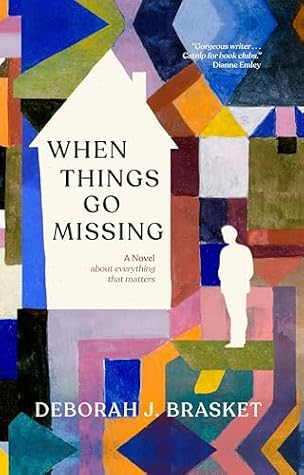
Thank you again for an incredible first year!
To celebrate When Things Go Missing and make it more affordable for new and old readers, I’m offering it at a discounted price for a limited time.
If you’ve been waiting to grab a physical copy for your shelf, or if you want to gift a copy to a friend, now is the absolute best time to do it.
As an Amazon Associate, I earn from qualifying purchases at no extra cost to you.
The Print 20% Discounts Start Today! Hop over to Amazon right now using this LINK to grab the Paperback for just $11.95, or the gorgeous Hardcover for $17.50. This sale will last 10 days only!
The E-Book Discount Starts this Saturday, Sept 26. The Kindle edition drops to just $0.99 for 5 days only. (It’s still FREE for those subscribed to Kindle Unlimited)
Discover more from Deborah J. Brasket, Author
Subscribe to get the latest posts sent to your email.

Many thanks for the revisit. Cal’s in particular is an interesting character-study, with his ADHD, obsessive and addictive personality. It’s clear that your research was meticulous. 🙂
LikeLike