
Tags
absence and memory, archeology, books you will love, creating meaning, Deborah J. Brasket, digging for answers, family saga, literary novel, Novel, novel about complex family dynamics, novel about finding yourself, novel excerpt, self-discovery, special anniversary sale of When Things Go Missing, symbols and metaphor, transformational journeys, understanding the past, When Things Go Missing
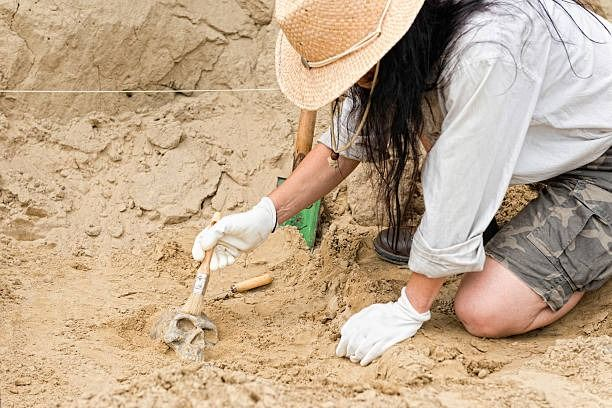
As part of my two-week celebration of the one-year anniversary of When Things Go Missing, I wanted to give potential readers a peek into the minds of the characters they will be inviting into their lives if they decide to do so.
And I thought readers who’ve already lived a while with Kay, Cal, and Walter might enjoy a revisit.
There will be no spoilers. Each excerpt comes from an early chapter in the book.
We’ll start with Kay, the young daughter of the missing mother, a budding archeologist, since archeology is a major metaphor in the book, as one reviewer noted:
“The metaphors in When Things Go Missing are amazing. Kay’s archaeological work of uncovering artifacts mirrors the human effort to piece together meaning from absence and memory, and Cal’s attachment to the rocks symbolizes control and identity. The thing that goes missing is not just Fran, and once you start reading to figure out what exactly that is, there’s no setting the book down. Very highly recommended.” Asher Syed from Readers’ Favorite
That sense of needing to dig beneath the surface of things, to gather broken pieces and scattered memories to try to make sense of ourselves and each other, lies at the heart of this novel.
In this excerpt, Kay is traveling with her professor and other graduate students to a remote site at a primitive rancho in Baja, California, to continue the work they’ve been doing there during school breaks.
From The Scent of Rocks
“Kay watches the road and the surrounding desert unfurl before her as if she’s looking at a map. The Baja peninsula is narrow and jagged like a knife, splitting the tranquil waters of the Sea of Cortez from the energetic upheaving of the Pacific Ocean. Humans migrated here from Eurasia on a land bridge soon after the Ice Age. They traveled from Alaska past her home on the Central Coast and into Baja, leaving bits and pieces of their lives scattered from one end to the other.
For Kay the most interesting archeological sites are the burial caves and rock paintings. Mother-of-pearl ornaments, coiled baskets, wooden ceremonial tablets inlaid with shark’s teeth, among other artifacts, have been found in the burial caves along with the bodies—elongated skulls wrapped in palm fronds or animal hides and skeletons with red, ocher-stained bones. The bodies were de-fleshed so the bones could be painted, but no one knows why. Some think these inhabitants may have migrated from as far away as the Melanesian Islands because of similarities between skull findings. But no one knows for sure.
The same is true for rock paintings. Most are simple geometric designs—lines and dots, ovals with slashes drawn through them. Some are handprints, sometimes single prints widely spaced, sometimes multiple prints overlapping each other. But further south from their destination are huge, elaborate black-and-red murals with oversized images of animals and humans. Local tribespeople told the early Spanish explorers that these were drawn by giants from the north. Today archaeologists are no wiser in their speculations.
So much in the study of archeology is speculative, open to revision, provisional at best. Like everything else, Kay thinks. You can gather all the bones and artifacts, all the hard evidence of someone’s life in your hands, but what do you ever know of their heart or mind? You can piece together some of the puzzle and speculate about what’s missing—but that’s what it remains—pieces, not the whole; speculation, not the truth. And even then, what they piece together is slanted by the perspective of those searching, limited by their life experiences, the questions they ask and fail to ask, the depth of their quest and reach of their vision, the keenness of their need to know and their fear of what they don’t know.
Their destination is the Piedra Pintada, a rock painting deep in the heart of the cape at Cabo de San Pablo. They opened an excavation pit beneath the ledge of the rock two years ago, and now they will go deeper. Donner has staked his reputation on this site, and Kay has helped with the research.
[Paragraphs omitted]
Whenever she’s at the rancho, she feels like she’s stepped back two hundred years. But here, deep in the pit, alone, as she is now, slowing brushing away centuries of packed earth, she loses track of time itself, as if it’s peeled back and floated away. Thousands of years roll by while uncovering, as she did last year, tiny beads made from oyster shells by women who lived here before Caesar ruled Rome. She wouldn’t be surprised to find when she looks up to that square patch of sky overhead the painted faces of Martina’s ancestors staring down at her or the helmeted heads of Spanish explorers.
A time traveler is what she is, uncovering fragments of people’s lives, most of them from the dust heap of their days, trying to decipher who they were from the things they threw away, lost, or abandoned—from the absence, not the presence, of things.
But this sifting through forgotten fragments, piecing together competing possibilities, isn’t limited to archaeology, Kay realizes. This endless, tedious, tenuous effort to piece things together to make sense of our lives and each other is what we all do all the time. We fill in the blanks and blind spots and absences with questions, hypotheses, educated guesses—theories strung out and glued together from fragments of our past and shifting memories.
After an hour in the pit, slowly, meticulously brushing away the earth, the surface of a smooth, round stone emerges. Her heartbeat quickens. It might be something significant, part of a circle of hearth stones perhaps, or a mano for milling grain, and she’s tempted to tease the stone loose quickly to see what it is. But she can’t. She must slowly, patiently brush away the earth until the stone is completely uncovered before examining it further.
At last, she holds the stone in her hands—round, unmarked, like any stone you might come across in some dry riverbed. She lifts it to her nose to sniff, remembering when she and Cal used to gather stones like these near their home.
One summer when they were still in grade school, Mom took her and Cal to a rock and mineral show at the fairgrounds where they walked between long lines of tables filled with all sorts of colorful gems and rocks—blue agate, ruby sapphire, dark green jade, gold pyrite. Kay was fascinated by how rocks that looked dull and ordinary on the outside, when cracked open, revealed hidden treasures: brilliant veins of red and green, silver and gold, dazzling flecks of light. Some were filled with bright, sharp-edged crystals like Superman’s cave of Kryptonite. Others contained the skeletal remains of creatures that lived long ago—delicate etchings of butterfly wings, tiny grasshopper legs, scalloped shells, and the fine cross-hatchings of fish bones. Who knew the insides of things, of plain gray rocks of no distinction, could sparkle like stars or gleam like a deep-sea garden? She was entranced.”
The chapter continues with memories of her and her brother rock hunting in dry riverbed one summer, searching for the treasure hidden in the center of things.
Toward the end of the chapter, she realizes, “leaning back on her heels in the pit, her brush still in her hand . . . how that magical summer would become a defining moment in both their lives and lead them in such different directions—her to archeology, him to heroin—both searching incessantly for that mysterious something hidden at the core, when things cracked open fall apart.”
Thank you for letting me share Kay with you today. I hope you enjoyed your visit. Stay tuned next week when we will visit Cal.
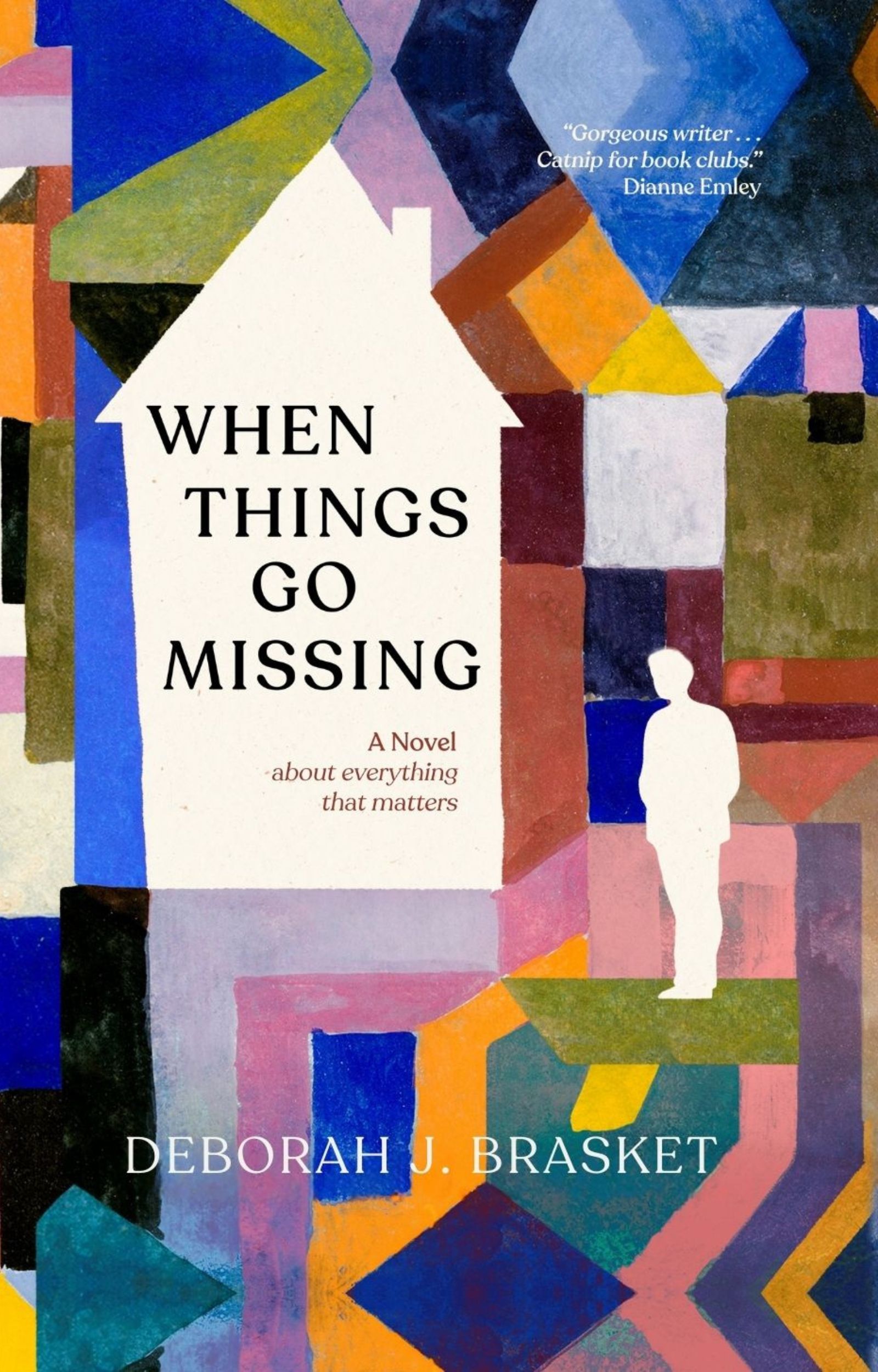
Thank you again for an incredible first year!
To celebrate When Things Go Missing and make it more affordable for new and old readers, I’m offering it at a discounted price for a limited time. If you’ve been waiting to grab a physical copy for your shelf, or if you want to gift a copy to a friend, now is the absolute best time to do it.
The Print 20% Discounts Start Today! Hop over to Amazon right now to grab the Paperback for just $11.95, or the gorgeous Hardcover for $17.50. This sale will last 10 days only!
The E-Book Discount Starts this Saturday, Sept 26. The Kindle edition drops to just $0.99 for 5 days only. (It’s still FREE for those subscribed to Kindle Unlimited)
Discover more from Deborah J. Brasket, Author
Subscribe to get the latest posts sent to your email.

Ah….I remember loving this when I read it the first time, Deborah. It still “hits”:
“So much in the study of archeology is speculative, open to revision, provisional at best. Like everything else, Kay thinks. You can gather all the bones and artifacts, all the hard evidence of someone’s life in your hands, but what do you ever know of their heart or mind? You can piece together some of the puzzle and speculate about what’s missing…”
💝💝💝
LikeLiked by 1 person
So glad to hear that, Vicki! Thank you!
LikeLiked by 1 person
Xo! 😘
LikeLike
I can highly recommend When Things Go Missing. Sharing!
LikeLiked by 1 person
So lovely to hear! Thank you for sharing, Liz.
LikeLiked by 1 person
You’re welcome, Deborah!
LikeLike
i really enjoyed your book and it has stayed with me
LikeLiked by 1 person
I’m so happy to hear that, Beth! Thank you so much for letting me know.
LikeLiked by 1 person
Congratulations on the anniversary. I can’t wait to read. Gotta feel good to have both your books on the shelf!!!
LikeLiked by 1 person
Thank you, Brian! Can’t wait to hear what you think of it when you do read. It is pretty wonderful to have two books out now!
LikeLiked by 1 person
It’s great to read this about your fantastic book, Deborah. Happy anniversary! 😍
LikeLiked by 1 person
Thank you, Tim! I hope you get a chance to read it.
LikeLiked by 1 person
You’re welcome, Deborah. 😍 If I get a chance, I will.
LikeLiked by 1 person
Pingback: “This Is My Brain”- ADHD & Addiction | Deborah J. Brasket, Author
Pingback: Seeking Solitude, a Quiet Eddy in a Rushing Stream | Deborah J. Brasket, Author