
Tags
Blues music, Bo Hopkins, book review, Elizabeth Gauffreau, historical fiction, Homelessness, literary fiction, Novel, playing the blues, poor house, The Weight of Snow and Regret
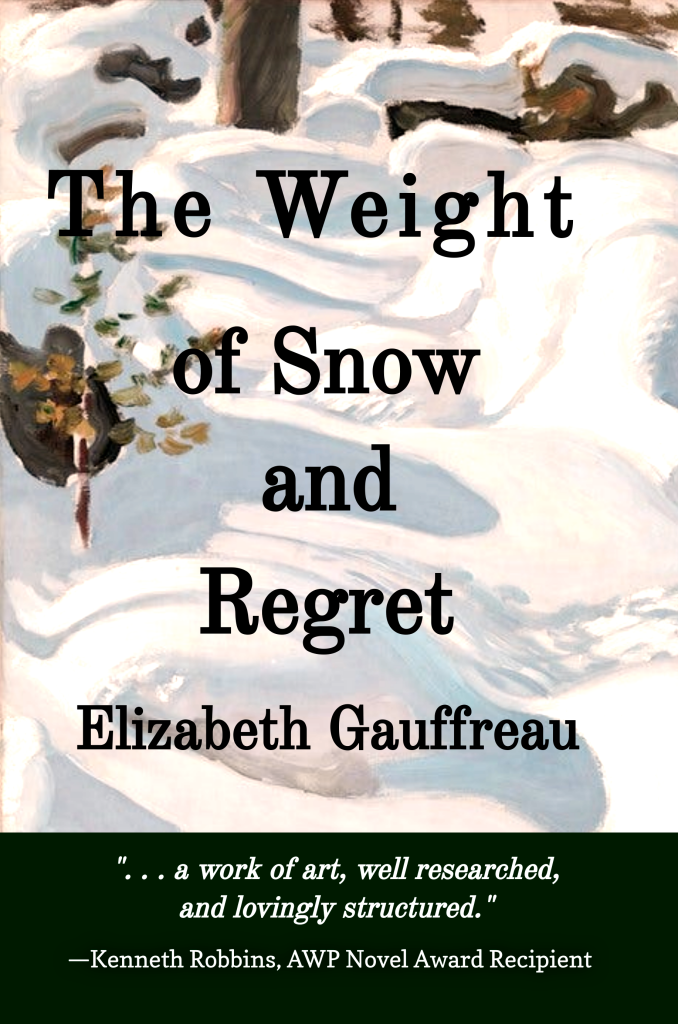
My Review
The Weight of Snow and Regret by Elizabeth Gauffreau is a beautifully-written story that throws light on an important and largely unmet societal problem. One that has eluded us forever: how to house the houseless, including families with no place they can afford to live, people with mental health issues unable to care for themselves, and old people with health problems and no income or family to care for them. This problem is compounded by a society that looks with disdain and apathy upon such people, while a few caring people do their best with limited sources and paltry support to help them.
This is as true today as it was during the time period this novel took place, the 1950s -70s. It opens the door into the lives of those in desperate need of a home and someone to care for them, and into the lives of the caretakers and that shaped them to become these angels of mercy.
The novel opens with Claire’s story, a woman found freezing in a barn when her husband disowns her. When she is taken to a Poor House run by Hazel and her husband, Paul, Claire is almost catatonic, refusing to eat or speak and yet hearing mysterious music that stirs her.
In other words, the novel opens with a mystery: who is Claire, how did she become this way, what is this music she’s so drawn to?
But there’s another mystery taking place as well, centered on Hazel, this angel of mercy who is so unconditionally patient and attentive to the needs of this silent and mysterious stranger, but also to the other residents whose needs are just as dire, but much more disruptive as they snipe and bicker with each other, becoming violent at times, raging, or dilutional.
In reading about the environment in which Hazel has to work, I was amazed at how she could maintain her own sanity let alone her temper and spirit. At all times she was patient and practical, quietly manuevering and managing the people she cared for in ways to soothe and calm their wildly erratic personalities. I was in awe of her. And thus the second mystery in my mind was how she came to be this way, to care so deeply for these broken people, and to undertake that responsibility with such dilligence.
As the story progresses, we learn the backstory of both Claire and Hazel, and to a lessor degree the backstory of some of the people living in the Poor House.
First the novel is centered on Claire’s story, which in some ways I found the most compelling. It tells of how an average, normal housewife and mother becomes mesmerized by the blues music she hears coming from a Juke Joint in the back-country.
We come to meet the real-life producer of the music, Bo Hopkins, who was much celebrated in the 50s and 60s. Bo Hopkins may have been my favorite character and I would have liked more of him. Claire’s story unfolds in the first third of the book and then it centers on Hazel, going back to her childhood and the tragic circumstances that sent her family to a Poor House very different from the one Hazel ran decades later.
During Hazel’s backstory, we also learn where the title The Weight of Snow and Regret comes from: two very real and tragic events that take place in Hazel and Paul’s life together. But it also serves as a metaphor for the whole of the novel, which unfolds like gentle layers of snow, one tragic event after the other over time, until the accumulated weight crushes those it falls upon.
Some are crushed irreparably; others like Claire slowly dig their way out; and some, like Hazel, are shaped by their circumstances to become angels of mercy. They develop the kind of endurance and compassion that allows them to not only rise above the tragedies that have befallen then, but to help others still stuck below.
I highly recommend The Weight of Snow and Regret to literary and historical fiction readers, and to anyone who wants a beautifully-written and thought-provoking read that throws light on a serious societal problem.
Available in paperback, hardback, ebook, and audiobook.
Purchase from your preferred book seller.
‘Lightning’ Bo Hopkins
Bo Hopkins, also known as Lightning Hopkins, is considered one of the top 50 blues musicians of all time. I love the blues but had never heard of him until I read Liz’s book. I can certainly see why she wanted to write about him, such an interesting character. Here’s a bit more about him and some vintage music videos. Enjoy.
Lightnin’ Hopkins (1912 – 1982)
Hopkins was the most recorded blues artist of all time. During his long and prolific career Sam Hopkins comfortably bridged the gap between acoustic country blues and the urban blues of his home turf of Houston, Texas. With his deep, evocative voice and deft guitar playing, Hopkins always did things his way and was one of the most respected artists of the blues.
Here’s a rare old video of Hopkins playing the blues at a juke joint. His music was a huge influence on blues musicians coming after him. I can see why poor Claire was so entranced!
One more playing Boom, Boom, Boom. Love this!
Last one. Bo was known for his “talking blues” and here you get a sample of that.
Discover more from Deborah J. Brasket, Author
Subscribe to get the latest posts sent to your email.

Liz’s book sounds compelling. And I’ve never heard of Bo Hopkins either.
LikeLiked by 5 people
It is! You will like her book.
LikeLiked by 2 people
Thanks!
LikeLiked by 2 people
Hey, Liz! This post about your book just got Freshly Pressed today!!! I hope it brings you oodles of new readers and reviews.
LikeLiked by 1 person
WOW! Thank you for letting me know, Deborah!
LikeLike
Boom, boom, indeed!
LikeLiked by 4 people
LOL. Love it!
LikeLiked by 3 people
I too love Blues, Deborah, but like you I hadn’t come across Bo Hopkins until I read Liz Gauffreau’s wonderful story.It’s a while since I read it, but your beautifully-analytical review brings back so much of it, digging far deeper into the snow and characters than I did. I still loved it, as a work which throws a light on those areas of society which many people would rather not think about; yet these characters are all of us, potentially – lives can fall apart so fast – so we’d do well to take more notice. Many thanks for your review, and I hope it finds readers and sales for Liz. 🙂
LikeLiked by 5 people
You are so right. These characters could be any of us or those we love. I’m glad you enjoyed my review. The book had so many facets to explore. It was a slow read for me, for that very reason, I think.
Also, fun to learn you love the blues too! I’m listening right now to something called Alabama Black Belt Blues, a playlist I found on Youtube. Let’s of sweet harmonica!
LikeLiked by 4 people
I’ll have a look for that playlist, Deborah; gotta love the Blues! 🙂
LikeLiked by 3 people
Thank you very much, Laura! You are so right that so many of us are one major illness, car accident, or job loss from being out of the street with nowhere to go, particularly since the social safety net lies in tatters on the ground.
LikeLiked by 3 people
Unfortunately so. 😪
LikeLiked by 2 people
Thank you so much for this, Deborah! Liz’s “The Weight of Snow and Regret” has been on my reading list for far too long. I appreciate your lovely review and the gentle nudge and reminder! xo! 💝
LikeLiked by 6 people
Yes, you really should move it up your TBR list. Liz is a wonderful writer.
LikeLiked by 3 people
😉❤️😉
LikeLiked by 2 people
Thank you , Vicki! I hope you enjoy The Weight of Snow and Regret when you get a chance to read it.
LikeLiked by 2 people
Will do, dear Liz! My copy is on its way to me. Love and hugs! ❤️😉❤️
LikeLiked by 3 people
🥰😊
LikeLiked by 2 people
It’s so nice to read your great review of Liz’s captivating book, learn about Lightnin’ Hopkins and hear his music, Deborah!
LikeLiked by 5 people
I’m glad you enjoyed the review and the music, Tim! Hope you get a chance to read her book.
LikeLiked by 3 people
Thank you very much, Tim!
LikeLiked by 1 person
My pleasure, Liz! 😍
LikeLiked by 1 person
Thank you very much for the wonderful review, Deborah! I’m so glad you enjoyed The Weight of Snow and Regret. Lightnin’ Hopkins really was something, wasn’t he!
LikeLiked by 3 people
My pleasure, Liz! I could have written so much more about it, so many layers! And yes, Hopkins is great. A great character too! I added him to my blues playlist.
LikeLiked by 2 people
Speaking of the blues, have you heard anything by Nat Myers, a neo-country bluesman? https://www.youtube.com/watch?v=de8kTBY56hg
He’s been fighting terminal cancer for a year and a half. He’s now playing tour dates between rounds of chemo.
LikeLiked by 3 people
Thanks for sharing that link, Liz. What an amazing and talented musician to take it to the road like that!
LikeLiked by 2 people
You’re welcome, Deborah. As dire as his prognosis was, I was very surprised when he went back out on the road between chemo treatments. Now THAT’s a musician!
LikeLiked by 1 person
PS – Your review is up on Amazon and Goodreads now! Let me know if you want me to leave it anywhere else.
LikeLiked by 2 people
Thank you very much for letting me knowing, Deborah! If you wouldn’t mind, I’d appreciate your posting it on BookBub. Thanks!
LikeLiked by 1 person
I will!
LikeLiked by 2 people
Thanks!
LikeLiked by 1 person
Wonderful review of an excellent book. Love the angst in Blues.
LikeLiked by 4 people
Thank you, Jacqui! It was excellent. And yes, so much angst and so much soul.
LikeLiked by 3 people
Thank you very much, Jacqui!
LikeLike
I’m a big fan of Liz’s work having enjoyed both Telling Sonny and The Weight of Snow and Regret. She expanded my knowledge of poor houses with an excellent tale of historical fiction.
LikeLiked by 4 people
I learned so much too, Pete. The contrast between the Poor House that Hazel moved into as a child and the loving, well-maintained one she ran really got to me. That poor child!
LikeLiked by 3 people
Thank you very much, Pete!
LikeLiked by 1 person
I loved Liz’s book! Thanks for the wonderful review!
LikeLiked by 4 people
You are so welcome. It was a pleasure to read and write about it.
LikeLiked by 2 people
Thank you, Dawn!
LikeLike
Thanks for sharing your wonderful review, Deborah. This book is on my list! Congrats to Liz!
LikeLiked by 3 people
Thank you, Lauren!
LikeLike
What a wonderful review of Liz’s book, Deborah. She is a gifted writer and it’s on my list as well💕
LikeLiked by 3 people
Thank, you! You will love her book. It’s sad, but true, and heartfelt.
LikeLiked by 3 people
❤️❤️❤️
LikeLiked by 3 people
Thank you very much, Cindy! I hope you enjoy the book when it makes its way to the top of your list.
LikeLiked by 1 person
You’re so welcome, Liz❣️ I know I will ❣️
LikeLiked by 1 person
😊
LikeLiked by 1 person
Pingback: The Weight of Snow and Regret & Bo Hopkins’ Blues – Daily News N Blog
Thanks for sharing this!
LikeLike
Wonderful
LikeLiked by 3 people
So glad you thought so!
LikeLike
Thanks, Caleb!
LikeLike
Pingback: The Weight of Snow and Regret & Bo Hopkins’ Blues – Jarrick Exum, Author
Thanks for the reblog, Jarrick!!
LikeLike
What a gift of a review, Deborah. The way you named both mysteries, Claire’s silence and the blues that called to her, and Hazel’s impossible grace in the face of so much breaking, shows how deeply you read. You didn’t just review the book; you honored what Liz built there. And adding Lightnin’ Hopkins’ music was perfect. Thank you for introducing readers to a story that matters. 💙
Much love,
Khadija 💕🤗
LikeLiked by 2 people
I’m so glad you enjoyed this! It’s easy to write great reviews about great books. And Bo Hopkins, what a pleasure to have discovered him!
LikeLiked by 2 people
Thank you very much, Khadija!
LikeLiked by 1 person
I thought the most well-known bluesman was Robert Johnson -you learn something new every day!
The first book sounds like a must-read because I’ve always been concerned about the homeless.
LikeLiked by 4 people
I hope you get a chance to read it, Kim! I’m sure you will be moved as I was by the story. I’d never heard of Bo until I read this book and then researched him. So just quoting what other say. Now I’ll have to look up Robert Johnson! Never heard of him either. So much talent lies hidden, just waiting for us to discover them!
LikeLiked by 4 people
Robert Johnson was a major force in the development and popularity of the Delta blues.
LikeLike
Thank you, Kim! I hope you get a chance to read The Weight of Snow and Regret.
LikeLiked by 1 person
Me too, but it will be a while-like most I have a stack of TBR books!
LikeLiked by 1 person
I understand! I have a backlogged TBR, too.
LikeLiked by 1 person
This is a wonderful review of Liz’s book which I also found very compelling. I liked Hazel’s story better though.
LikeLiked by 4 people
Thank you, Robbie! Yes, Hazel’s story was as heartbreaking as it was inspiring!
LikeLiked by 3 people
Yes, it was very memorable
LikeLiked by 1 person
Thanks, Robbie!
LikeLiked by 1 person
This is a great post and I’ve only heard this artist briefly and I’m a music thank you
LikeLiked by 6 people
Thank you! I’m a great music fan myself. Hopkins was a new find of mine too. Great stuff.
LikeLiked by 2 people
What a deeply moving review, Deborah! The way you described Hazel’s grace and patience in managing the Poor House really highlights how powerful well-crafted characters can be. It’s so true that the themes of homelessness and mental health are just as relevant today as in the mid-century setting. Also, loved the inclusion of Lightnin’ Hopkins—music has such a unique way of weaving through a story’s emotional core!
LikeLiked by 3 people
Thank you so much! I love sharing with others things I enjoy. It was a pleasure writing the review, and I love Hopkin’s music.
LikeLiked by 1 person
It was a wonderful review and it tempted me to listen to Hopkin too.
LikeLike
Pingback: The Weight of Snow and Regret & Bo Hopkins’ Blues – Internet marketing
This book seems quite interesting and fascinating to me because of, the way you described the story and crux of it as well.
It was fun reading your blog 😁
LikeLiked by 1 person
Thank you! I’m glad you enjoyed reading my blog too. That means a lot.
LikeLiked by 1 person
This sounds like a must. Great 😊
LikeLiked by 1 person
Pingback: My Book Buffet, August 2026 | Deborah J. Brasket, Author