
Tags
a marriage falling apart, a mother goes missing and a family falls apart, Deborah J. Brasket, difficult family relationships, excerpts from a novel, family saga, finding one's purpose, identity and self-discovery, literary fiction, multigenerational novel, novel about transformational jouneys, Parenting, When Things Go Missing

This post ends my two-week celebration of the one-year anniversary of When Things Go Missing, where I’ve been giving potential readers a peek into the minds of the three main characters.
I dedicated this novel to: To all families who fall apart and struggle to find their way home again. I have loved thee with an everlasting love: therefore, with lovingkindness have I drawn thee.—Jeremiah 31:3
Yes, all of these characters, imperfect as they are, are drawn with lovingkindness.
First I wrote about Kay and how her work in archeology piecing together fragments she finds on her digs mirror her (and our) efforts to piece together an understanding of those we love, but probably don’t know as well as we think we do.
I followed with Cal, a young man who has struggled with ADHD, compulsive behavior, and addition nearly his whole life.
Now we turn to their father, Walter, a man devoted to his wife but who has a distant and troubling relationship with his children.
The mother, Franny, is an absent presence in the novel. As the one person who has held this family together all these years, now that she’s mysteriously disappeared, her family falls apart. The epitaph for Part One of the novel reads:
Turning and turning in the widening gyre
The falcon cannot hear the falconer;
Things fall apart; the center cannot hold;
Surely some revelation is at hand;
—William Butler Yeats, from “The Second Coming”
Yes, surely some revelation is at hand for each of them, and for Walter, perhaps, most of all.
Kay is the first person in the novel who gives us a glimpse of Walter, or at least, her perception of him:
From Chapter 2, All the Little Lambs
Dad’s not in the garage [as Cal told her he was]. He’s in the backyard watering the hanging fuchsias, their pink and purple petals the twirling skirts of ballerinas. She watches him through the French doors. He’s small and dark like Kay, more taut than muscular. He’s talking to himself beneath his breath, a habit he’s had forever—one that she and Cal interpreted, along with his whistling, as a sign to stay far away. She steps out cautiously onto the patio. He turns, and his face softens.
He puts his arms around her and pats her gingerly on the back, the way he always does in greeting, as if he’s not quite sure how hugs are done or for what purpose, but he knows it’s expected, so he tries. She senses in these hugs and pats not only his awkwardness but the genuine affection he feels for her that comes more naturally through twenties pressed into her palms than through physical contact. How this man ever fathered two children, she’ll never know, for his body language nearly shouts stay away.
He’s always seemed like the unwitting partner in a family life that mystifies him, that moves around him, carries him along, but never pulls him in. He stands on the far side of some invisible barrier, remote, aloof, and unaware.
Mom was the one she and Cal counted on, the one who helped them with homework, attended school conferences, took them out on Halloween nights, and read them fairy tales at bedtime.
Where was her father when all this was going on? What role did he play in their lives? The only times he made a real impression on either of them was when he was irritated, upset, or angry: his grunts of dissatisfaction, sighs of disappointment, and angry grabs on their shoulders and arms as he led them where he wanted them to go.
When Kay asks him about what they are going to do to find mom, he tells her: “She’ll come home when she’s ready,” as if he’s not worried about her at all.
Walter only has two chapters in Part One of the novel, so he’s as distant and inscrutable to the reader at the beginning as he is to Kay and Cal. But here’s a bit from these first two chapters to throw a little more light on him:
From Walter’s First Chapter, “Good Girl“
The first credit card bill comes in October, three weeks after Franny disappears. Walter slits it open with his pocketknife like he does all his mail, sitting at the dining room table with a cup of black coffee steaming at his side. He’s been up for hours. Can’t sleep. Never could. Some restlessness that keeps him moving, keeps him awake.
By now he’s hosed off the patio and its smoked glass table and wrought-iron chairs, hand-watered the hanging plants and boxwood bushes that line the fence, as well as the birch trees whose long limbs sweep the ground. He’s refilled the hummingbird feeders, dodging the long, thin beaks that swoop at him like kamikaze pilots.
And he’s stood motionless in the middle of the damp grass while the sun raised a watery face above the fence line, a face as pale as an old moon in a new sky, trying not to think of Franny.
It’s when he views his credit card bills that he finds out what she’s been up to all this time: On a road trip heading south.
At first when he sees the balance on the statement, he’s stunned. There must be some mistake. He reads through the charges to see what’s wrong. That’s when he finds her. Franny. He laughs out loud—at her, at himself.
He should have realized she’d need something to stay alive, to keep gone this long. Where else would she get the money? He shakes his head.
Good girl, he thinks. Smart. Always was.
She could have cleaned out the savings account by now, but she didn’t. She put it all on credit instead, knowing he’d pay it off. It’s her way of staying in touch, letting him know where she’s been, that she’s okay, letting him know she trusts him to keep taking care of her like he’s always done.
“Good girl,” he says aloud now, softly. A weight that’s been crushing his shoulders, which he hadn’t realized he was carrying until now, begins to lighten.
From Walter’s Second Chapter, “Far Ends of the Earth“
Walter is starting to realize that his wife may not be coming home after all and sets off on his own trip northward. Yet, here’s how the chapter begins:
My Franny. That’s how he thinks of her, affectionately, this way. My Franny, like she belongs to him, even while knowing she doesn’t—like a cat, a pet you never quite own because it’s so independent and unpredictable. And yet when she curls up in your lap and purrs—all that silky softness melting beneath your stroking hand—you think of her that way, like she belongs to you even when you know in another moment she’ll disappear. Even when she’s gone and wandered off to who knows where, and there’s no telling when she’ll reappear. Even when you know, finally, she’s never coming home. Still, she remains, in your mind if nowhere else, in your heart, my Franny. Mine.
The chapter goes on telling about their history together. It ends with this;
Opposites attract, so they say. He and Franny were like that, attracted by the otherness of each other, yet striking a balance somehow. He liked the feel of her playful upward tug as she soared aloft like a skittish kite; she liked the feel of his calm hand holding her firmly to the ground.
[Yet he realizes now he’s] always known someday she’d drift off like this. Their relationship was tenuous at best, and the fact it lasted this long was the most surprising thing about it.
Now, driving farther away from her, he wonders if she had the same feeling too, that someday she would drift away so far that his fingers would open and let her loose. But he knows now, now that the inevitable finally happened, that he will never let go, not completely. She will never drift so far that he will let her slip away for good.
As long as he holds on, she’s safe. And he’s safe. And his life has purpose.
Walter’s Third Chapter, “Luther, Alaska“
Walter finally reaches his destination, a cabin in the woods near Salmon Creek:
“He’s come here seeking solitude. That’s what he’s wanted his whole life: a spot away from the crowds and confusion and all the complications that come from a life highly involved with others. It’s what he would have if Franny hadn’t come along and stolen his heart. Even then, he’s kept to himself as much as possible, despite being a married man and a father to boot. His stint owning that welding shop, he realizes now, was an attempt to cut the clutter, to get out from working for others. But he was never able to make an income that matched what he brought in as a union worker, and he needed that pension, so eventually he let the shop go.
But the longer he stays out here by the lake, the more restless he feels. He’s surprised by this and disappointed in himself. He thought he’d like being alone, nothing between him and God but sky and the surrounding forests. He thought he’d relish the stillness, nothing but the sound of breezes blowing through the timbers, birdsong drifting through the air, the rush of creek water spilling away below, or the whirr of the reel as his line flicks through the air and the cold-water hums around his thighs. And he does relish it, or he did, those first few weeks. But now it’s too quiet standing here in the sunlight with his mug in his hand. The stillness has lost its luster and seems empty, barren almost, like he’s listening for something not here, something missing, something he misses.
Although he’s always been a quiet man at heart, a loner like Franny says, he’s never been alone, not in the thirty-two years of their marriage and not even before that when he was in the Marine Corp and did his tour in Vietnam. His personal quietness has always basked in the ever-flowing sound of others, like a quiet eddy in an otherwise rushing stream of sound.
In his life with Franny, the house was always full of noise—Kay bright and bossy with her bright and bossy bevy of girlfriends traipsing in and out, Cal with his loud outdoor-indoor voice and loose laughter chasing them about, Franny’s cheerful chattering and soft, absent-minded humming. Even when they all managed to be gone for the day, the radio in his shop and the twenty-four-hour news on TV were a constant backdrop for the stillness in his head.
He misses his hummers in the backyard too, strange as that sounds, watching and feeding them, laughing at the way they attacked him with their long beaks when he took down the empty feeder and brought it back full of nectar, too impatient or ignorant to know he’s the hand that feeds them. He misses his garden too, harvesting his fat beefsteak tomatoes and prickly squash in the half-barrel containers where he planted them. He’s always been better at tending things than people. He could tend birds and gardens, tend houses and cars, tend the business of making and fixing things. It came natural, easy, to him. But people? How do you tend people? That always seemed a mystery.“
EMAIL READERS: HIT THE “READ MORE” BUTTON BELOW TO CONTINUE READING
Thank you for letting me share Walter with you today. I hope you enjoyed your visit. Today is the last day of my two-week celebration of the first-year anniversary of When Things Go Missing. If these excerpts have piqued your interest, today is the last day to purchase it at a discount.
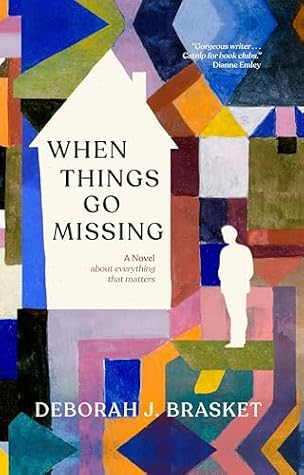
Thank you again for an incredible first year!
To celebrate When Things Go Missing and make it more affordable for new and old readers, I’ve been offering it at a discounted price for a limited time. Today is the last day of the sale.
If you’ve been waiting to grab a physical copy for your shelf, or if you want to gift a copy to a friend, now is the absolute best time to do it.
As an Amazon Associate, I earn from qualifying purchases at no extra cost to you.
The Print 20% Discounts END Today! Hop over to Amazon right now using this LINK to grab the Paperback for just $11.95, or the gorgeous Hardcover for $17.50.
The E-Book Discount Also ENDS Today: Get yours for just $0.99. (It’s still FREE for those subscribed to Kindle Unlimited)
Discover more from Deborah J. Brasket, Author
Subscribe to get the latest posts sent to your email.

Sharing for a last chance at the promotion!
LikeLiked by 1 person
Thanks, Liz!
LikeLiked by 1 person
You’re welcome, Deborah!
LikeLike
I liked Walter – I liked them all, complex and therefore realistic human characters as they were, and those are always my favourite part of any novel, including my own. Congratulations on the anniversary, Deborah; enjoy it to the full. 🙂
LikeLiked by 1 person
Thank you, Laura. I like Walter too. It was traveling with him. writing about his journey, his “Dawn, Again.” What I’m going to be enjoying soon is some time off, stepping away from SM to dig deeply into Book 2 of my trilogy.
LikeLiked by 1 person
All the best with that. 🙂
LikeLike
It’s good to absorb all this fascinating information, Deborah.
LikeLiked by 1 person
Thanks, Tim!
LikeLiked by 1 person
My pleasure, Deborah! 😍
LikeLike
FYI: I bought a physical copy a couple days ago and sent it to a cousin ‘just because’. Amazon should deliver it today. YaY! Congrats on one year since pubbing your debut novel – and since then with your recent novel and other WIPs. Brava
LikeLiked by 1 person
Aw, that’s so lovely to hear. You are such a good friend. Thank you, Laura! Hugs!!
LikeLiked by 1 person