
Tags
Deborah J. Brasket, how I came to be a song-writer, inspiration, Joni Mitchell, Santana, song lyrics, song-writing, The Beach Boys, The Doors, the iconic 60s, This Sea Within, Woodstock summer of love, writing, writing a novel, writing songs for my novel
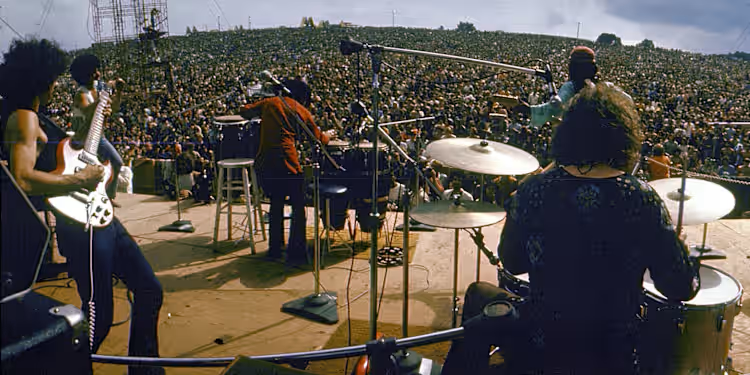
I’ve never thought of myself as a songwriter, so this was a new experience. It wasn’t supposed to be this way. What I really wanted was to quote some of those iconic song lyrics from the 60’s in my novel set in 1971. Lyrics that spoke to the heart of my novel, and Lena in particular, that idealistic surfer and anti-war protester who travels to Central America in search of her Maya heritage but ends up in a revolution as a freedom fighter.
Here’s what I wrote originally in Chapter Two:
[Lena] pulls out Joni Mitchell’s Ladies of the Canyon album and drops it onto the spindle. . . . When her favorite song Woodstock comes on about turning bombers into butterflies, she sings along, loving Joni’s airy bell-like voice flouncing up and down the scale.
We are stardust, we are golden
We are caught in the devil’s bargain
And we’ve got to get ourselves
Back to the garden
Unfortunately, I found out that you need special permission to use song lyrics, and it can be very expensive and a long wait for approval, if it comes at all.
Yet, Part One of the novel is called Hour of the Garden, eluding to that state of innocence from which Lena eventually emerges in Part Two (titled Hour Up in Arms, referring both the arms of her lover and the arms of the freedom fighters she is about to join). Therefore, I needed a song that would communicate something similar to the “Woodstock” song I had quoted before.
So I changed it to this, adding a fictional singer and my own lyrics:
Lena pulls out Cali Michael’s iconic anti-war album and drops it onto the spindle. . . . When her favorite song “Back to the Garden” comes on, she sings along, imitating Cali’s airy bell-like voice.
We must return to the Garden of Eden
To the innocence we once understood:
Where destroyers were dolphins
And bullets butterflies
And Serpents sang sermons of good.
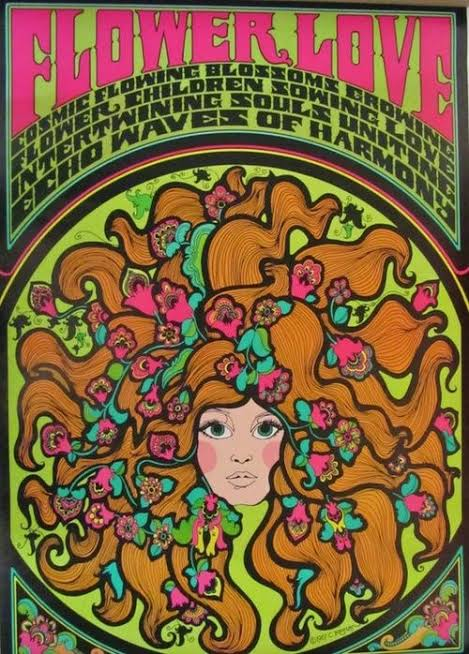
Later on I had to do the same thing in chapter 11 after quoting the lyrics of the Beach Boys’ “California Girls.” I invented a new surfer band and wrote the lyrics for a new song.
It was a fun scene. A young, brash soldier learns that Lena (now embedded in his camp as a photojournalist) is also a surfer. So he belts out a surf song to a crowd of soldiers gathered in the camp:
Pepe looks closely at Lena. “You’re from California, right? A surfer?”
“How’d you guess?”
He slaps his knee. “I knew it! You look like those California girls the Pipeliners sing about. You know the song, “Surfer Girls,” right?” He grins and then begins singing.
We’ve travelled all around these U.S. towns
And kissed all kinds of girls,
From the City Slickers with their trendy knickers
To the Southern Dolls with their sexy drawls.
But none out there can ever compare
With the gals we find back home.”
By now, others nearby are egging him on, so he gets up to milk the crowd, leaning into a pretend microphone.
With their sun-kissed hair and tan limbs bare,
These wild Wahinis in their French bikinis
Put all the rest to shame.
Why can’t they all be surfer girls?”
He points his thumb over his shoulder at Lena as he sings the chorus, “Why can’t they all be surfer girls?”
By the time he’s finished, all are clapping, and Lena is blushing. “Stop it! You’re embarrassing me.” Pepe plops down beside her again. “You seemed to enjoy that,” she says.
“Immensely,” he agrees, grinning.
I refer to other singers and songs in the novel. Here’s a few you might enjoy, including the ones by Joni and the Beach Boys that, sadly, I couldn’t use:
“Black Magic Woman” is the song playing when Lena enters a pub, hoping to learn more about rebels said to be hiding in the hills and their leader, Raoul, whose posters are plastered all over the streets of San Balanque.
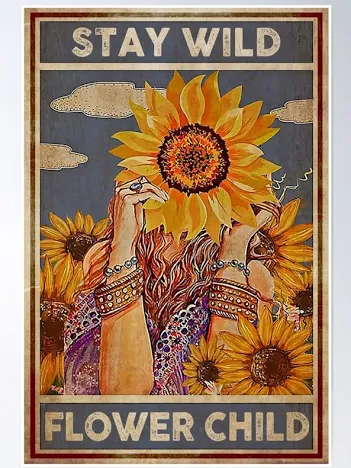
I’m including the following song by The Doors, because Lena thinks Raoul looks like Jim Morrison, whose poster hung on her on her bedroom wall as a teenager. But she decides he’s too pretty to be the leader of the rebels trying to overthrow the regime.
Here’s how that scene plays out:
Everywhere she goes, large posters are plastered on walls, some looking as if they’d been torn away, then pasted back. All feature a man with a mane of dark wavy hair, large dark eyes, and full sensuous lips. He reminds her of Jim Morrison in The Doors poster she has at home. Or Che Guevara in those new posters. For like Che, this man is dressed in fatigues with a bandolier slung over his shoulder.
“Who’s that on the poster?” Lena asks the young woman next to her on the bus.
“Ah, that is Raoul, leader of the Aguileros.” When Lena looks puzzled, she explains, “Leader of the freedom fighters.”
“The rebels hiding in the hills?”
She shrugs. “The hills, the villages, the city—as you can see. He’s what you Norte-Americanos might call a Robin Hood, who takes from the rich and gives to the poor. The people love him!”
“And do you?”
She grins. “But of course! He’s so handsome. All the girls swoon. But,” she adds, her grin disappearing, “his days are numbered. It’s regrettable, but what can you do?” She turns from Lena to scold the little boy sitting on her lap, slapping his hand as he reaches into her satchel to pull out a bun.
Lena looks again at the poster before they drive away, noticing the name Raoul in big block letters below the image. The artwork reminds her of Andy Warhol’s Marilyn Monroe, an idealized image silkscreened in three colors. This one’s in orange, gold and maroon—the colors of San Balanque’s flag. He is strikingly handsome, she concedes—too handsome to be taken seriously. Those large dark eyes are like Christ’s on the cross. They’ve already made him into a martyr!
He’s just a figurehead, someone to rally around, she decides. He looks like a model made up to look like a rebel. Sexy and sultry, but certainly not dangerous. He needs a beard or mustache, at least. Or a cocky beret. The bandolier helps, but it’s not enough. She sees why they chose this face though—all the women half in love with him, all the men wanting to look like him. He’s like a movie star, larger than life. All their hopes and dreams pinned on his pretty face. But the real power behind these Aguileros, if there’s any at all, lies elsewhere. She’s sure of it.
I hope you enjoyed this song excursion into the wild and turbulent Sixties, where I (and Lena) came of age.
This Sea Within is FREE for 3 Days
A “Summer of Love” Promotion
Get This Sea Within, Book 1 of my trilogy, FREE on Amazon, September 7-9
Discover more from Deborah J. Brasket, Author
Subscribe to get the latest posts sent to your email.

Ahh, the soundtrack of my youth. You’re brave to write your own song lyrics for the novel!
LikeLiked by 1 person
I know! A trippy trip down memory lane! It was fun writing those songs. In a way, I’m glad I was forced to do so.
LikeLiked by 1 person
Makes sense to me! 😀
LikeLike
Classic songs and fun way to learn a little song writing and introduce your book.
LikeLiked by 1 person
Yes, it was. Being creative about talking about my books without the so-called “cringe” factor is something I’m trying to do, learning as I go.
LikeLiked by 1 person
That sounds like a good plan.
LikeLike
That was fasinating, Deborah. Just think, when they make the movie version of This Sea Within, you can get Elton John to set your lyrics to music. 😉
LikeLiked by 2 people
I’m so glad you enjoyed this, Michelle! Yes, wouldn’t it be lovely to see this made into a movie! Elton John would be great.
LikeLiked by 2 people
Deborah,
So now you’ve become a songwriter! You’ve worn so many hats to get this book written, published, publicized, and promoted. Highly commendable!
I know what you mean about the difficulty and cost of trying to get the rights to use a song in a book or a video. But it is at least worth trying. I can remember working as an account rep for a small video company in town. One of our clients had hired us to do a state educational video for high school Drivers Ed classes to warn students about the dangers of drinking and driving. We obtained emotional testimonials from people who lost friends in drunk driving accidents, from both sides—the perpetrators and the victims.
When the company owner was editing a final draft, he added a world-famous hit song during the credits roll. He knew he could never use ‘Through the Living Years’ by Mike and the Mechanics, but it fit the emotional sentiment of the video so well. He showed it to me and I was so impressed I told him I we had to at least try to get permission. I tracked down and spoke with their New York manager and he said they received many such requests and turned them down. I said he should just let Mike see what we had done and sent them a copy of the video. Surprisingly, the answer came back, ‘Yes’, but with strict terms on how it was to be used when promoting the short film. We got lucky. But you won’t know if you don’t ask.
BTW, you wrote the words, ‘on her’ twice in this sentence: I’m including the following song by The Doors, because Lena thinks Raoul looks like Jim Morrison, whose poster hung on her on her bedroom wall as a teenager.
I wish you continued success with your trilogy. You never know who might read your books and suggest them to the right person who would want to turn them into a screenplay for a movie.
Ken
LikeLiked by 1 person
Thanks for sharing your story, Ken. I’m glad that worked out for you. I just didn’t have the patience or time to do that. And in a way I’m glad I didn’t. It was fun coming up with the lyrics.
LikeLiked by 1 person
Yes, in your situation, you did the appropriate thing. You set up another creative challenge for yourself and look what happened! And thank you for giving us a 3-day period with which to download a free copy of your book! Hopefully more people will read it and discover you so that when your next two books come out they will buy them.
LikeLiked by 1 person
Yes are so welcome, Ken! I hope you get a chance to read it and let me know what you think.
LikeLiked by 1 person
You are doing such an exceptional job with your writing and how you project it. Can’t wait to see you tomorrow at the SLO meeting. Fondly, Viviana
LikeLiked by 1 person
Thank you, Viviana! It will be great to meet you in person. I’m so glad you can come.
LikeLike
Those are great songs for you to absorb so you can write song lyrics for your novel, Deborah. Thank you for the announcement that it’s free.
LikeLiked by 1 person
You are welcome, Tim! I hope you get a chance to read it.
LikeLiked by 1 person
Well I got it, Deborah, but it will take time for me.
LikeLiked by 1 person
Thank you, Tim! I hear you about taking time to get to it. Same with me and so many books waiting on my kindle to read, including one of yours!
LikeLiked by 1 person
😍
LikeLike
Wow, Deborah. You are so creative — finding ways to make the music, the mood, come to life even if you can’t use the exact lyrics. Brava, brava! Keep going! (And I LOVED Michelle’s earlier comment. Yes!) 💝
LikeLiked by 2 people
Thanks, Vicki! This whole publishing process has opened up a lot of creative challenges and opportunities, from song-writing, to myth-making, to graphics for ads, and powerpoint presentations . . . all useful skills!
LikeLiked by 1 person
Absolutely — and look at all you’re accomplishing. I love it – thanks for letting us ride along! ❤️❤️❤️
LikeLiked by 1 person
so, you have yet another creative skill – bravo!
LikeLiked by 1 person
Thanks, Beth! I guess I do at that!
LikeLiked by 1 person