
Tags
authors, books, favorite authors, favorite books, influential books, literary fiction, literature, non-fiction, novels, Philosophy, spirituality
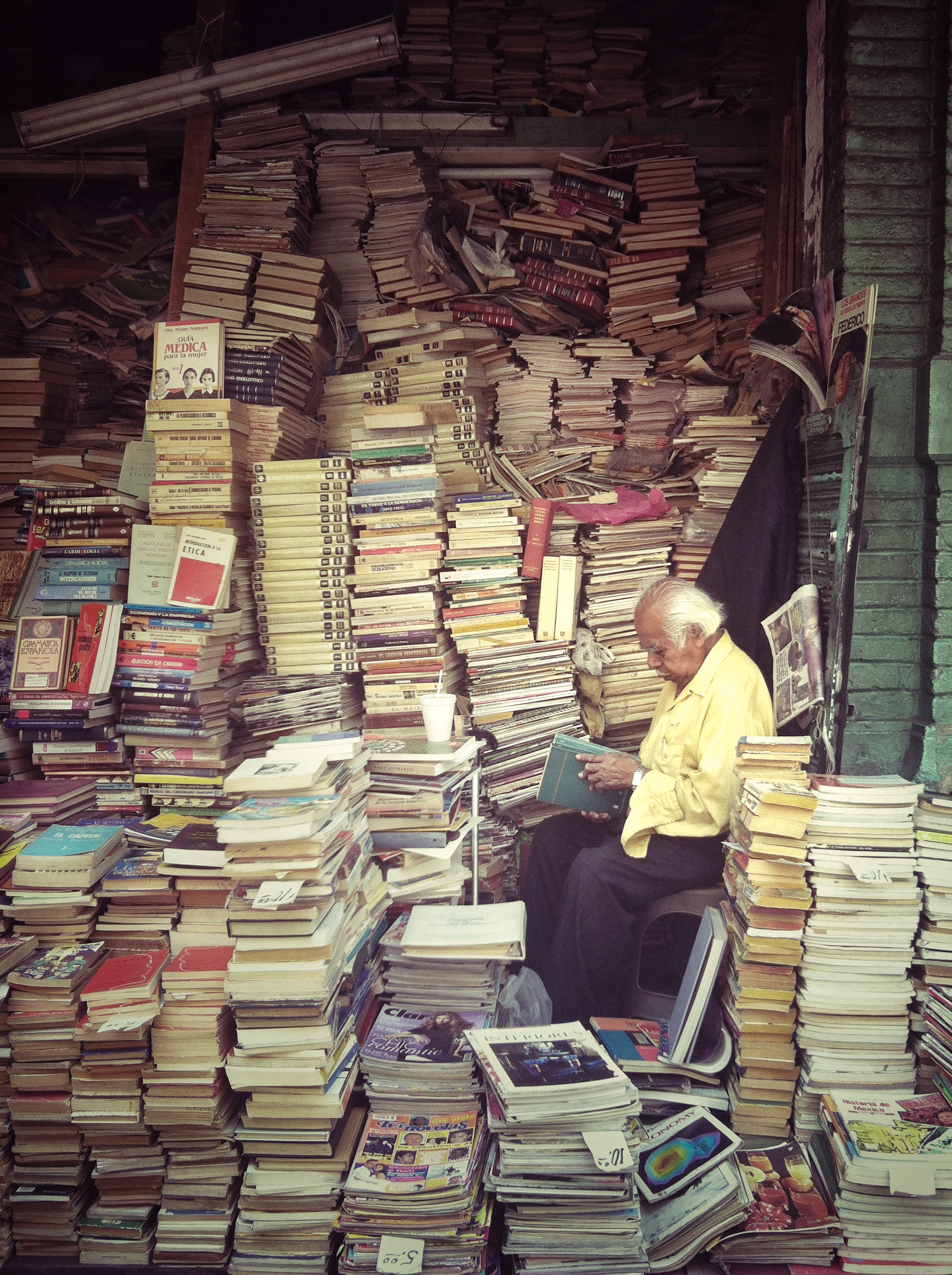 What follows are the 20 favorite books that helped shape the way I think and write. It was hard to limit the list to twenty, and the only way I could do so was by including only one book per author, and by excluding works of poetry, and two foundational (religious) books, all of which I may write about in future posts.
But the twenty remaining are significant. I’ve listed them–more or less–by when they first appeared in my life, starting with fiction and moving to non-fiction: memoir, science, and philosophy.
- Fairy Tales, by Charles Peuralt and the Grimms Brothers – I grew up on fairy tales and came to love these stories, which speak in deeply moving ways of what it means to be human. Not surprisingly these stories seemed to rise in slightly different forms all over the world. They illustrate the archtypes that Carl Jung writes about and point toward a collective human consciousness. A few of my favorites were Beauty and the Beast, Rapunzel, and The Snow Queen. As an adult, my love of fairy tales is satisfied by such books as The Bloody Chamber by Angela Carter (a darkly sensual retelling of the old fairy tales) and more recently The Snow Child by Eowyn Ivey (a retelling of that classic fairy tale, as experienced by homesteaders in 1920 Alaska.)
- A Wrinkle in Time, by Madelien L’Engle – As a child, this classic was my all-time favorite. It introduced me to the genres of science fiction and fantasy, and inspired me with the subtle elements of spirituality woven throughout. It also spurred my interest in physics and astronomy, and how all these things can be drawn together and brought to life with lively characters and a riveting plot.
- Lord of the Rings, by J. R. R. Tolkien – This trilogy by a master story-telling creates a fantastical world that has the gravitas of myth and lore. Humble, flawed, impulsive, and heroic characters are set upon a rousing adventure full of pitfalls and setbacks, in their quest to overcome evil and save the world. It both delighted me as a reader and instructed me as a writer. I haven’t read anything quite like it until recently, reading the Game of Thrones series by George R. R. Martin. This series doesn’t measure up to the Lord of the Rings as literary fiction, but it does surpass it in terms of gritty reality, sexual exploitations, and characters with fatal flaws–literally.
- The Bear, by William Faulkner – This is one of several linked stories in Faulkner’s book Go Down, Moses. It’s one of his most spiritual stories and the one most anthologized, about a boy coming of age in the wilderness and his hunt for the legendary and mythical Bear. I found how Faulkner depicts nature as a powerful, mystical force mesmerizing, as I did the structure of his sentences. I love how his long, sensuous, prose that wraps around itself, and takes you, phrase by phrase, to a deeper and more profound meaning. Reading Faulkner trained my ear for other seductive writing styles and stories, such as those by Toni Morrison and Gabriel Marquez.
- The Beast in the Jungle, by William James – This is another short story, a novella actually, that deeply impacted my taste in literature, for writing that is dense and complex. I found the way he deeply probes the human consciousness and shifting perceptions using an unreliable narrator fascinating. His writing was a major influence in the works of the next writer on this list, Virgina Woolf.
- To a Lighthouse, by Virginia Woolf – I love her lyrical prose, the way she uses stream of consciousness to move the narrative, and the fact that so much can be revealed so quietly and subtly when writing about an ordinary day, ordinary lives. I agree with Eudora Welty when she wrote how this book is “beyond being about the very nature of reality, it is itself a vision of reality.”
- Song of Solomon, by Toni Morrison – I was blown away by this novel, the beauty and lyricism of the prose, the intensely passionate and quirky charactors, and the magical realism that is woven throughout. I also loved her novels Beloved and Tar Baby. More than any other writer, I think the depth and beauty of her prose is what I aspire to. Reading her books led me to the works of Gabriel Garcia Marquez, his short works as well as One Hundred Years of Solitude, which easily could have been included as one of my top 20’s.
- Bellefleur, by Joyce Carol Oates – I had read many of Oates’ dark, often violent short stories with a strong psychological bent. And I know these influenced me – some of my short stories are dark and deeply psychological. But I found Bellefleur, which is written in a completely different style, spellbinding. Here she marries gothic romance with magical realism, and it’s so over the top, and written with such rich and luscious prose, such depth and sensuality, that it is a delight to read.
- Passion and Other Stories, by Isaac Bashevis Singer – I fell in love with these stories set in Eastern Europe about Yiddish-speaking Jews. While rooted in realism, these stories of unique characters and situations have subtle elements of magical realism and an undertone of spirituality. While not well-known today, Singer won the Nobel Prize for Literature in 1978.
- War and Peace, by Leo Tolstoy – For all of its length and complexity, this novel is easy reading because it sweeps you away with the mastery of great story-telling. Reading Tolstoy, I feel I am sitting at the knees of a master writer and drinking up all I can learn.
- Notes From Underground, by Fyodor Dostoevsky – Another book I was blown away by, but in an entirely different way than the others. I’d never met a character or heard a voice like the narrator of his tale, who displays a kind manic, depraved perversity and woundedness. Doestoevsky intimately and devastatingly dissects the inner life of a man on the verge of madness. He reveals that kind of humiliation and masochistic tendency that haunts our worst nightmares.
- Tropic of Cancer, by Henry Miller – This fascinating novel is based on Miller’s own experiences living in Paris in the late 20’s. It’s about an artist seeking to live a rich and authentic life under dire conditions. This narrator, like Doestoevshy’s, writes about the humiliations he suffers and his own woundedness, but unlike the other character, he rises above it—he yearns for transcendence. This novel reads in part like a memoir with sketches of important writers and artists living in Paris at that time, and also contains long sections of stream-of-consciousness with poignant, luminous passages. When it was published in 1934 it was banned in the US for its erotica. When finally published here in the 1961, it sparked a controversy that ended in a Supreme Court ruling that extended free speech to include literature.
- At Play in the Field of the Lord, and The Snow Leopard, both by Peter Mathiessen – I couldn’t decide which book to include, both were so influential. I read At Play first, a novel set in South America about two degenerate pilots, two missionary families, and a tribe of natives on the verge of extinction. The second is a memoir about Mathiessen climbing the Himalayas in search of the elusive snow leopard. It’s also a meditation on the death of his late wife, and about his pracice of Zen Buddhism. Both books are great adventure stories that look deeply into the meaning of life, the natural world, and the human heart.
- Zen and the Art of Motorcycle Maintenance, by Robert M. Pirsig – This was an immensely popular “culture-bearing” classic from the seventies. It had been rejected 122 times before finally finding its way into print, and immediately became a best seller. And for good reason. Like “The Snow Leopard,” it is part memoir –a father-son road trip, part meditation on the meaning of life (the author calls it “an inquirey into values”), and part instruction manual on how to practice Zen through the art of motocycle maintenance. A heavy and heady road-trip indeed.
- Cosmos, By Carl Sagan – Another heady and heavy road-trip—through the Cosmos this time. His series inspired a keen interest in astronomy and cosmology, and enabled me to see how science, too, can help us explore the big questions about what it means to be human.
- The Lives of a Cell, by Lewis Thomas – Where Sagan was exploring the outer universe, Thomas explores the universe of earth, which he compares in all its complexity to the beauty of a single cell. Writing as a biologist, his essays ramble from field to field, with meditations on such diverse topics as music, death, language, medicine, insects, and computers. Each essay always brings into juxtaposition seemingly dissimilar items, revealing surprising relationships and shedding light on the human condition and the nature of reality.
- The Tao of Physics, by Fritjof Capra – The book copy describes this as “a pioneering book” that “reconciles eastern philosophy and western science in a brilliant humanistic vision of the universe.” An apt description. This book took me on another adventurous road-trip, this time into the tiniest realms of the universe. It awakened in me a keen interest in quantum physics and the latest discoveries of science, which I’ve been exploring (as a layman) ever since. James Gleick’s Chaos: Making of a new Science, M. Mitchell’s Complexity: The Emerging Science at the Edge of Order and Chaos, and Leonard Shains’s more cross-disciplinary Art & Science: Parallel vison in Space, Time & Light are a few examples of influential books that followed.
- The Prophet, by Kahlil Gibran – I read this as a teen, and it began a life-long interest in philosophy, eastern spiritual practices, and the possibility of creating an artful life. It was written by a Lebanese artist and philosopher as 26 prose poems, each a meditation on such topics as joy and sorrow, good and evil, beauty, pleasure, marriage, children, and so much more.
- An Introduction to Zen Buddhism by D. T. Suzuki, Forward by Carl Jung – This book introduced me to two great thinkers, Suzuki and Jung, and a new way of thinking. It was hugely influential. Suzuki was born in Japan and trained as a Buddhist disciple at a Zen Monestary. He wrote extensively on Zen and was credited with bringing Zen to the West. I went on to eagerly read (and study) several more of his works, including his Essays in Zen Buddhism. I’ve never read another book on Zen that comes close to his works in depth and clarity. Another favorite, however, is Alan Watt’s The Spirit of Zen. The foreword to Suzuki’s book also led me to read Jung’s The Archetypes and the Collective Unconscious, and Bill Moyers’ interviews with Joseph Campbell in The Power of Myth. Both hugely influential.
- Creativity and Tao: A Study of Chinese Philosophy, Art, and Poetry, by Chang Chung-yuan – I ran across this in a used book store when I was a young woman. I read it to tatters along with several other copies I bought to replace it—that’s how much I love this book, and how often I study and meditate upon it. It’s the kind of book you can read over and over and gain new inspiration and understanding with each reading. It sparked a keen and enduring love of art, and threw new light on the creative process–where it comes from and how it is manifested in art and the written word. It deftly weaves together and brings to a profound point some of the great loves of my life: Poetry, Art, Philosophy, and Spirituality.
Have you read any of these books? I’d be really interested in hearing your comments on them. I’d also love to hear what books influenced you the most.
Discover more from Deborah J. Brasket, Author
Subscribe to get the latest posts sent to your email.

Nos. 2 and 18 are right up there for me also:).
LikeLike
I think Wrinkle in Time is a favorite of a lot of people. Strange, I never did read the other books in the series though. Not sure why not. How about you?
LikeLike
I love your list, but other than number one my list would be completely different and also I would choose different books from some of these authors.. Like. Crime and Punishment. Beloved. Absalom, Absalom.
LikeLike
I’d love to read your list sometime. Most of these books I read a long time ago, but they had a deep impact on me. I wonder if I read them again, would they do the same? Beloved is one of my very favorite books and I could have put it first–but a read Song first, so the greatest impact hit me there. I tried C&P once but couldn’t get into it, and sad to say, haven’t read Absalom! I think I need to put it on my list.
LikeLiked by 1 person
I am grateful you shared your list with us. I would like to read some of the items you mention. I have always found it incredibly fascinating why people are captivated by particular books. I may even think of writing a similar post – thank you for a brilliant idea.
LikeLike
I hope you do write a post about your most influential. I love reading about books people love.
LikeLike
thanks for the post of all these wonderful books.Some I have read and others I had wanted to but never seem to find enough time. But now you have motivated me again to try and read more.I took 3 titles from your list and will add them to my “try to finish by” list for the new year and see what happens…thanks for sharing
LikeLike
Which 3 did you chose? I’m curious now.
LikeLike
Ok I have chosen to add to my reading list…Cosmos by Carl Sagan…..Tropic of Cancer by Henry Miller……and Go Down Moses by William Faulkner… I have read some of the other Faulkner books but not that one.I have always found him to be inspiring so this just reminded me to read more of him books. I also have heard so much about Carl Sagan over the year that maybe it is time to see what he is all about. thanks again Jolynn
LikeLike
Good choices. Thanks for sharing Jolynn. Hope you enjoy them as much as I did.
LikeLike
Great list. Although I have only read seven on the list, I am familiar with almost all. BTW – I recently picked up a copy of Wrinkle in Time done as a graphic novel by Hope Larson. I am really looking forward to that. Cheers!
LikeLike
Thanks Jeff. How interesting about the graphic novel. Let me know how it is.
LikeLike
Deborah: Many on this list I have read and agree on your choice…many I’ve not and will explore them based on your rec.
I have to comment on M. L’Engle: I love her books! Have you read her non-fic? For me, she is the Willa Cather of the mid-20th Century…(Ahem-plug for My Antonia!)
peace
LikeLike
That’s interesting, Laura, your seeing L’Engle as Willa Carter of 20th c. Now I do want to read more of her work. Which books would you recommend I look at first?
LikeLike
I think the Cather connection has to do with her being grounded in the ‘place.’ Not so much as a social thing (ie-how southern writers wield their craft) but the depth of character as earthy as the environment in which that character lives and breathes.
That said, the one non-fic I remember absorbing is: “The Rock That Is Higher.” Connecting a sense of place creatively as well as spiritually and yet grounded in the Now of life…
BTW: I read the entire ‘Wrinkle in Time’ series as a college student during my work-study hours in the education library (during the lulls!) 😉
Thanks to your post, I’ll be re-reading both Cather and L’Engle in the weeks to come!
peace
LikeLike
We have many common books and authors, including Wolfe and Morrison. And I was so happy to see Zen and the Art of Motorcycle Maintainance! So good to know that stpry by Pirsig has hit others like myself. No winder you and are drawn to each other. Thanks for the list, and some new reading leads. Passing this on.
LikeLike
I agree–like minds and all that. I’d love to see your list sometime! Maybe for an upcoming blog post?
LikeLike
You are actually the first person I have found that shared the same esteem for #17, The Tao of Physics-it is on my top ten list as well. Sharing a top 10 or 20 in your case list is a brilliant way to recommend great books or (re)discover books worth reading at any stage in life.
LikeLike
I’d love to see the rest of your top-ten list. I have Capra’s “Web of Life” too, also very good. I haven’t read his most recent ones thought. Might be worth a look.
LikeLike
O my god ! and how may you find a book ???????
LikeLike
Fairy tales have also made a huge impact on my writing. They inspire me all the time. 🙂
LikeLike
I love the illustrations found in some of the old tales and started a Pinterest Page to collect them. Somehow FT seem inscribed in my psyche.
LikeLike
The title of your post intrigued me and I was anxious to see if I’d read any of those you listed. I admire your writing, but even more the thoughtful way in which you share your thoughts and words.
Alas, while Beloved is on my list of books to read, other than fairy tales, the only thing I have read is Tolkien. Perhaps if I hadn’t read The Hobbit and the Trilogy 6 times, I would have had time for other books 🙂
I’ll save this list!
LikeLike
Thank you LB. A love of Tolkien–that’s a huge connection. I imagine if we listed our top 100 we’d find more.
LikeLike
This is a great list. I’ve only read a handful of them, so now I have a few more to go looking for. 🙂
LikeLike
Zen and the Art of Motorcycle Maintenance has definitely been an influential book for me! I think you’ve come up with a fantastic list here. I feel like this is a great place to recommend a very interesting book I just read called “The Bible of Mithra: A Book of Clarity” by Andre Atabaki (http://www.persianastrology.com/). This book is a perfect example of the quality you can get when an author truly loves and immerses themselves in the subject matter of their book. At first it was a little over my head, but I quickly settled in to the book and the author did a great job of helping me to understand the profound concepts introduced here. The books main focus in on exploring your consciousness and overcoming obstacles in order to realize a higher level of spirituality and peace. I have always been a spiritual person, and am very open minded when it comes to expanding my mind and consciousness. This book will leave you with thoughts and strategies that you will carry with you for a lifetime.
LikeLike
Thanks Stacey. I’ll check out that book.
LikeLike
I’m so happy to have discovered your blog! Several books you list as significant to you are also on my list, Zen and the Art of Motorcycle Maintenance for one. I read this as well as the Iliad and other greats when I was recovering from a double compound fracture to my leg when I was 18. It helped keep me sane.
LikeLike
I’m glad you did too! It’s been a long time for me too since I read Zen and the Art of MM. It might be time to reread it.
LikeLike
I love Suzuki and Jung. I discovered Jung much earlier in life, only came to Zen at around age 50. Loved, loved, loved The Snow Child. The Snow Leopard – superb – a book to read again and again. I am looking forward to dipping in to Creativity and Tao. Thanks for this important list, Deborah.
LikeLike
Valorie, I’m sure you will love the Creativity and Tao book too. I think you and Claire may have been the ones who brought The Snow Child to my attention. If so, many thanks.
LikeLiked by 1 person
Hi, Deborah. I thoroughly enjoyed this blog, what a grand list. I agree with everything you say about The Tropic of Cancer – it appears in a recent list I made of my top twelve influential books. I enjoy a lot of Henry Miller’s work, his essays as well as his novels. Pirsig’s Zen and the Art of Motorcycle Maintenance was on the recommended reading list for my degree course in photography during the 70s, good to be reminded of it. The very excellent Angela Carter gets a mention, too; one of her early novels, Heroes and Villains had a big impact on me as a schoolboy. I have recently acquired a copy of Notes From the Underground and have yet to read it properly; your post has reminded me to do that soon. Best wishes and keep up the good work.
LikeLike