
Tags
fiction, literary themes, literature, loss and desire, Meditation at Lagunitas, Novel, poetry, Psychology, writing, writing process
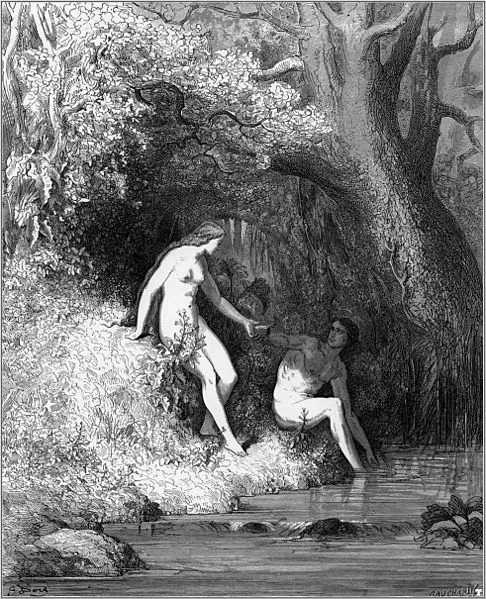
Loss and desire–these are the themes that run through so much of what I’m compelled to write about in my fiction. No doubt because they are the great themes running through all the arts, through myth, religion, psychology–through life itself.
The poem below captures that so eloquently.
Meditation at Lagunitas
By Robert Hass
All the new thinking is about loss.
In this it resembles all the old thinking.
The idea, for example, that each particular erases
the luminous clarity of a general idea. That the clown-
faced woodpecker probing the dead sculpted trunk
of that black birch is, by his presence,
some tragic falling off from a first world
of undivided light. Or the other notion that,
because there is in this world no one thing
to which the bramble of blackberry corresponds,
a word is elegy to what it signifies.
We talked about it late last night and in the voice
of my friend, there was a thin wire of grief, a tone
almost querulous. After a while I understood that,
talking this way, everything dissolves: justice,
pine, hair, woman, you and I. There was a woman
I made love to and I remembered how, holding
her small shoulders in my hands sometimes,
I felt a violent wonder at her presence
like a thirst for salt, for my childhood river
with its island willows, silly music from the pleasure boat,
muddy places where we caught the little orange-silver fish
called pumpkinseed. It hardly had to do with her.
Longing, we say, because desire is full
of endless distances. I must have been the same to her.
But I remember so much, the way her hands dismantled bread,
the thing her father said that hurt her, what
she dreamed. There are moments when the body is as numinous
as words, days that are the good flesh continuing.
Such tenderness, those afternoons and evenings,
saying blackberry, blackberry, blackberry.
So much here resonates with me:
- how “each particular erases the luminous clarity of a general idea,”
- how each particular presence is “some tragic falling off from a first world of undivided light,”
- how “a word is elegy to what it signifies,”
- how “desire is full of endless distances,”
- including “the moments when body is as numinous as words.”
I wrote a series of blog posts several years ago about how these themes are developed in Milton’s Paradise Lost, Wordsworth’s Prelude, and Lacan’s Mirror State, starting with Some Tragic Falling Off into Difference and Desire.
I wrote in Our Quest for Wholeness:
Writers of fiction know that to create a compelling story that keeps readers turning pages we must:
- Create a protagonist with an overarching need or desire (derived from some sense of loss, of being wounded, or incomplete)
- beset by constant conflict that intensifies and delays achievement of that desire (to gain what was lost, find healing or wholeness)
- until that need or desire is eventually realized (or not), but either way,
leaving the protagonist in a better place (happier, wiser, more whole) than where she had been before the story began, - having learned something important or significant about herself, the world she lives in, or what it means to be human.
What drives the story and develops the character is a quest to return to wholeness, to regain what was lost. But what is regained is never simply what was lost, but “something more.” Some new realization– wisdom chiseled from the hard knocks and setbacks of a difficult journey, insights into human nature that will light her path moving forward.
Perhaps we find these stories so compelling because they parallel our own psychic development from the womb to maturity and beyond.
I should not have been surprised when rereading and editing my novel From the Far Ends of the Earth to find these themes repeated in each character’s journey from loss and desire to the search for “something more.”
But I was surprised. Perhaps even as we all are surprised to find it running through our own personal history and journeys. We are so close to it that even while we know it is there, we miss it in the particularity of the moment, in the ordinary humdrum of each day. We have to step back, way back, to see it, the path behind and before us. Even then, which fork will we take next? Which way will our lives unfold? It’s all part of the mystery of being–even being ourselves.
Do you see any of these themes playing out in your life or your creative artwork?
Discover more from Deborah J. Brasket, Author
Subscribe to get the latest posts sent to your email.

Deborah I saw these amazing sites. 👏 Anita
LikeLike
So happy to hear!
LikeLiked by 1 person
Yes, definitely a relation between particular or more momentary conflict states and the existential condition od working towards a feeling of wholeness in life and beyond, usually without a map. I see all revelations I come across in my poetic stuff as a kind of next step resolution of some baffling or haunting mystery connceted with a past occurence and memory. I see my essays as more of a less personalized striving towards articulating truths in new forms which escaped my capacity earlier in life… and often this happens because I let something go, a personal element, to see more completely. But new questions always arise. A conclusion feels healthy to me if and when it opens up new avenues for inquiry and self-work.
LikeLike
I love what you say here and agree. This especially: “I see all revelations I come across in my poetic stuff as a kind of next step resolution of some baffling or haunting mystery connceted with a past occurence and memory. I see my essays as more of a less personalized striving towards articulating truths in new forms which escaped my capacity earlier in life.” I see things that way too, and what I try to do in my own writing. And agree, that what I often discover “opens up new avenues for inquiry and self-work. Thanks so much for reading and sharing your response. It means a lot to me.
LikeLiked by 1 person
welcome as always.
LikeLike
In “Little Gidding” T.S. Eliot offered one take on this:
“We shall not cease from exploration
And the end of all our exploring
Will be to arrive where we started
And know the place for the first time.”
I first came across those lines in the late 1960s, when I found them quoted in John Fowles’s novel The Magus, a tour de force that embodies your four bullet points.
LikeLike
You are so right, Steve, those lines do sum up all I was writing about. Interesting that you found it in The Magu. I read that soooo long ago and remember it made a strong impression on me at the time. May be time to read again!
LikeLike
If you do reread The Magus, be aware that Fowles came out with a revised edition a decade after the original version got published.
LikeLike
In answer to your question: always. It’s the human story. And I wouldn’t be alone in believing that the choice to come into human form is a choice to experience lack and longing, to embark on that particular hero’s quest, to leave home in order to find it and return there with gifts. Wonderful, thought-provoking post, Deborah! Thank you!
LikeLike
Thank you, Camilla, for this thought-provoking response. “The choice to come into human form” is not something I’d considered before. But I like the sound of it, and do believe that we lived before and will live after our time on earth has passed.
LikeLiked by 1 person