Tags
art, beauty, Inspiratiion, Joaquin Sorolla, John Singer Sargent, museums, Paintings, Six Persimmons, Zen
Three of my favorite artists are currently featured at museums across the country. If you are near any of these museums, you are in for a treat. For those, like me, who can’t make it, here are samples to tempt us.
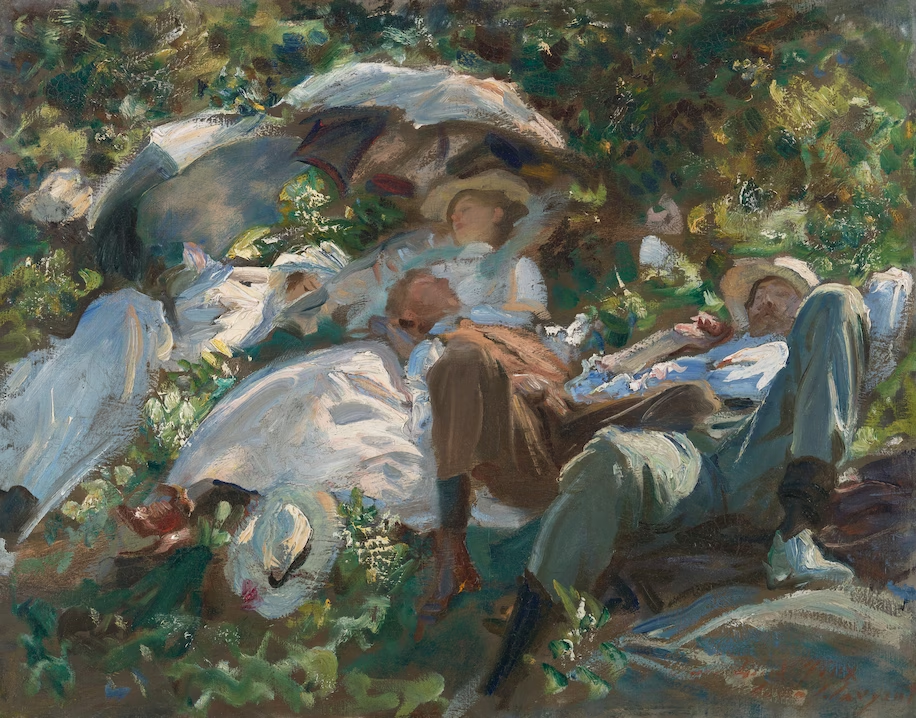
I’ve long loved John Singer Sargent’s maritime paintings and have featured some here before. His brushwork is so bold and free, so full of light and energy. This new exhibit, “Fashioned by Sargent,” at the Museum of Fine Arts, Boston, features portraits of people, some in rural settings, with the same carefree, bold and energetic brushstrokes, where the people almost disappear into their surroundings, like the one above.
But his more formal fashion portraits are absolutely stunning. The rich saturation of his colors, the delicate details of his gowns, and the sensuous facial expressions take his artwork to a whole new level.


You can read more about this exhibit and see more of Sargent’s portraits “that leave you gasping for air” in this article in the Washington Post by Sabastian Smee.
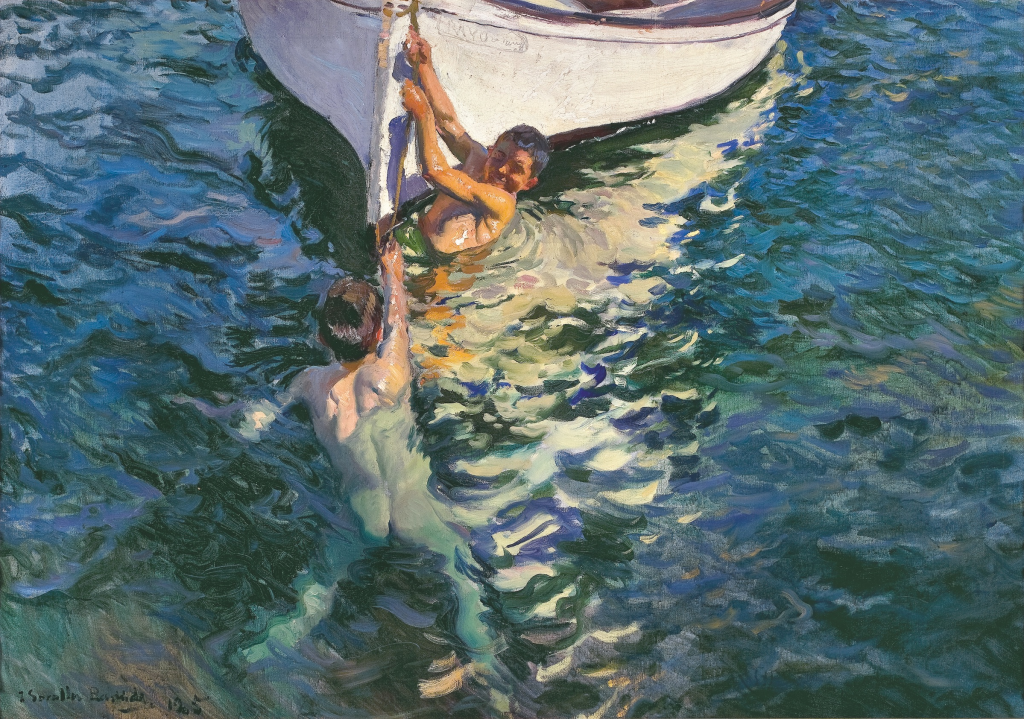
Joaquin Sorolla’s paintings are another favorite for their luscious use of light, many set by the sea, as I wrote about in another blog post: Known as “the painter of light,” his seascapes and beach scenes are drenched in a warm, buttery light, and swim with dazzling swirls of color. They evoke a dynamic sense of playfulness, as if capturing fleeting moments of the here and now, brief snapshots frozen in time.
Sorolla was Spain’s most famous and treasured artist until Picasso arrived on the scene. An exhibition at the Meadows Museum in Dallas, Spanish Light: Sorolla in American Collections presents 26 rarely exhibited paintings including the two below.

You can read more about this exhibit at Hyperallergic.
The final painting I want to share is a long-time favorite by a master artist who lived over 800 centuries ago. It is regarded as the “Zen Mona Lisa.” I discovered this painting in book worn nearly to tatters now, I peruse it so much, Creativity and Taoism – A Study of Chinese Philosophy, Art, and Poetry by Chang Chung-yuan. This ink wash painting Six Persimmons by Mu ch’i, a Zen monk, is featured on its cover.
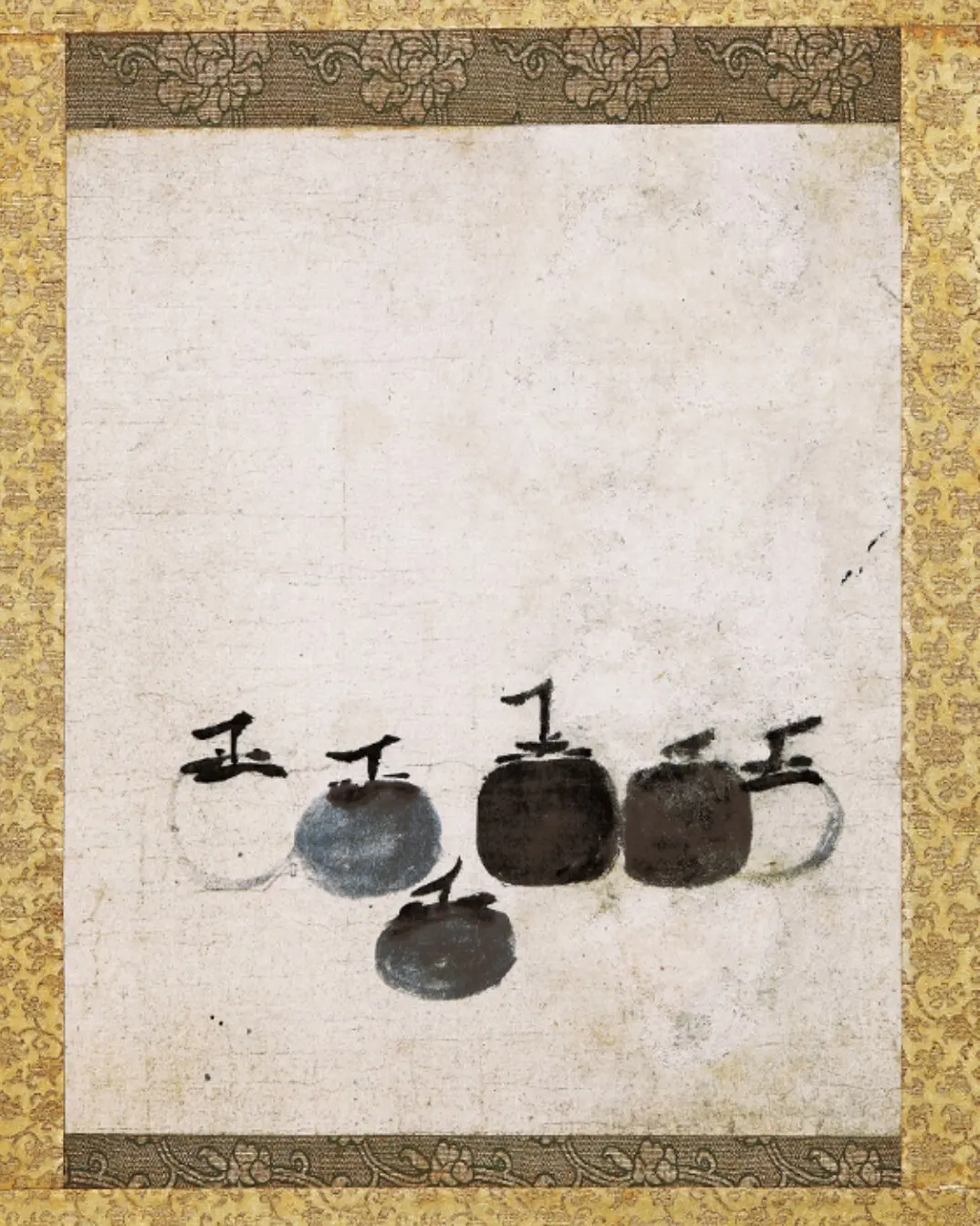
Mu ch’i was in a state of no-thought when he picked up his brush, Chung-yuan writes. The dark to gray to white contours captures the mind’s movement from creative night to creative innocence: from the “primary indeterminacy of the uncarved block to transparency.” For me, it captures a sense of simplicity and stillness, depth and weight: the airy lightness of vast space out of which the distinct weight of particularity appears and settles itself.
You can read more about this masterpiece and it’s appearance at the Asian Art Museum in San Francisco. in The New York Times. Sadly, Six Persimmons left the museum December 10, but its sister Chestnuts will be on display till the 30th.
I hope you enjoy these artworks as much as I do. Let me know if you are close enough to visit any of these exhibits.
Discover more from Deborah J. Brasket, Author
Subscribe to get the latest posts sent to your email.

All different, but each stands out in its own way.
LikeLiked by 1 person
They do indeed. Thanks VJ.
LikeLiked by 1 person
Welcome, Deborah
LikeLike
I’m not close to any of these exhibits but John Singer Sargent is one of my favorites and I’m so glad you introduced me to the latter two artists!
LikeLiked by 1 person
Thanks, Ka. It’s always a pleasure to introduce people to artwork and artists I love. I wasn’t table to make any of these either, although I’m within a day’s drive to the Asian Museum, I couldn’t make it there in time to see the Six Persimmons.
LikeLiked by 1 person
The Six Persimmons would be extraordinary to see in person! 😃
Maybe another, better opportunity will arise?
LikeLiked by 1 person
I hope so! It’s an amazing museum. I’ve spent time there before. Lots to see.
LikeLiked by 1 person
Thank you so much for featuring these artists! I am forever seeking to broaden my knowledge of all things art and art history and was delighted (and a bit chagrined) to meet these three. I should have encountered them before (and quite possibly DID but don’t remember). Thank you for posting.
LikeLiked by 1 person
I am so glad you enjoyed these artists, JT. I’m always encountering new ones that I feel I should have known before too. There’s so much wonderful art out there down through the ages.
LikeLiked by 1 person