
A Song on the End of the World
By Czeslaw Milosz
On the day the world ends
A bee circles a clover,
A fisherman mends a glimmering net.
Happy porpoises jump in the sea,
By the rainspout young sparrows are playing
And the snake is gold-skinned as it should always be.
On the day the world ends
Women walk through the fields under their umbrellas,
A drunkard grows sleepy at the edge of a lawn,
Vegetable peddlers shout in the street
And a yellow-sailed boat comes nearer the island,
The voice of a violin lasts in the air
And leads into a starry night.
And those who expected lightning and thunder
Are disappointed.
And those who expected signs and archangels’ trumps
Do not believe it is happening now.
As long as the sun and the moon are above,
As long as the bumblebee visits a rose,
As long as rosy infants are born
No one believes it is happening now.
Only a white-haired old man, who would be a prophet
Yet is not a prophet, for he’s much too busy,
Repeats while he binds his tomatoes:
There will be no other end of the world,
There will be no other end of the world.
Warsaw, 1944
The World
By Czeslaw Milosz
It appears that it was all a misunderstanding.
What was only a trial run was taken seriously.
The rivers will return to their beginnings.
The wind will cease in its turning about.
Trees instead of budding will tend to their roots.
Old men will chase a ball, a glance in the mirror–
They are children again.
The dead will wake up, not comprehending.
Till everything that happened has unhappened.
What a relief! Breathe freely, you who have suffered much.
Czeslaw Milosz (1911-2004) was awarded the Nobel Prize for Literature in 1980. He spent his childhood in Czarist Russia, watched the rise of the Soviet Union, witnessed two World Wars, working as a resistance fighter in Poland when Hitler invaded, and eventually came to the United States. He became an American citizen in 1970, living his final years in California and writing well into his 90’s. He died in his native Poland, home of my own ancestry.
Yet through it all Milosz maintained his faith as a devout Catholic, and his belief in humanity. “The act of writing a poem is an act of faith,” he claimed. In these troubled times his poetry has much to teach us. I wonder what he would think of the world today, with the new rise in the totalitarianism he escaped in Europe and the threat to Democracy in his adopted homeland.
“At a time when voices of doubt, deadness, and despair are the loudest; when writers are outstripping each other in negation of man, his culture, and nature; when the predominant action is destruction . . . . [Milosz] leads the reader to a place where one can see—to paraphrase the poet’s own formula regarding time—Being raised above being through Being.” –Krzysztof Dybciak in World Literature Today.
Just what I needed to hear this Easter morning in these troubling times.
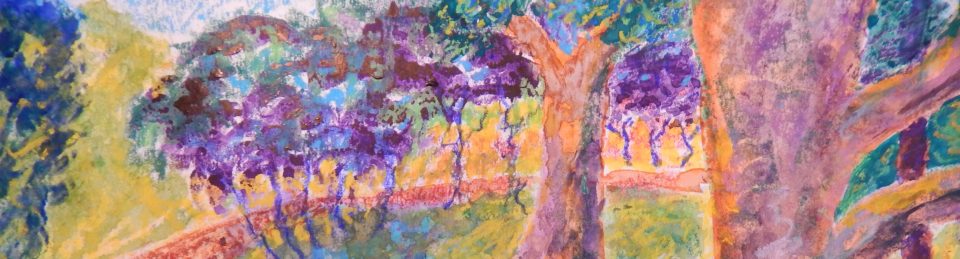
Painting by Joaquin Sorolla Y Bastida
Discover more from Deborah J. Brasket, Author
Subscribe to get the latest posts sent to your email.

Such thought provoking words. Thanks for sharing
LikeLiked by 1 person
I’m glad you liked it. This was supposed to go out on Easter Sunday, but Palm Sunday works just as well.
LikeLiked by 1 person
Worked for me today!
LikeLiked by 1 person
I love this. Touches me to the core of my being. Thank you for sharing, deborah.
LikeLike
I’m so glad, Ginny. I felt that way too when I read the poems.
LikeLike