
Tags
abstract art, art, Art + Faith, artist, Christianity, creativity, faith, Makoto Fujimuro, spirituality

“There are burning bushes everywhere, burning yet not consumed, and our lives can be just as miraculous. Our Making can be a visible marker of God’s gratuitous love.”
So writes Makoto Fujimuro in his book “Art + Faith” about what he calls a “Theology of Making.” I knew nothing about his artwork when I bought his book. But, always interested in the way art and faith and spirituality intersect, I wanted to see what he had to say.
Then I discovered his paintings and was stunned by the beauty I found.

He practices the ancient technique of Nihonga. His pigments are semi-precious stones crushed, such as azurite, malachite, cinnabar pigments, coarsely grounded. He writes:
“I use them not just because they are beautiful, which they are, but because they have this wonderful lineage. I use them because of the specific symbolism attached to them. For me, mineral pigments have significance as symbols; they symbolize God’s spiritual gifts to people and the glories of the saints in the Bible. In Solomon’s temple these precious stones were embedded in the walls as well as in the garments of the high priest. When you look closely at these paintings you see that they have a peculiar surface–they glitter and shine. Crushed minerals, therefore, symbolize gifts both from heaven and earth, and point to my deeper struggle to return the gifts given to the Creator.”

Fujimura quotes a passage from George Eliot’s Middlemarch, “If we had a keen vision and feeling of all ordinary human life, it would be like hearing the grass grow and the squirrel’s heart beat, and we should die of that roar which lies on the other side of silence.” Then he says it’s the artist’s mission to listen to the mystery of things and to be touched by the “keen vision and feeling” of God’s creation. He says, “This experience ‘of the other side of silence’ is the timeful potential of art, which is what the Greeks called kairos, an ‘eternal time.’ “

He also writes about the artist’s capacity to know “both the depths of sorrows and the heights of joy.” To “feel deeply the wounds and agony of life with its explosive potential.” To reveal “the roar which lies on the other side of silence.”
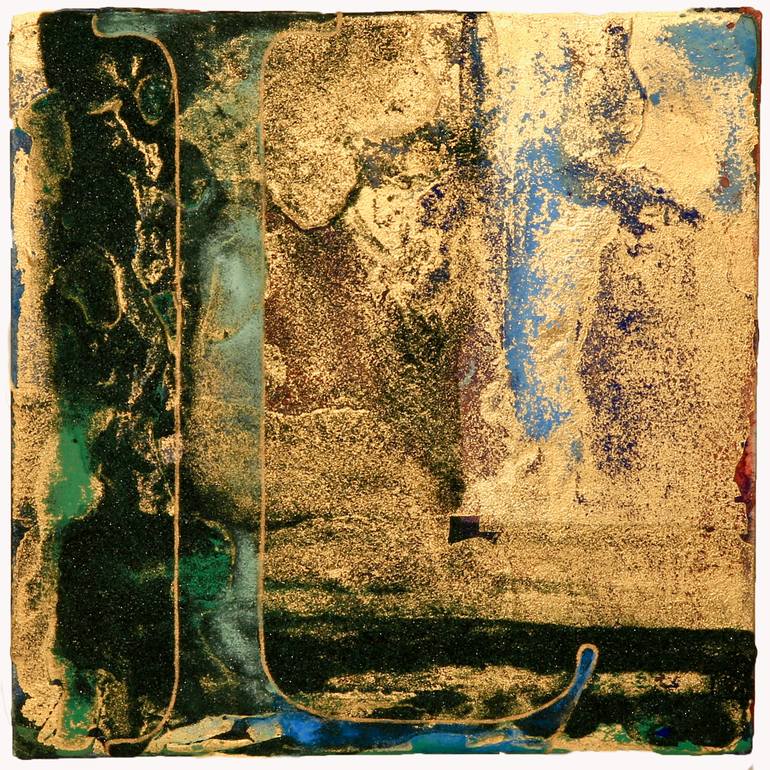
Fujimuro, in connecting art to Making, says he is broadening the word art to apply to every human being’s act of making. “We are all artists in that sense,” he says. “Let us reclaim creativity and imagination as essential, central, and necessary parts of our faith journey. Imagination is a gift given to us by the Creator to steward, a gift that no other creature under heaven and earth (as far as I know) has been given.”
There are burning bushes everywhere in our lives to inspire us in our Making, if only we would open our eyes and see. And remember to remove the sandals from our feet, for the place we are standing is holy ground.
Discover more from Deborah J. Brasket, Author
Subscribe to get the latest posts sent to your email.

Pingback: Burning Bushes Everywhere, The Art of Makoto Fujimura – Jackanori, (MPD)
Thanks for the share!
LikeLike
Wonderful thoughts. I totally get where you’re coming from. My husband and I sailed around the world in eight years in a catamaran called Pacific Bliss. I wrote about our adventures and moments of bliss in the my three books, Maiden Voyage, Sailing the South Pacific, and The Long Way Back. Now we own a one-acre reunion and nature retreat in Wisconsin we call Northern Bliss. We also live on the edge of nature. I’m writing another book: Seasons of Joy.
LikeLiked by 2 people
I’m glad you found me, Lois. It sounds like we have a lot in common. I’ll have to check out your books. Aside from a series of “sea saga” blog posts, I haven’t written much about our adventures. Although I am writing a series for middle graders about a family who goes off sailing around the world.
LikeLike
Thank you so much for this introduction! I am curious about the relationship between faith and art as well. Faith has been an emerging word in my consciousness, free and untouched from how it was used culturally growing up. Walking the path of art is not easy, nor is paving our own roads through the sometimes seeming chaos. I love the incorporation of these special mineral/crystal paints. The Art of Makoto Fujimura and writing are urging me into that silence that takes me to the sounds I long to hear most eminently—the small precious movements of life. Thank you.
LikeLiked by 1 person
I’m so glad you like his work, Ka. I’m not surprised because your blog shows so much of that intersection between art and spirituality too. The precious minerals he uses really intrigued me too. I love the way he uses them, that shimmer and shine.
LikeLiked by 1 person
Oh my goodness, I love his work! Thank you for the introduction to his process and pigments. Gorgeous
LikeLiked by 1 person
You are so welcome, Laurie! It was a pleasure to do so.
LikeLike
The colours he uses are particularly alluring. Thanks for posting.
LikeLiked by 1 person
I know what you mean. It’s always the color that draws me to particular artwork. And these are so brilliant they shine!
LikeLiked by 1 person
Thank you for introducing us to his beautiful paintings and persectives. I love the idea of life as art which we help cocreate be being willing to look, see, and feel deeply into the mysteries of life.
LikeLiked by 2 people
You’re so welcome, Brad. I love the way you put it about the co-creation going on and helping us see deeper into the mysteries of life. His artwork it quite transcendent that way and springs from his faith.
LikeLiked by 1 person
Lovely intro – his work and your excerpts appeal to me. Thank you!
LikeLiked by 1 person
It’s always fun to try to pair the excerpts with the artwork. There were so many others I could have shared. But these will do for now.
LikeLiked by 1 person
Lots to delve into in this post – my simple comment is more physical. There’s just something about using Mother Earth elements in art. One summer, I focused on pottery (put aside all public music stuff as I knew working with clay would wreak havoc with my nails). Along with delving into the clay I was briefly introduced to Raku glazing/firing. The metallics rendered stunning results, but were also very finicky…way beyond my beginner abilities!
Burning bushes indeed!
LikeLike
I’ve experimented with metallic paints in my art, and love both the glimmer and shine but also the texture, those specks of darker color you see in the wash. I’ve never worked in clay but my brother makes beautiful pottery with lovely glazes. I’ll have to ask if any are metallic.
LikeLiked by 1 person