Tags
Alcazar, Europe, History, photography, Roman Aquaduct, Segovia, Spain, travel, vacation
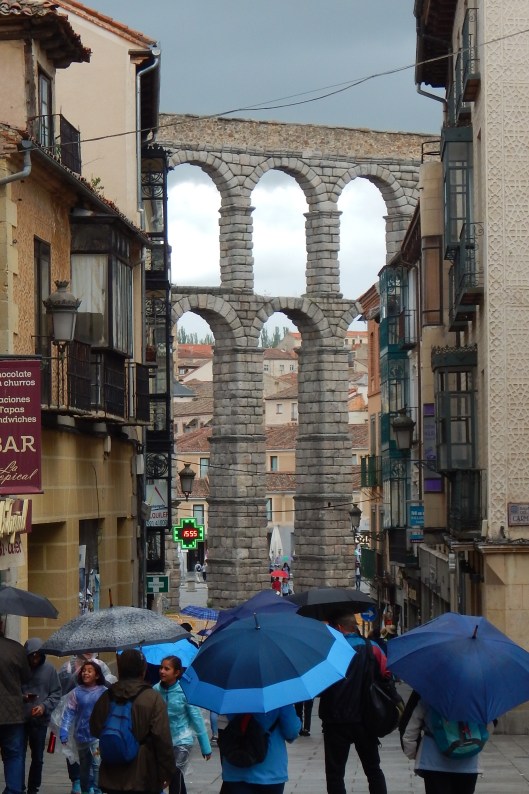
One of my favorite side-trips when traveling in Europe was the day we spent in Segovia, viewing the Roman Aqueducts and visiting the Alcazar, a 12th century castle where Queen Isabella grew up.

The Roman Aqueduct is by far the most dramatic feature of a city full of beautiful landmarks. Built in the 1st century, it rises nearly 100 feet tall and reaches over 2600 feet long, consisting of over 170 arches and 25,000 granite blocks, all built without mortar. It delivered water to the city for over 1800 years, until the mid 19th century.

The city through which it passes is a painter’s palette of raw sienna, burnt umber, and yellow ochre, stitched together with narrow streets of cobblestone and brick pavers.

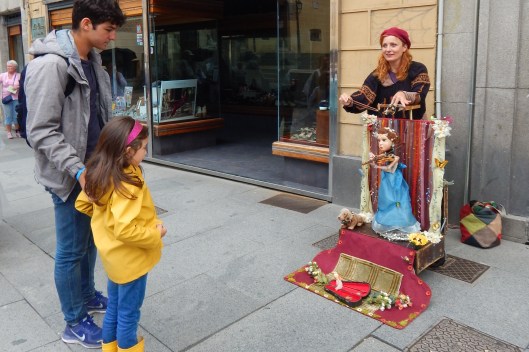
We stroll through the damp streets with the patter of raindrops on our umbrellas, stopping often to visit the quaint little shops along the way, to watch the street performers play, and to snap photos of each other.


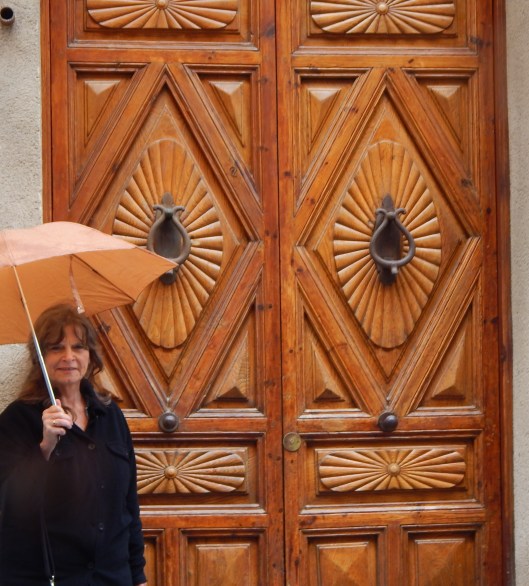
We love the ornate doorways we find, the flower-filled balconies, and richly textured walls we pass.
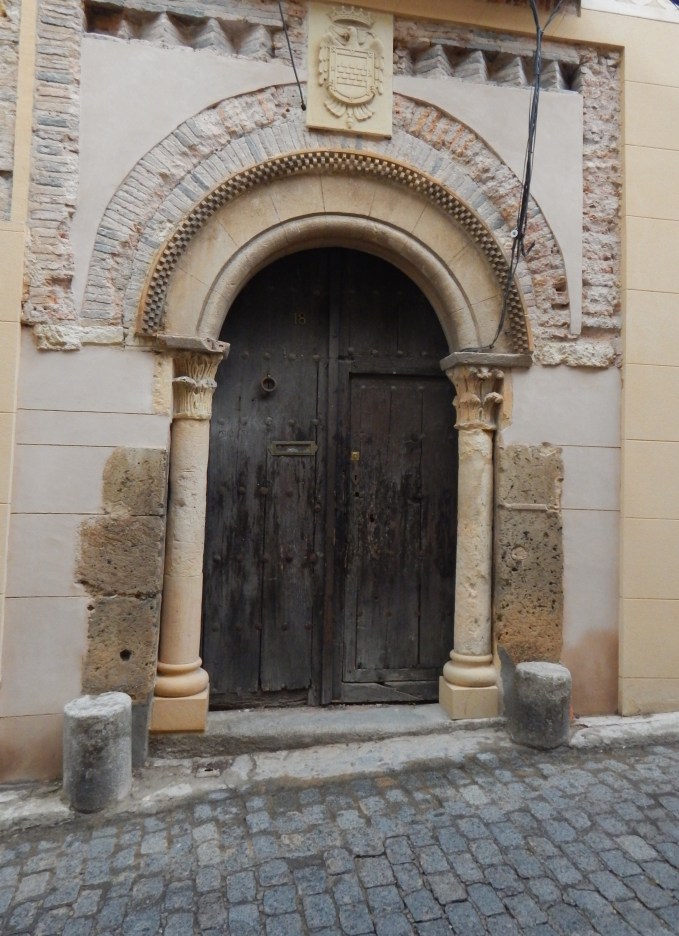
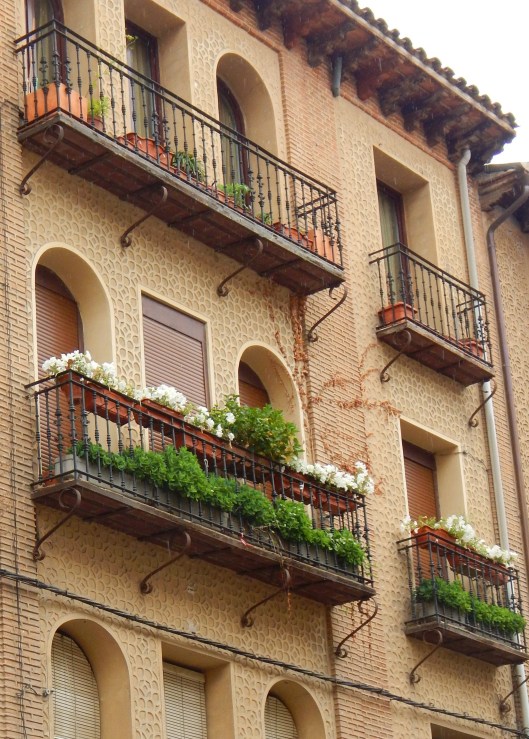

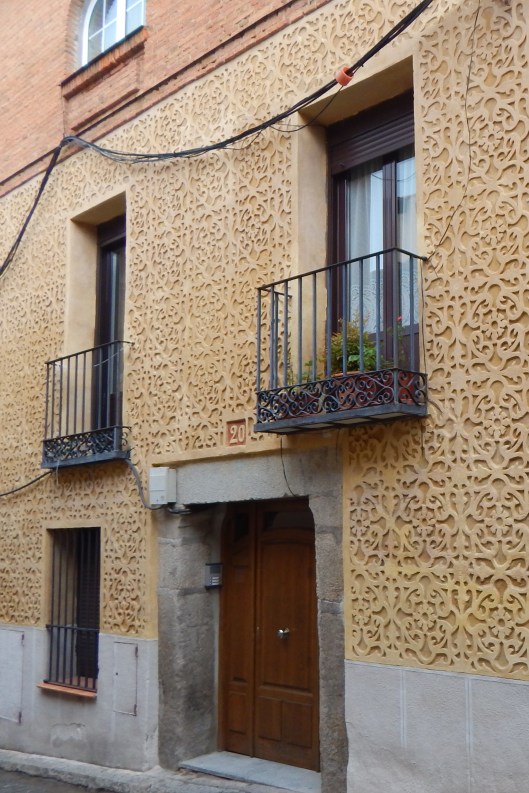
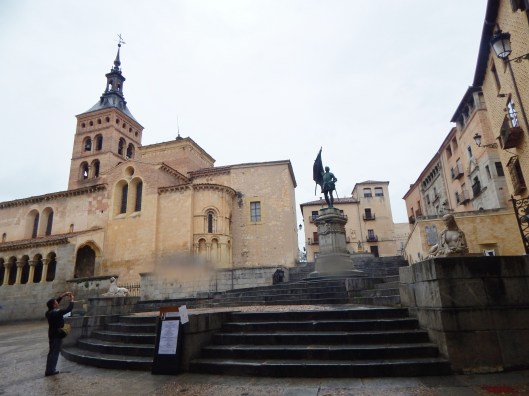
Eventually the narrow streets lead us into large plazas, as it does here before the Iglesia de San Estaban with its Romanesque bell tower, built in the 14th century.

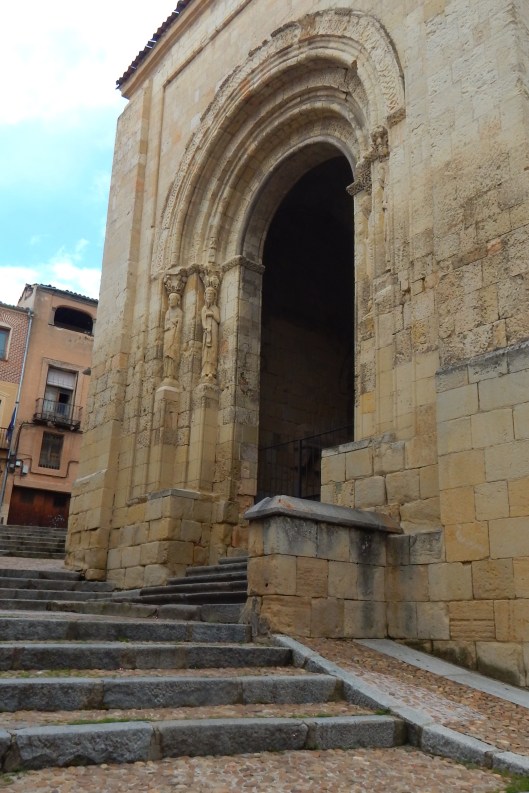
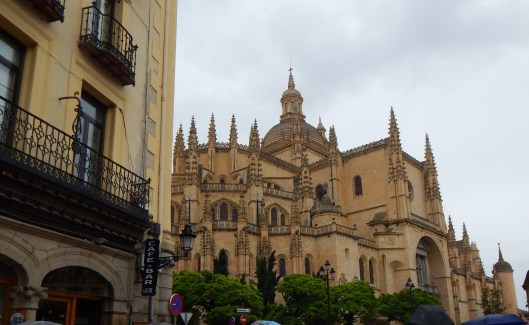
The largest plaza on our walk opens up to reveal the jewel of the city, Segovia Cathedral, built in the mid 16th century. It is considered a masterpiece of Basque-Castilian Gothic architecture and is known as “The Lady of Cathedrals.”
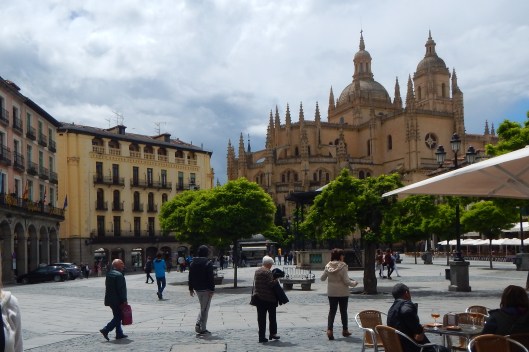
Surrounding the spacious plaza are an array of sidewalk cafes and tall, elegant buildings.


Another steep climb from the plaza leads to the Alacazar. It sits high above the city on a stony crag with steep cliffs falling to the Castilian valley below. The castle, first referenced in 1120, was a favored residence of the Spanish Royals. This is where Queen Isabella spent her youth. Where she fled with her husband Ferdinand for protection from her enemies when they were newly married. And it’s where she was finally was crowned Queen of Castile and Leon.

It’s tall towers and turrets are said to be the inspiration for Disneyland’s castle, but several other castles claim that distinction as well.
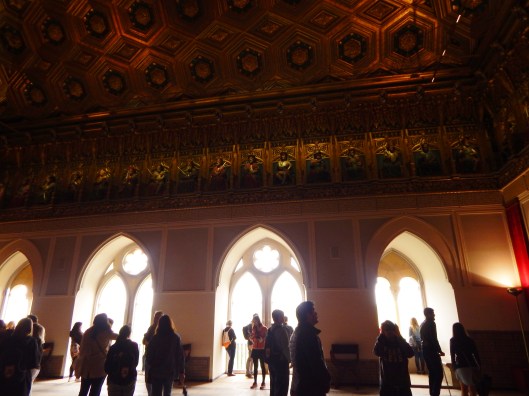
Inside the castle is a dazzling array of richly decorated halls, chapels and armories.
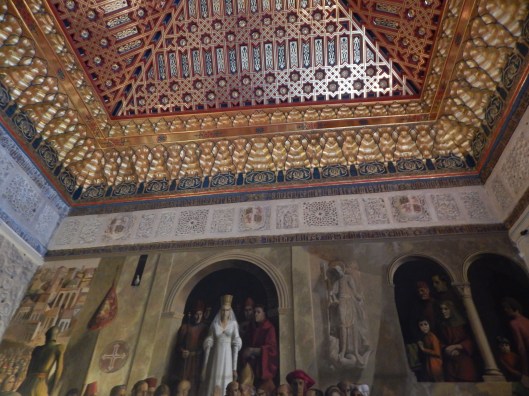


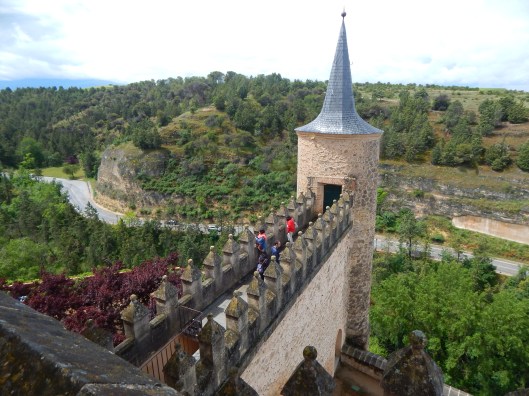
The views from the ramparts are dizzying as well as dazzling, revealing lush forested hillsides, . . .
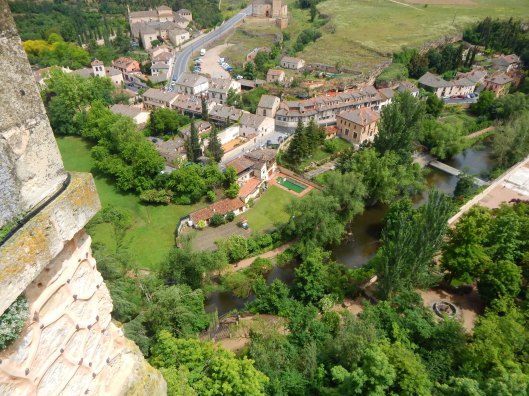
. . . fairy-tale villages winding along the riverside . . .
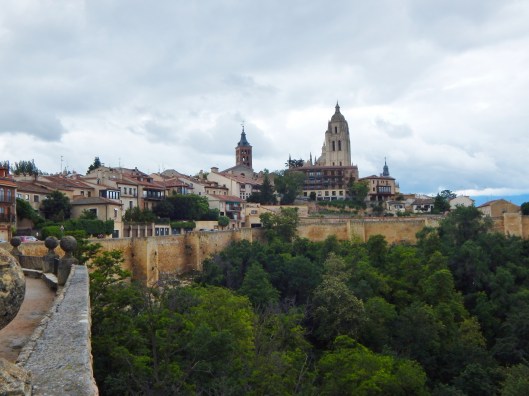
. . .and panoramic views of the city of Segovia.
Here you can see the towers of Segovia Cathedral and the Iglesia de San Estaban in the distance. Note too the ancient walls that surround the city, built before Isabella’s father retook the city from the Arabs.
I’m asked all the time which were my favorite places to visit during our 30 days of travel, but I can’t quite pin that down, there were so many. Still, when asked, Segovia always rises quickly to mind.
If you ever get the chance to visit Spain, the city of Segovia is a must-see.
Discover more from Deborah J. Brasket, Author
Subscribe to get the latest posts sent to your email.

Beauty flows throughout the images, writing and organization of this post. Thank you so much for sharing your visit so that we can enjoy this wonderous city, vicariously.
LikeLike
Thank you Catherine. I’m so glad you joined me. I would never want to travel alone. It’s so much more fun to share what delights us it with others.
LikeLike
Oh, Deborah–how wonderful! What a fabulous trip! Thank you for sharing your photographs.
LikeLike
You are so welcome, Andrea. It was fun to sort through my photos and decide which to post here.
LikeLike
Well-taken photos, and you describe the scenes so well! I can’t imagine living in fear of my enemies and having to flee to the safety of a fortress. No riches or power are worth that, to my way of thinking.
LikeLike
Thank you Lori, I agree. I just finished the historical novel “Castile for Isabella” by Jean Plaidy, telling about her early life. Reading it, one wonders whether the royals at the time had it any better than the peasants. Her younger brother and so many others had been murdered for political purposes. She half expected the same to happen to her. Instead she lived a long life with many children and accomplishing many of her goals, including creating a united Spain. It’s a good read, the first of a trilogy about her life.
LikeLike
Wow!! I am reliving my trip with your wonderful words and awesome pictures. I love seeing that grand trip through your camera pictures. Your images capture the whole essence of that rainy, yet exalted scenic day. I could never ever ask for a better traveling partner. Love your Blog! And You!!
LikeLike
I’m so glad you enjoyed this, Shelly. It is lovely being able to relive our adventures this way. xo
LikeLike
Oh yes, love your long hair!
LikeLike
Thank you, Laura. Dale is loving it too. Reminds him of when we were young, even though it was blond then and now has turned dark.
LikeLiked by 1 person
How wonderful to have history coming alive before your eyes! Such beautiful images and a tantalising travelogue, Deborah. I used to devour Jean Plaidy books as a child and vaguely remember reading about Ferdinand and Isabella. A fascinating tale. Thank you so much for sharing these scenes with us. I love how your painterly eye captures it all so descriptively and enabled you to frame the shots perfectly too. 😊💟
LikeLike
Pingback: Creative Juice #103 | ARHtistic License