Tags
art, artist, creativity, devotion, higher calling, life, purpose, Steven Pressfield, The War of Art, Turning Pro, writing
 I read Steven Pressfield’s book “The War of Art” not long ago and followed up with its sequel “Turning Pro: Tap Your Inner Power and Create Your Life’s Work.”
Both are motivational books that help artists of all stripes get serious about their work. It helps them turn the corner from being mere dabblers, dilettantes, or “amateurs” as he calls them, to becoming true “professionals,” devoted entirely to their craft.
I think I’ve been turning that corner for a while now, but the “fire in the belly” comes and goes, and I realize I’m not as seriously devoted to writing as I could be, or want to be
One of the interesting things he does in “Turning Pro” is compare the artist and the addict. The mindless and mind-numbing pleasurable distractions, along with the self-doubts and fears and life-long bad habits, are what he calls “addictions.” This could include what we normally think of as addictions–to drugs, sex, gambling, money, fame. But they also include web-surfing, working out, house-cleaning, pleasing others, a leisurely life-style, etc.
It’s all the same.They are all ways we resist devoting ourselves to the work we know we were meant to do.
Let me quote a few things he says about these addictions:
“Addictions” are not bad. They are simply the shadow forms of a more noble and exalted calling.
Addiction becomes a surrogate for our calling. We enact addiction instead of embracing the calling.
All addictions share, among other things, two prime qualities: (1) They embody repetition without progress; (2) They produce incapacity as a pay-off.
Both addicts and artists are dealing with the same material, which is the pain of being human and the struggle against self-sabotage.
Both artist and addict wrestle with the experience of exile. They share an acute, even excruciating sensitivity to the state of separation and isolation, and both actively seek a way to overcome it, to transcend it, or at least to make the pain go away.
The addict seeks to escape the pain of being human in one of two ways–by transcending it or by anesethetizing it. Borne aloft by powerful enough chemicals, we can almost, if we are lucky, glimpse the face of the Infinite. If that doesn’t work, we can always pass out. Both ways work. The pain goes away.
The artist takes a different tack. She tries to reach the upper realm not by chemicals but by labor and love.
The book is calling all the “amateurs” of the world–-those of us stuck in our distracting, mind-numbing “addictions”–-to turn “pro.” Turning pro is a mind-set. It’s embracing our higher-calling, the work we feel defines us.
It’s not an ego thing. It’s devotional. And it’s humbling. He writes:
“When [the poet William] Blake said Eternity is in love with the creations of time, he was referring to those planes of pure potential, which are timeless, placeless, spaceless, but which long to bring their visions into being here, in this time-bound, space-defined world.
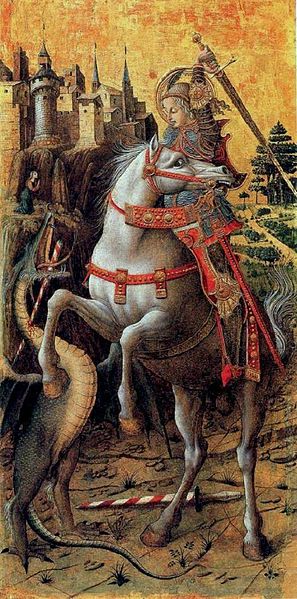
The artist is the servant of that intention, those angels, that Muse. The enemy of the artist is the small-time Ego, which begets Resistance, which is the dragon that guards the gold. That’s why an artist must be a warrior and, like all warriors, artists over time acquire modesty and humility . . . . They know they are not the source of the creations they bring into being. They only facilitate. They carry. They are the willing and skilled instruments of the gods and goddesses they serve.”
I feel I’m getting there. I feel I’m turning that corner. But I’m not quite there yet. I’m holding something back. That’s sense of urgency perhaps. That devotional state of mind. That single-purposedness.
I dreamed not long ago about a ferocious bear descending upon me, coming to grab me away from my ordinary life. I felt like I was being “chosen” for something, being taken on a journey to a higher realm. I was terrified—until I noticed the hand grabbing me was “soft,” not hard.
Am I being “softly” led away to my calling?
Or am I once again choosing the soft, easy path? S-l-o-w-l-y turning the corner, rather than plunging directly into the heat of that creative fire?
Annie Dillard, whom I wrote about recently, also spoke of the artist in terms of the devotee and the warrior:
Writing a first draft requires for the writer a peculiar internal state which ordinary life does not induce. If you were a Zulu warrior banging on your shield with your spear for a couple of hours . . . you might be able to prepare yourself to write. If you were an Aztec maiden who knew months in advance . . . the priests were going to throw you into a hot volcano, and if you spent those months undergoing a series of purification rituals . . . you might be ready to write. By how, if you are neither Zulu warrior nor Aztec maiden, do you prepare yourself, all alone, to enter an extraordinary state on an ordinary morning?
How set yourself spinning? Where is an edge—a dangerous edge—and where is the trail to the edge and the strength to climb it?
While she was referring to the state of mind needed for writing a first draft, could that not also apply to our lives as artists, activists, entrepreneurs, whatever we feel in our bones we were called to do?
Mary Oliver asks at the end of one of her marvelous poems:
Tell me, what is it you plan to do with your one wild and precious life?
Indeed, what?
And, most urgently, when?
Discover more from Deborah J. Brasket, Author
Subscribe to get the latest posts sent to your email.

As I prepare for my studio assistant to arrive this afternoon to put work in the online inventory program, write information on the back, add the hanging wire and paint the edges of each painting I know I am living my artist life as a “pro” who slices out the most creative activities for the limited time I have in this life. Now I am considering. Shall the studio assistant be given the task of painting grounds as well? Well, not today but maybe sometime in the near future. Deb, keep going! The corner may be a longer arch than expected but sooner or later you will be on the road straight ahead to your desired intention.
LikeLike
I know you are too, Terrill. Your art and the way you write about it are such inspirations to me. Thanks for the encouragement too.
LikeLike
Wow! Thank you for this post. Beautiful, good for the soul. 🙂
(and If I ask my therapist that when question he says: you are already alive. So of course I discard that message and try an oracle like I-tjing which then says; you are already alive. That’s when I swear a lot, and loud. Dunno, but it feels like it helps…. :-))
LikeLike
You made me laugh! Thank you, and thanks for coming here and sharing.
LikeLike
Hmmm. I have always related to a different definition of addiction: The constant searching for something outside yourself to change how you feel inside. I suppose artistic expression could fall into that category. At least it’s a healthy addiction… usually.
LikeLike
I think of artistic expression as coming from within the individual, not outside. I suppose it could become an addiction if it threw one’s life out of balance. Interesting question.
LikeLike
I am now treating my writer calling as a job. I have a writing space away from my home and I will go there every morning to write, starting tomorrow. I realize I must hunker down and make it happen. Because we live in a time-bound, space-defined world, I must work accordingly (while creating on those planes of pure potential).
LikeLike
Yes, that’s what we need to do, treat it as a job, our work, as well as our pleasure. I don’t have a separate space from my home, but I have an office where I go every day to write (or most days). It helps having that dedicated space.
LikeLike
This gives me a lot to think about.
LikeLike
🙂
LikeLike
Someone must have slipped me some “Tums” because the Fire in my Belly has really simmered down and I miss it. Thanks for this, Deborah!
LikeLike
You are so funny! I love the way you lighten things up. So glad you stopped by.
LikeLike
I like it! It’s telling me to stay curious and have a fluid mind. Thanks!
LikeLike
I’m glad! Thank you for reading and responding.
LikeLiked by 1 person
Thank you, Deborah. I’ve never read “Turning Pro,” but now I want to! Good food for thought!
LikeLike
It’s an easy read, Nicole. Very short chapters. Very inspiring.
LikeLike
Great post, Deborah,
I love Pressfield-which reminds me to get his book back that I lent a friend. It’s a consciousness issue first, we have to first validate ourselves and that helps us to make the turn to set up the conditions for writing success.
LikeLike
Good point, Michelle. It is a consciousness issue. Thanks for coming here and commenting.
LikeLike
“As they say in the quantum physics department, there’s no time like the present.”–Captain Janeway (one of my addictions)
Thank you for the encouragement. Just the right tone. I’m participating in a reading from one group to another tonight. My schedule is just getting to the point where I will have no longer an excuse not to write each day. Thanks for holding my feet to the fire.
LikeLike
I’m glad this spoke to you, David. Love the quote.
LikeLike
I love this! I never thought about artists as addicts, but it makes so much sense. I especially liked the Blake quote ” . . . (Artists) know they are not the source of the creations they bring into being. They only facilitate. They carry. They are the willing and skilled instruments of the gods and goddesses they serve.” Yes!
LikeLike
I love that quote too. It is how it seems to me as a writer, like I’m pulling up something already fully fleshed into consciousness, to greater or lessor degree: It doesn’t come from me, but is shaped passing through me. Thank you for reading and sharing your thoughts.
LikeLike
Thank you for sharing 💖
LikeLike