 How much of our lives do we view through a narrow lens, whether through the lens of a camera, our own limited viewpoint, or the stories we tell about ourselves and each other?
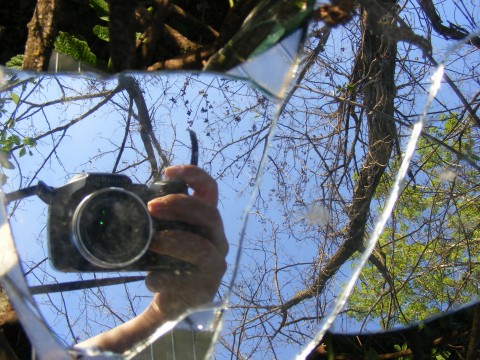
When we walk through life with a perpetual camera around our necks, we are tempted to see everything through that narrow focus, framing everything we see–the city streets, the sunsets and landscapes, the people we pass, the objects that come into view. As we frame what we see and take photos, it helps us to notice things we may have overlooked otherwise, and to see these things in a new light. It intensifies our ability to discover the extraordinary in the ordinary, and allows us to capture and preserve those visions.
But it also breaks the whole into parts, raw experience into the photo-worthy and not-so-much. We experience things not as a participant, but an observer, a spectator or voyeur at worst, a curator of the significant at best.
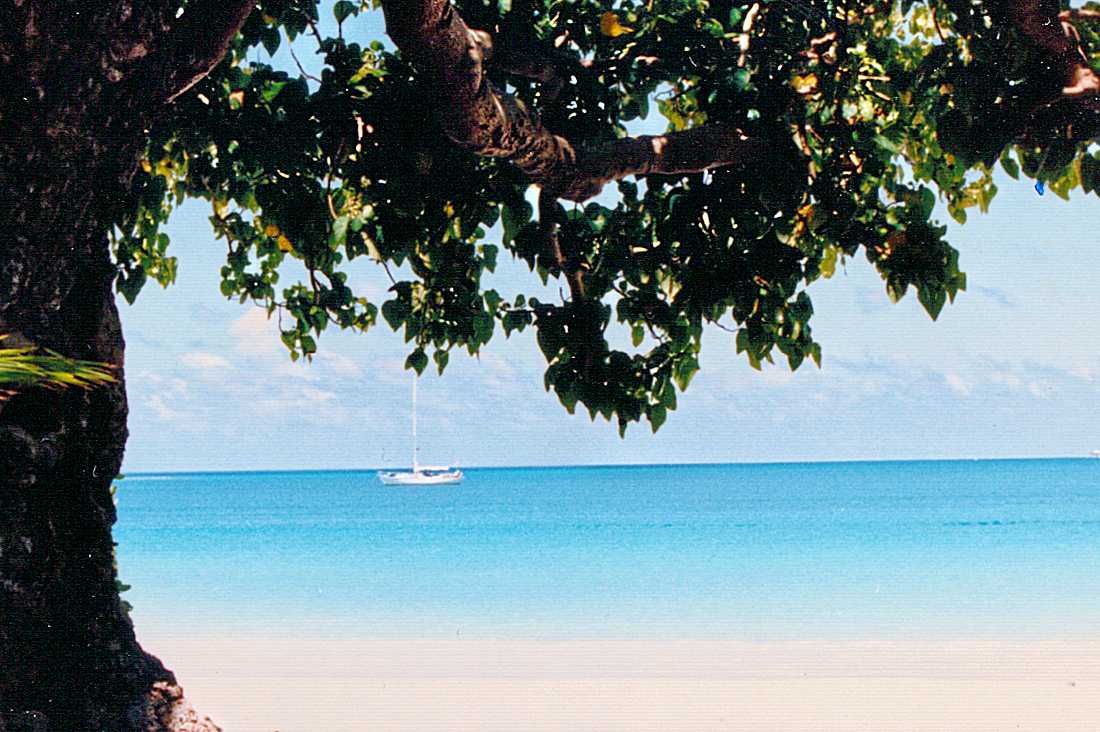 When we were sailing around the world, I wish I had done more of that capturing and preserving. There were no digital cameras then, and film was expensive and hard to store in a hot, damp climates. So now I have only a handful of photos from hikes through the enchanted valleys of the Marquesas. Three or four of our stay in legendary Bora Bora, a dozen from our three months in Samoa. Now I wish we had dozens more photos of each place to view and remember.
On the other hand, by the time my first grandchild was born we had a digital camera. Because I saw him so seldom, when I was with him I photographed him almost continuously, following him everywhere and capturing every sweet smile, every cute incident, every new thing he did.
Until I stood back one day and realized that by indulging the urge to “frame” everything for posterity, I was missing out on now, on just being with him–soaking up his presence, our time together–in the moment, raw and unfiltered.
 Now though, I do not regret all those photos I took. For I am able to relive those moments with greater clarity and in more detail that I might have been able to do so without them.
It’s all a balancing out, I guess.
As writers we do that too—viewing the world and our experiences through a mental lens, framing things for posterity, seeing images, events, interactions, as fodder for our stories. We couldn’t write without doing that, consciously, or unconsciously.
 But we have to know when to see things through the writer’s mind, as observer, spectator, curator, and when to put away that lens and become a participant in the raw experience that evolves around us. To “step barefoot into reality” as the poet Wallace Stevens once evoked.
It’s harder than we might imagine, to put away all the filters through which we experience life, and just “be” it. Life itself. Unfiltered.
LINK TO WALLACE STEVENS POEM WITH COMMENTARY
http://www.thethepoetry.com/2011/03/poem-of-the-week-wallace-stevens/
Discover more from Deborah J. Brasket, Author
Subscribe to get the latest posts sent to your email.

I think you are right, a balance is needed between photography and living life. I read a blog recently where it was told that a parent had been busy filming their child playing and then went home never having played with their kid.
LikeLike
That’s sad! But I did feel a bit like that one day following my grandson around the yard snapping up photos. I thought of how he’d remember me as this person with a camera for a face who dogged his every step. That was a wake-up call. I put my camera away for a long time after that.
LikeLike
Good action 🙂
LikeLike
I started trying to read this post and couldn’t. I couldn’t see much of it. My son gave me a pair of his once a day contacts to try as we have a similar prescription. As it’s the first time I’ve ever tried contacts I was aaaggggeeesss getting them in. So, I was determined to persist with them when I did. And the outside world opened up to me in glorious close-up. Reading licence plates of neighbours’ cars where previously only the cars could be seen.
Unfortunately, although the lenses are magnificent for long view, my short vision has gone awol.
Thankfully, an able-bodied son was on hand to correct my computer. He adjusted the vision for ‘disability’. I was then able to read your post.
I’m typing this with a distorted image and I so get what you mean.
I feel I was meant to read this post under my current circumstances. I have never been one for photographs; visual reminders being less important to me than writing about an episode.
Since joining WordPress I have been posting furiously and loving every minute of it.
Perhaps. to the detriment of actually living. So much going on inside my head that I wanted to get out there.
But, and it’s a big but, I am aware that in posting and reading as much as I have been doing. family life has been suffering by my absence from full participation.
Thank you for the wake-up call. Balance is so important.x
LikeLike
What a wonderful story! I hope your persistence was well rewarded. Yes, we need these wake-up calls. But like you, I feel there’s so much in my head that needs getting out, and sometimes I feel the attempt to do so makes the non-writing times much more rewarding as well. So glad you stopped my to read my blog!
LikeLike
I’ve just come in from a ‘date’ with my husband. And I could not persist with the contacts. Lovely to see the horizon but I could not see to read or write.
The wonderboy who adjusted the settings on my computer was called to aid the removal of the lenses. Such a wimp. Me, that is. I couldn’t get them out.
I lay back on the couch and let him get to it. Hey presto, they were out.
I have decided to stick with my glasses for driving. The rest of the world can remain a blur. I need to be able to get up close and personal with words.
So, a two – fold lesson for me here. And a lovely evening out when I decided that my laptop and WordPress could live without me for a few hours.x
LikeLike
Deborah–It was wonderful to get this post in my inbox because this is something I have thought about a lot. My husband and I don’t take tons of photos of our kids, and sometimes I feel bad about that when we are at school events and all the other parents are jockeying for position with their iPhones (and even worse, blocking everyone’s views by taking videos with their iPads). Recently, I tried filming a performance, and it ruined the experience for me. I was so focused on making sure I held the device steady that I couldn’t really focus on the experience. Have you ever read Susan Sontag’s On Photography? She wrote it decades ago, but it is exploring this idea of documenting life rather than living it.
LikeLike
So glad this resonated with you. So many of us have this quandary when it comes to trying to capture our experiences. I think I read Sontag’s piece years ago. I’ll have to revisit it.
LikeLike
I sometimes feel that way about writing too – if I’m caught up in writing a novel or stories I don’t seem to be able to hear a conversation on the bus or watch someone pass in the street without seeing it through the lens of how I might write about it.
LikeLike
Yes, I do too. Also when I’m sitting at my desk and seeing life going on behind my window while I’m tapping away on the computer. Thank you for stopping and commenting.
LikeLike
Very thought provoking, Deborah. So true. Tweeting this!
LikeLike
Thank you, Luane! Getting a twitter account is on my to-do list. I’m feeling a bit intimidated about doing it.
LikeLike
I was too, but it’s super easy to use and kind of convenient. I recommend it :).
LikeLike
Balance. Check! Now … for the follow through 🙂
LikeLike
Yes, follow-through, always the hard part!!!
LikeLike
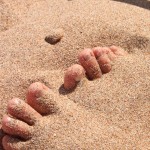
I think it’s a symptom of our times. People get caught up in the act of doing something and forget the moment they are in and sadly miss it entirely. Having said that, I did love the picture of the toes.
LikeLike
So true! Glad you like the toes.
LikeLike
The question of which moment am I in (observer : participant), is a running dialogue I have with myself, and something I’m constantly renegotiating as a blogger. I think it’s possible to be present and acutely aware in both moments (in front of and behind the camera lens), though in different capacities. A photo is the embodiment of perception, intuition and the engagement of one’s senses. To be an observer is also to be a participant—a participant in the creative process of photography. I don’t think it’s possible to create a striking photo without having a connection or emotional reaction to the subject/object. At the same time, the camera can become an obstacle or impediment to lived experience. There’s a time to put it down, to stop chronicling, to bridge the distance, to know which moment you are present in, and in which you are absent.
An insightful piece, Deborah. And something that occupies my thoughts on a fairly regular basis as someone who enjoys both photography and writing.
LikeLike
Beautifully put, Jacqueline. I think we can’t help being both, so it’s a balancing act, or perhaps a dance, a dialectic. I agree that there has to be that emotional connection and thus “participation” when involved in the creative process of photography, or any creative process that momentarily takes us out of one kind of moment into another–both equally valuable.
LikeLike
A while ago, I was busy taking pictures of my baby niece when it hit me that I should be playing with her more. Felt moments make even more precious memories. Of course, photos must still be taken when the mood swings by. Different roles at different time.
LikeLike
Yes, we have to know when to capture the memories and when to simply experience them more deeply. So glad you stopped by.
LikeLike
I often find that when I am on an adventure, I have to consciously put down the camera and experience it or I feel like I have more pictures than memories. It is a balancing act, but a wonderful problem to have.
LikeLike
I do too, now that I have a digital camera. But I have to admit, I wish I had more photos of when my own grown children were babies. We didn’t record everything then the way we do now.
LikeLike
I’m so glad that you brought this to all of our attentions. I’ve always been an avid collector of photos and my mother was the same way, until she got sick. For this, I don’t regret snapping photos of her over the years because she was such an exquisite and beautiful person. Her illness has taken a toll on her so when I show her our albums, she always appreciates those memories. However, when I see people taking pictures at restaurants with their iphones of their dinner plates or out at concerts, etc. I truly believe they are missing out on the personal and deeper connections we should be making as human beings. If you enjoy taking pictures because they move you, compel you, or simply bring you joy in your life, then go for it. But just don’t allow this hobby to take away the simplicity of how pleasurable and memorable every moment is. Great post and I love your writing!
LikeLike
Thank you so much. I agree with everything you’ve said here. Treasure those moments with your mom. I lost mine a couple of years ago.
LikeLike
Thank you for this thoughts. It touched me a lot. It is indeed interesting to see what happens when you take a certain angel in your views. I am a painter and normally I would work in an abstract way. I then paint when I have nourished myself , eaten up, swollowed, breathed in impressions that went far deeper then my eye. This time I am having an art journal and I paint realistic – a painting a day – and I look quite differently, framing nearly every view that seems attractiv to me. So this is a journey for my eyes – and it feels a bit like not being IN the situation but watching and evaluating it, while the other journeys where journeys with my heart. Nevertheless, I am very happy about a lot of fotos I took while travelling – good memories. But taking fotos just for memory was not as framing as what I do now. Gerda
LikeLike
So glad you came here and left your comment. I love what you say about having “nourished” yourself before painting. Also the differences you depict painting realistically and abstractly is quite interesting. I think there’s some similarities between writing objectively–especially nonfiction–and subjectively, as in fiction or poetry. I also love exploring the correlations between different types of creativity, art and writing, for instance.
LikeLike
When I was at Wimbledon this year there were three people sitting in front of me who were continually taking photos – of the game, of each other, of each other with the game going on in the background. At one point I just wanted to say: hey, why not just experience the moment, rather than trying to capture it. You’re right about balance – because we need a few photos to remind us, though I’ve discovered not as many as I might think because I remember a lot more than I give myself credit for. I also realised – going through old diaries for a memoir piece I was working on – that the things I remember were not in the diary, and the things I had written in the diary I didn’t remember…
LikeLike
I hear you. I’ve had similar experiences. Thank you for coming here and sharing.
LikeLike
Like many of the other commenters, I too struggle with the balance between being in the moment and capturing the moment for posterity. I spent last weekend going through some old photo albums–family photos my grandparents took in the ’50s and ’60s–and while I wouldn’t miss them if I didn’t know they existed, I am thrilled to have them. Yes, those photos reduced my grandparents’ worldview when those snapshots were taken, but I am thrilled to be able to see that world through their eyes. As we record more and more of our own reality in today’s digital world, it becomes even more important to remember to just BE sometimes . . . while keeping the camera ready, just in case.
LikeLike
You are so right. I love looking at photographs of my parents and grandparents when they were young, just to see how the house was decorated, what furniture they had, what the yard looked like, what cars were they driving. Also the clothes and hairstyles. It’s so interesting to be able to view their lives as they were then. And it helps when writing my stories too, to be able to picture that. So glad you stopped by.
LikeLike