Tags
addiction and recovery, annie Dillard quote, art, art-making, creative process, creativity, Deborah J. Brasket, fiction, novels, Quote from Tale of Genji, scrap-metal sculpture, the power of art to transform lives, This Sea Within, transformation, When Things Go Missing
Art-making has been a transforming power in my life, in my writing and poetry and paintings. Even in the artful way I display things I love around my home.
So it’s not surprising that art-making has played such a significant role in my novels.
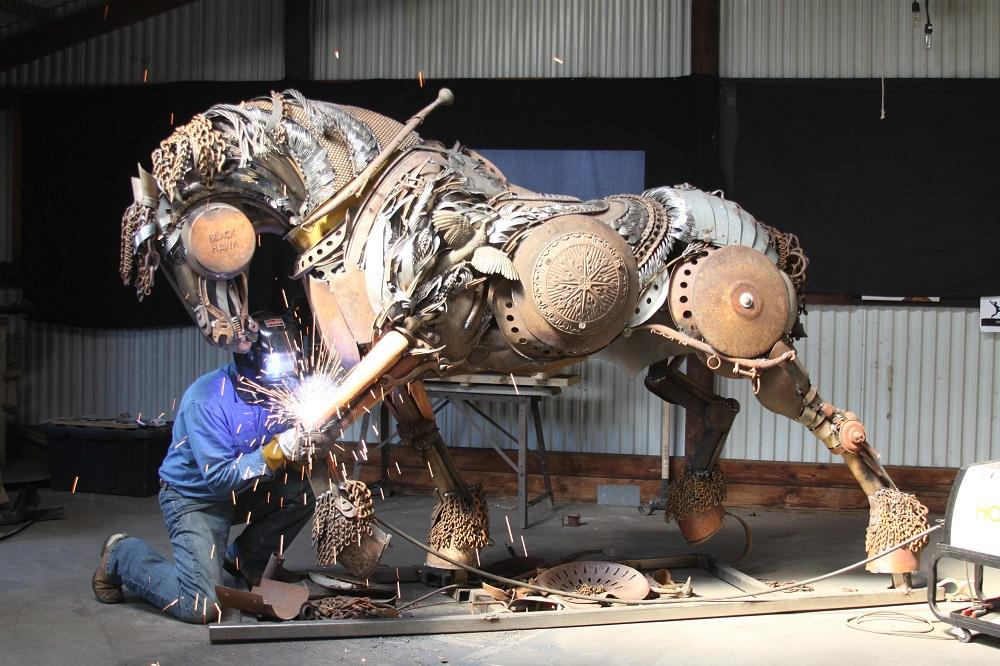
In When Things Go Missing, Cal, a recovering drug addict who lived on the streets for long periods of time, discovers the transforming power of scrap metal sculpturing. Below is an excerpt from the chapter called White, Hot Flow, which shares a title similar to something I wrote years ago describing my own creative process.
From White, Hot Flow: A new obsession
“Cal pulls the welding hood down over his face and watches flame meet metal through the dark visor, his hands twisting and turning the iron to match the images in his mind. He’s been at this since before Christmas, since he first opened his dad’s shed and made it his own, since he realized: I can do this. I can make something out of nothing. I can weave my dreams and hopes and fears into something fierce and tangible.
He’s on a roll now, caught up in what he thinks of as a white-hot flow. The creative juices feed him for two, three, four days at a time. He’s been holed up in the shed, welding and sculpting with barely a moment to eat, piss, sleep. And even when he must, he does so grudgingly, worried that any interruption, however slight, might break the spell and end the white-hot flow that feeds his work.
Cal realizes his new obsession is the kind of hyper-focus related to his ADHD. Those hunters in the wild scanning the horizon, looking for game, had to become hyper-focused once they sniffed out the scat of some prey and followed its tracks. The hunt could last for miles, days, weeks before they finally chased it down. It was like those days when he was rock hunting in the riverbed with his sister, his attention never wavering. He was like a bloodhound, his focus clear, intense, pure.
Welding is like that, only he isn’t interested in being a workman welder like his dad. He wants to bend metal and flame into the images that surge through his imagination, the monsters and gargoyles, angels and devils, of his dreams and nightmares wrought to life by his hand and hot metal. He searches through piles of books at garage sales and thrift stores for books on art, anything to help him understand and channel his desire to create. Even when he isn’t in the act of creating art, it’s in his head—all day, all night—when he dreams, when he wakes, when he makes himself eat.
Cal on a tangent. Cal obsessed. Cal throwing the weight of his will into whatever activity grabbed hold of him—this is how his mom and sister would see it, how he’s always been since he was a kid, grabbing hold of something and beating it to death. Not letting go . . ..
So be it, he thinks now. It’s how I’m wired. I can’t do a thing about it. And, for once, I don’t want to.
For the first time, he knows exactly where he wants to be and what he wants to be doing, 24/7, for the rest of his life.”
From Wings & Claws: Something true that needed saying got said
Later, as his craft develops, Cal enters a whole new sphere of art-making: how it reveals things about ourselves and others at a deeper level:
“Cal spends the rest of the summer locked in his shed, welding. Ever since Ivey told Vince that Cal was an artist, he’s becoming more serious about his work.
Don Quixote was Cal’s first large-scale sculpture. He follows that with the Old Man and the Sea’s struggle with the giant marlin. Perseus holding the head of the slain Gorgon, Medusa, comes next. All are self-portraits, Cal writ large. In some ways, all his artwork is like that, he realizes. Certainly, the roosters are and the lizards and gargoyles. Even the small stuff—the scorpion hooks and frog plant stands—hold pieces of him. But after the series of big, free-standing sculptures, something shifts in his work.
One day when he’s heating a flat, thin square of metal, it begins to melt. The whole surface begins to blur and blister in long, fluid welts. He stops and steps back to examine the damage. It reminds him of a windowpane streaming rain or a steamy mirror that’s starting to run. For a second, he glimpses his own face reflected there looking back at him, blurry behind the wet surface—his face running with rain, dripping with steam. Immediately, he works the metal until he sees it, this bewildered face half hidden below the surface, looking out.
After that, he starts a series of self-portraits. Not him writ large in myth or symbol but him writ small, twisted and turned inside-out—the way he saw himself, the way others saw him not so long ago. Him, fucked up and falling apart; him, piecing himself back together again. He uses squares of metal with screws for eyes, fuses for mouths, and knobs for noses. Jagged pieces of metal overlap each other, so you get the full face and its profile at the same time. What he sees is something alien and terrifying or studious and curious, looking back at itself. He does not display or attempt to sell these. He hangs them on the wall of his mother’s office next to her photos, which he’s matted and framed now.
Later when he’s rummaging through a junkyard, he comes across an old porcelain electrode, round and stubborn, like a nose, and Wanda’s face flashes before his mind. [Wanda and the others mentioned below live on the streets.] He gathers more materials—a mess of copper wiring for her hair, a set of screws for her teeth. He welds together her face, this impossibly strong and intimidating face with eyes like a god, like something that sees right through your soul.
Gideon is next with his wandering eye, mottled complexion, and motley beard, a look like he’d sooner eat you than look at you. Then he does Mikey, so thin and comical and goofy, so trusting and gentle that it makes you want to laugh and cry at the same time.
If you look at these faces one way, they’re nothing but junk—odd bits of scrap metal, useless garbage, obsolete car parts thrown together. But if you look at them another way, you see the fierceness, the vulnerability, the loneliness. You see something interesting and unique. You see faces torn apart and reassembled, as they must have been, time and time again, every newborn day.
He hangs these, and more like them, on the office wall with his self-portraits. Now when he opens the door, it’s like he’s looking into a crowd of people staring back at him—strange and wild and broken, but so infused with emotion it’s like a wave breaking over you, a wave of faces tumbling over and through you. His heart feels good, standing there, looking at them. Like something true that needed saying got said.”
Something True that Needs Saying
So much art-making is about that, about something that needs saying that hasn’t been said before, at least not in the way we envision it. Writers through the ages have known this and expressed it so much better than I can:
“Again and again something in one’s own life, or in the life around one, will seem so important that one cannot bear to let it pass into oblivion. There must never come a time, the writer feels, when people do not know about this.” –Shikibu Murasaki, Tale of Genji (978 – 1014 AD)
“A writer looking for subjects inquires not after what he loves best, but after what he alone loves at all. Strange seizures beset us. Frank Conroy loves his yo-yo tricks, Emily Dickenson her slant of light; Faulkner the muddy bottom of a little girl’s drawers visible when she’s up a pear tree.
Why do you never find anything written about that idiosyncratic thought you advert to, about your fascination with something no one else understands? Because it is up to you. You were made and set here to give voice to this, your own astonishment.”
–Annie Dillard, from The Writer’s Life (1989)
My new novel This Sea Within is all about art-making as well. A mother and daughter Lena share a love of art, the former with her color-field abstracts and her fantastical hyper-realistic paintings, and the latter with her collages and photojournalism. Art is woven into the lush Gaugin-like illustrations of a storybook about a Mayan myth. It’s highlighted in a visit to an art museum where Goya’s famous May Third, 1808 painting of the execution of a revolutionary haunts Lena. It’s featured in the “protest art” article she writes when she sees the rock-style posters plastered around the city to rally people to support the revolutionaries who are attempting to overthrow a corrupt regime. I’ll share some excepts about these at a later date.
In the meantime if you appreciate art, you might want to take a look at When Things Go Missing. Cal isn’t the only artist in the family. His missing mother is sending him strange, bewildering photographs that both disturb and inspire him. More on that later too.
Does art play a significant role in your life? Your home? Your writing? If so, I’d love to hear about it. Please share in the comments below.
WHEN THINGS GO MISSING
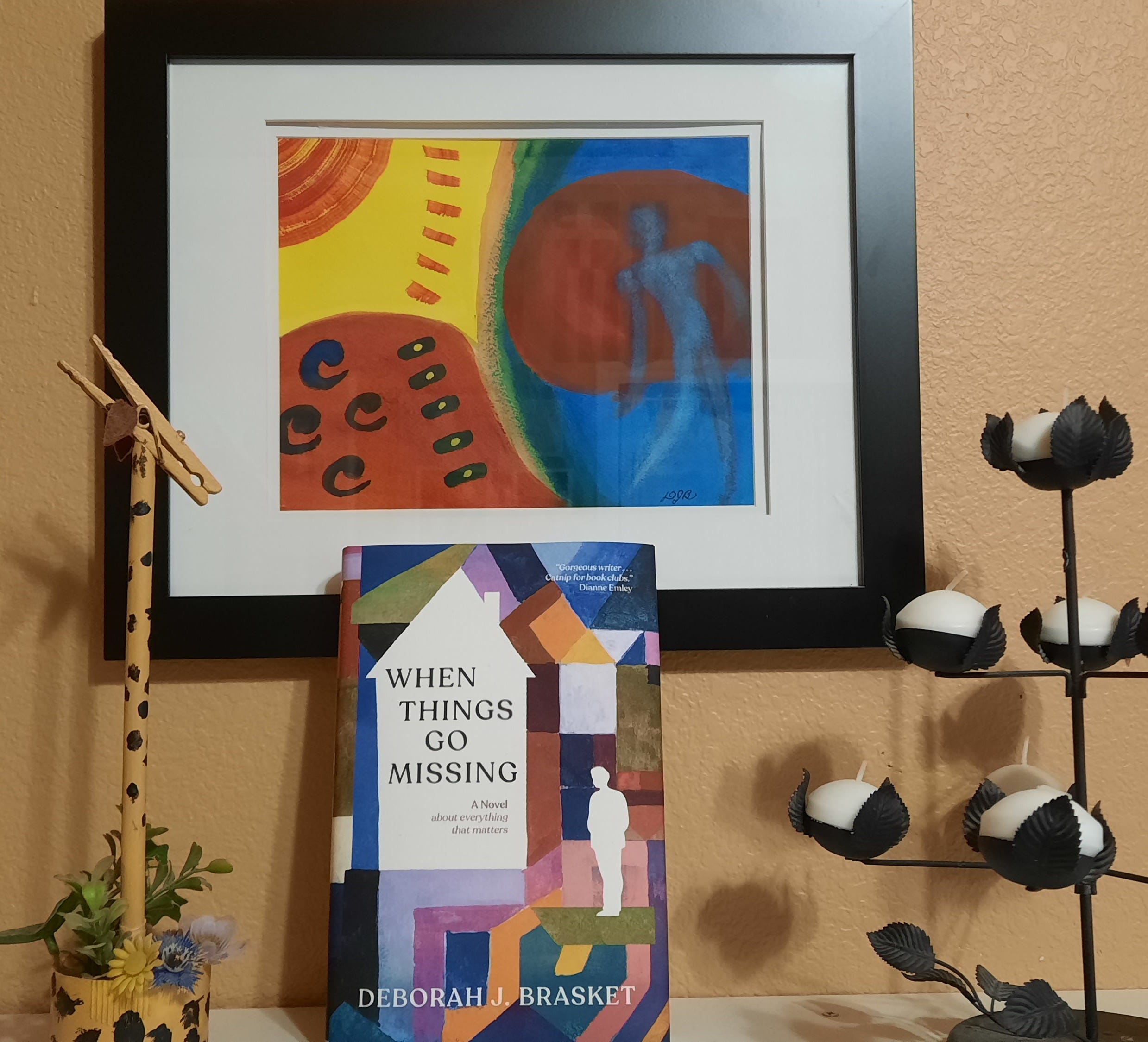
You can support my creative endeavors by purchasing When Things Go Missing on Amazon, Amazon UK, Amazon AUS, Bookshop, Barnes & Noble. This Sea Within will be published in June 2026. (Artwork above the book is my own)
Discover more from Deborah J. Brasket, Author
Subscribe to get the latest posts sent to your email.

Fantastic excerpts from your book Deborah, making the book and art come alive.
LikeLiked by 1 person
Thank you so much, Brad! Music to my ears.
LikeLiked by 1 person
😊
LikeLike
Cal’s foray into sculpture – his artistic calling – was one of the aspects of your novel that I felt showed how as a creative, dour (he)art is not separate from life. Something basic to those of us living it, but not quite as clear for those who do not. This is where I related to Cal – (he)artist to (he)artist. 🙂 Great to see your novel maintaining momentum – yay!
LikeLiked by 1 person
That’s so good of you to say, Laura. His art chapters were some of my favorites too. Things are moving along with the book. Tomorrow I give a author interview on the local radio. Yikes! Wish me luck. Sometimes I wish for the good ol’ days when all I had to do was sit here and write (sigh).
LikeLiked by 1 person
Good vibes. Good luck!
LikeLiked by 1 person
Happy to report it went well. 😊
LikeLiked by 1 person
I love, love, love how artistry finds its way into your writing, Deborah. With intention – helping us understand the characters and the importance of art and expression in their lives and ours. I also love the Annie Dillard quote. Wow…this: …”You were made and set here to give voice to this, your own astonishment.” Thank you so much. 💝💝💝
LikeLiked by 1 person
Thank you, Vicki! Your enthusiasm so heartens me. If you haven’t read Dillard’s book yet, I know you’ll love it.
LikeLike
Cal was truly an interesting character. I enjoyed reading about his growth from a derelict drug addict to a responsible, creative adult.
LikeLiked by 1 person
Thanks, Dawn. I’m so glad you enjoyed his journey. It was fun writing about his artwork.
LikeLike