Tags
democratic principles, Economic Justice, inspiration, Love, Martin Luther King, political power, spirituality
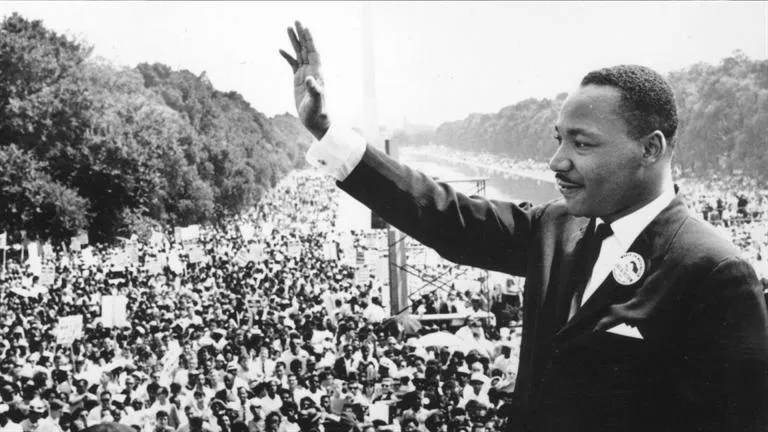
Celebrating the legacy of Martin Luther King during Donald Trump’s second term as president could not seem more incongruous, nor be more timely. And needed.
When Martin Luther King Jr. was assassinated in 1968, he had begun to turn his attention away from the civil rights movement to what he considered to be an even more compelling problem: economic injustice.
“For we know now that it isn’t enough to integrate lunch counters. What does it profit a man to be able to eat at an integrated lunch counter if he doesn’t have enough money to buy a hamburger?”
He had discovered that the major divisive force in America was not color, but class. The rich and powerful, whether black or white, shared the same interest in keeping the races segregated, exploiting the poor and powerless, and maintaining the status quo.
He believed the unequal distribution of wealth was tearing America apart and threatening to make it a two-class society. He wanted to help build the kind of America that would not tolerate poverty within its borders, that would not allow one class to exploit another, that would not allow the powerful to abuse the powerless.
He called for “a revolution in values” that placed “democratic principles and justice above privilege.” Fighting for this change would not be easy. “A nation that continues year after year to spend more money on military defense than on programs of social uplift is approaching spiritual death.”
“We will be greatly misled if we feel that the problem will work itself out. Structures of evil do not crumble by passive waiting,” he warned. “The battering rams of justice” are needed.
Shortly before his death he began organizing for another march on Washington, this time for economic equality. He fought for an “economic bill of rights” that guaranteed full employment and a livable wage, affordable housing and a “massive public works programs (to build) decent housing, schools, hospitals, mass transit, parks and recreation centers.”
“Freed from the smothering prison of poverty, people could chart their own path and fully realize their human potential.”
At King’s death, over 50 years ago, the federal minimum wage in today’s dollars would be $9.54. Now it is only $7.25. That’s a loss of nearly three dollars per hour for today’s workers.
The gap between the rich and the poor is far greater now than it was then. The two-class society King feared and warned us against is already here. And people in the mostly white rust belt who had been suffering steep economic decline because of jobs being shipped overseas, decided they had had enough. Decided that career politicians had failed them. Decided that what they needed was a “strong man” to save them.
Why do the hard work of organizing, of mobilizing workers to strike and march, of flooding into the offices of their congress to demand change, of creating white papers on policy-change and registering voters? Why do that when they had a demagogue who promised, “I will fix it, I will bring jobs back, I alone will do this.”
Unfortunately, Trump isn’t interested in economic equality across the board. He isn’t interested in tearing apart the political policies and economic structures that create and sustain a two-class society, that allows the rich to grow richer and the poor poorer as one class exploits another. Economic justice isn’t on his radar or even part of his vocabulary.
What we need, as King said, is “a revolution in values” that places “democratic principles and justice above privilege.”
We need an economic system based on love. That’s what transforms the heart and mind and motivates real lasting change.
King said: “Power without love is reckless and abusive. Love without power is sentimental and anemic. Power at its best is love implementing the demands of justice. Justice at its best is love correcting everything that stands against justice . . . It is the collusion of immoral power with powerless immorality that constitutes the major crisis of our times.”
That kind of love and economic equality lifts all boats, for, as King said, we are all “interrelated.”
“The agony of the poor impoverishes the rich. The betterment of the poor enriches the rich. We are inevitably our brother’s keeper because we are our brother’s brother. Whatever affects one affects all indirectly.”
This is Martin Luther King Jr.’s legacy to us, and his challenge: To end poverty and economic injustice by wedding power with love.
He writes:
“In the final analysis, love is not merely an emotional something. Love is creative, understanding goodwill for all men. It is the refusal to defeat any individual. When you rise to the level of love, of its great beauty and power, you seek only to defeat evil systems. Individuals who happen to be caught up in that system, you love, but you seek to defeat the system.”
In the age of Trump, especially in his second term while suffering the domestic terrorism that ICE is bringing into our communities, this kind of love is needed more than ever.
[First printed in 2017, updated in 2026.]
Spread a little love my way by leaving a comment, supporting my work with a subscription, or purchasing my novel When Things Go Missing, which was a work of love, long in the making.
It’s available at at Amazon, Bookshop, Barnes & Noble, and other major outlets.
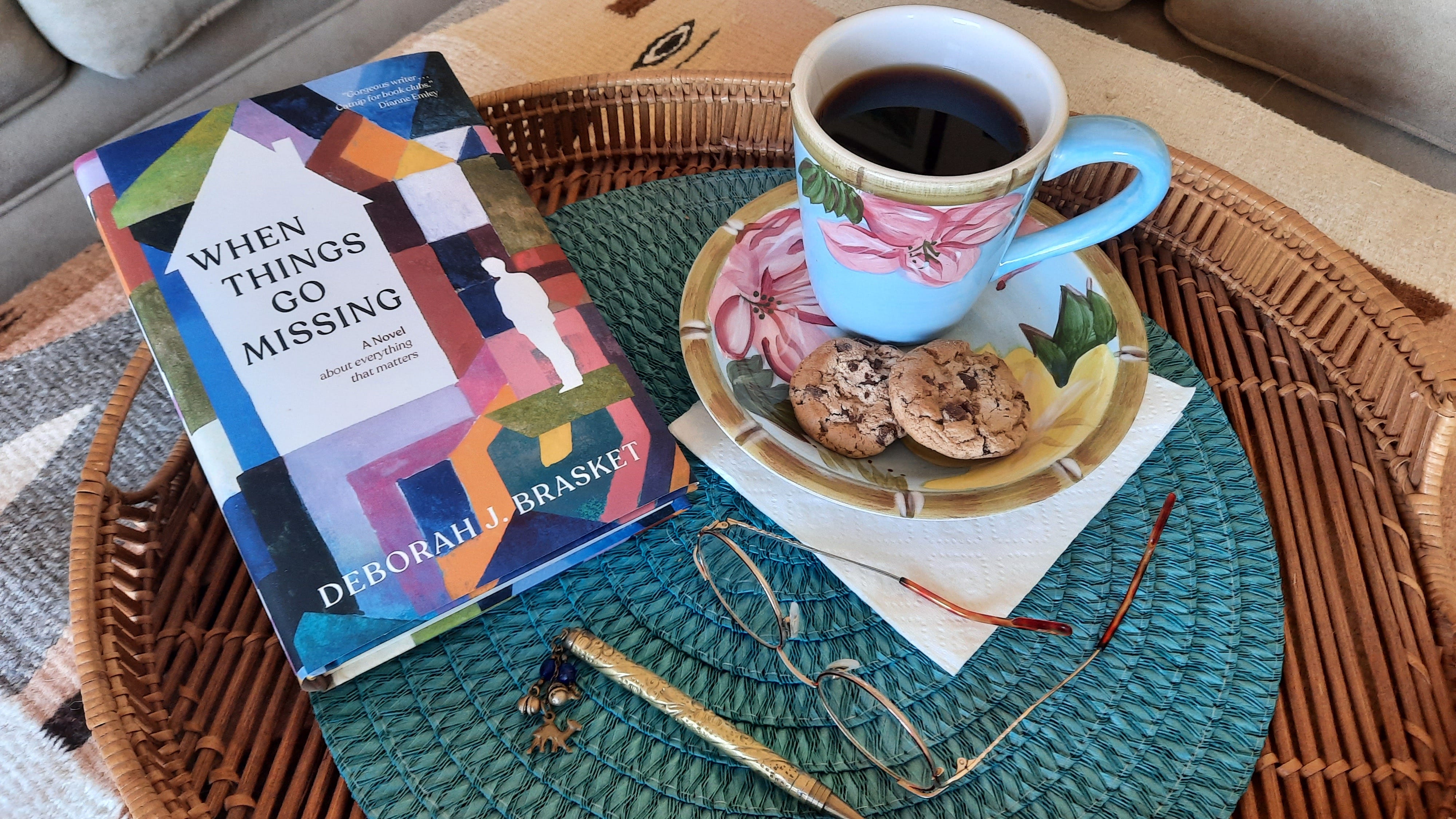
“When Things Go Missing is a beautiful unfolding – a tender, loving portrait of a family contending with grief, loss, and regret, while fully embracing all the joy that life can hold.” Valorie Grace Hallinan, Books Can Save A Life
Discover more from Deborah J. Brasket, Author
Subscribe to get the latest posts sent to your email.

I have one remaining hero … Martin Luther King, Jr. We desperately need a new MLK, Jr.
LikeLiked by 1 person
We do, indeed!!!
LikeLiked by 1 person
A concise account of the depth of MLK’s message – part of the ‘evolution’ of the movement which was building upon the momentum of the ‘obvious’ civil rights activism of the day. This living & growing aspect of the movement is often overshadowed by the huge historical significance of the times…and is certainly urgently relevant in these days as well.
Where oh where is our 2026 Freedom Bus?!? Let me know so I can hitch a ride and not let those in MN and Chicago and LA and Portland and ???? take on this continued freedom fight all by themselves.
Sorry, I got a bit long! 😉
LikeLiked by 1 person
Absolutely! We need more of the non-violent tactics that MLK and the civil rights movement used, We need a figure or movement to rally around. A MLK or Ghandi, Navalny or Lech Wałęsa, who led the non-violent Solidarity movement in Poland. We need a Freedom bus!
LikeLike
MLK was a wise and passionate crusader. Sadly, we’ve gone in the opposite direction since his death.
LikeLiked by 2 people
Sadly, that’s true. We need another MLK for today.
LikeLiked by 1 person
“He believed the unequal distribution of wealth was tearing America apart and threatening to make it a two-class society.” Wise beyond his years. Yes, the unequal distribution really is at the root of so many of our problems. Well said Deborah!!
LikeLiked by 1 person
Absolutely! Thanks so much, Brian.
LikeLike
Needed more than ever…love. Yes, yes. Thank you, dear Deborah.
❤️❤️❤️
LikeLiked by 1 person
You are so welcome 🙏 ❤️!
LikeLiked by 1 person
I admired ML King. I was a senior in high school when he was assassinated, and it made me sad.
LikeLiked by 1 person
He’s one of my heroes too.
LikeLiked by 1 person
That minimum wage statistic is shocking, but not surprising! I have long maintained that economic inequality is at the root of many of the world’s woes. Sadly, this is the case in many western countries, not just the United States.
This brings to mind a quote from the late, great, Jimi Hendrix “When the power of love overcomes the love of power, the world will know peace.”
LikeLiked by 1 person
That’s a great quote! If only . . . Sigh.
LikeLiked by 1 person
Reading Dr. King’s words now in light of what this country has become is physically and psychically painful. My dad participated in the March on Washington and the voter registration drive in Mississippi.
LikeLiked by 1 person
I feel that way, too, Liz. It’s heartbreaking.
LikeLiked by 1 person
❤
LikeLiked by 1 person
🙏
LikeLike
Well put, Deborah. Instead of the ignorant ways those in power try to divide us, we should be knocking down the barriers of poverty, ethnicity, color, religion, and sexual orientation. Looking out for everyone makes us a healthier nation.
LikeLiked by 1 person
You put that so well, Peter. Totally agree. Thanks for sharing that.
LikeLiked by 1 person
Pingback: Get inspired with my January 2026 blog roundup - Boomer Eco Crusader
Excellent content as always. Looking forward to more posts like this.
LikeLiked by 1 person
I appreciate that, Marcus. Thank you for letting me know.
LikeLike
We have to re-imagine MLK in a Trump administration.
LikeLiked by 1 person
Yes, we do. Thank you for coming here and sharing your thouhts.
LikeLiked by 1 person