Tags
beauty, fighting fascism, finding balance, flowers, Gloria Horton Young, inspiration, Nature, poetry, political turmoil, saving and savoring, tending beauty, the last gardener in Aleppo, The Quiet Art of Resistance
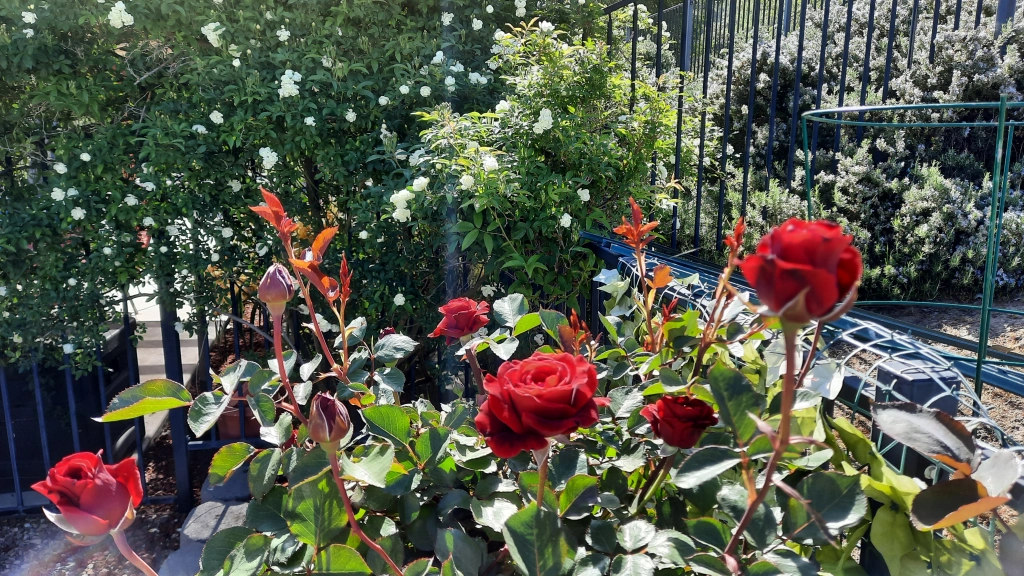
Like many of you, I struggle to balance myself in this uncertain world where the rule of law and so many institutions of democracy are crumbling around us. Where we are falling into fascism, failing to support human decency, our friends and allies, and the values that made America the land of the free and the home of the brave.
Like many, I falter between hope and despair. I struggle to know how to live this life I love as it is being destroyed from within.
Can I go on writing my novels, tending my garden, blogging about beauty, living a life of peace and tranquility? Do I abandon my piano, my artwork, my joy in living?
Do I take up arms and march in the streets? Can I do both? Will one taint the other? Will my joy be lessened, my rage take control?
As I struggle with these questions, I came across Gloria Horton-Young’s powerful post where she addresses these very issues: Tending Beauty: Poems for an Uncertain Spring: On roses, legal fictions, and loving what might not last.
THE QUIET ART OF RESISTANCE
It’s Friday in Las Vegas and I can’t face
Vivian and Riley today, can’t open the document
where my characters wait for me to give them words
for their quiet resistance against fascism
I keep thinking about Vivian at one year old
her mother moving from safety to France in 1933
how she fought alongside other civilians
armed with the OSS Manual for Simple Sabotage
these were real people with real courage
who opened their homes to strangers, who passed
messages hidden in everyday objects, who risked
everything while appearing to do nothing at all
meanwhile I’m out here watering roses
that don’t understand the Supreme Court just ruled
a man can’t be “disappeared” to El Salvador
as if that’s something we need to debate in America
Crystal is planning someone else’s celebration
across town where money insulates against fear
while I stare at my laptop’s blank screen
unable to type a single word of fiction
how do you write about resistance
when the past and present blur together
when your own country is now known
as the one on the wrong side of history
I’ve been researching how ordinary women
became extraordinary through small defiant acts
leaving doors unlocked, misplacing documents
while I deadhead roses as if that matters
the OSS manual was brilliant in its simplicity
how to fight without weapons, how to resist
without being caught—work slowly, make mistakes
look incompetent while secretly undermining
my country feels like a sick child gasping for breath
while I stand helpless beside her bed
wanting to help but having nothing
but these inadequate hands that can only garden
what would Vivian’s mother do in this America?
what would my characters say to me now
as I hide in my garden rather than face
the parallels between their world and mine?
the lavender still hypnotizes bees
the bougainvillea climbs its arbor
the fountain sings its twenty-year song
all of it oblivious to history repeating
perhaps tending this garden is its own
quiet art of resistance, a way to keep
creating beauty in ugly times, to maintain
something worth fighting for
my story sits unwritten today but these roses
these transplanted immigrants from Santa Barbara
bloom as if democracy still matters
as if someone is still watching over them
by Gloria Horton Young
Yes, tending beauty is a powerful part of resisting brutality. Crafting stories that inspire and entertain, playing and listening to beautiful music, making art and appreciating it–all are quiet ways of resisting the chaos around us. All breathe a welcome breath of relief and sanity and hope into a world that sorely needs it.
I read a story not long ago about the last gardener in Aleppo, Abu Ward, the owner of a garden center in the besieged city. It was an oasis of calm and beauty for the people of Aleppo who were surrounded by death and destruction.
Abu Ward did not lay down his spade for a sword. Nor did he allow the ugliness around him diminish his pleasure in tending flowers. He understood how important this oasis of beauty was to keep the heart and soul of his people and his city alive.
“The essence of the world is a flower,” he says. “It nourishes the heart and soul.”
I’m also reminded of what E. B. White said about being torn each morning between the desire to save or savor the world. Yet it’s what we savor that makes the world worth saving. The savoring is itself a kind of saving.
Discover more from Deborah J. Brasket, Author
Subscribe to get the latest posts sent to your email.

I think many of us struggle with these questions and the balance between hope and despair. Thank you Deborah for continuing to tend the beauty and savor the good. The video of Abu Ward was touching and heart wrenching, especially for his son.
LikeLiked by 1 person
Thank you , Brad. I see you as one of those tenders of beauty on your blog with your photography and poetry. I felt the same way watching that video. It was touching and heartbreaking. It reminded me of stories I’ve heard about Jews in the death camps, the music they made, the plays they composed and acted out–tending the beauty of music and the imagination even under such dire circumstances. This was how they countered, and in a way, exposed and rejected, the brutality they experienced. It said, this is who we are, not that, not what you are trying to reduce us to.
LikeLiked by 1 person
I admire their bravery and commitment to reaching for beauty and kindness.
LikeLiked by 1 person
Thank you for your post, Deborah, and this reminder: …”making art and appreciating it–all are quiet ways of resisting the chaos around us…”
Yes, yes, yes. 💕
LikeLiked by 1 person
I’m so glad you like this, Victoria. You are another “tender of beauty” on your site with your inspiring posts and poetry.
LikeLiked by 1 person
Too kind…too kind. Xo! ❤️
LikeLike
Thank you flower sister for this segue into my latest post…you helped ‘unstuck me’ in writing it! hugs
LikeLiked by 1 person
You are so welcome, my friend. I look forward to reading your post. We’re all in this together. Hugs to you too.
LikeLiked by 1 person
Yes, perhaps we cannot save the world without also savouring it.
LikeLiked by 1 person
I believe this is so. Thank you for coming here and sharing your thoughts, Michael.
LikeLiked by 1 person
“The savoring is itself a kind of saving.” Absolutely!
LikeLiked by 2 people
Thanks, Camilla, big smiles here.
LikeLiked by 1 person
Back atcha! Keep tending the good and the beautiful!
LikeLike