Tags
cultivate a mind of winter, inspiration, Metaphysics, Nature, poetry, spirituality, Wallace Stevens, Winter, writing, Zen
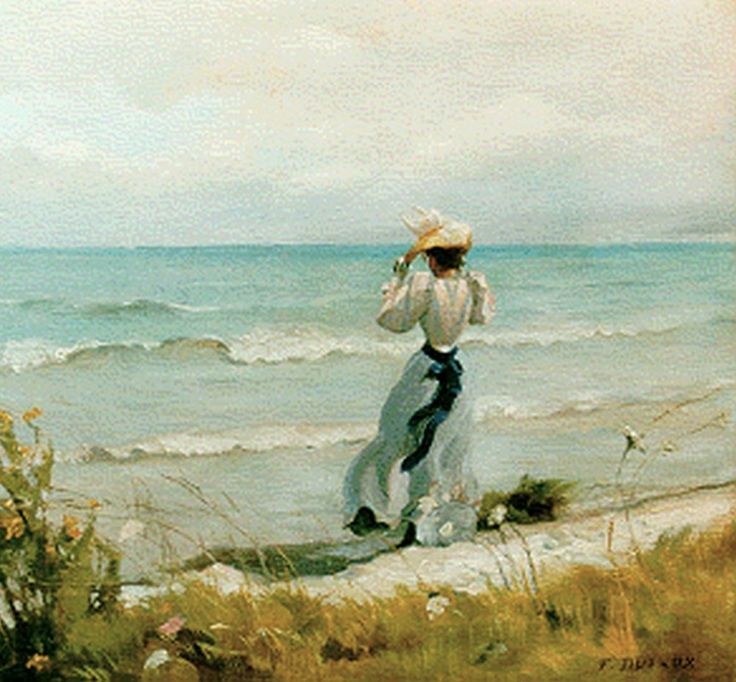
I was entranced by Wallace Stevens’ poem “The Idea of Order at Key West” when I first read it in a freshman literature class so long ago. That’s when I knew I was a writer, whether I ever wrote a word or not. I was that woman singing while she strolled by the sea. We all are.
She was the single artificer of the world
In which she sang. And when she sang, the sea,
Whatever self it had, became the self
That was her song, for she was the maker. . . .
. . . there never was a world for her
Except the one she sang and, singing, made.
What we experience as the world around us is always to some degree a creation of our own imaginations—the objective world filtered through our subjective experience of it. We are writing the world as we live it. And there’s beauty and mystery and grace it that.
And yet, and yet . . . . There is too that “mind of winter” that Stevens also writes about. The sense that we can get at the “thing-in-itself” without the cloud of imagination, the subjective, standing between it and us, as he writes about below.
The Snow Man
One must have a mind of winter
To regard the frost and the boughs
Of the pine-trees crusted with snow;
And have been cold a long time
To behold the junipers shagged with ice,
The spruces rough in the distant glitter
Of the January sun; and not to think
Of any misery in the sound of the wind,
In the sound of a few leaves,
Which is the sound of the land
Full of the same wind
That is blowing in the same bare place
For the listener, who listens in the snow,
And, nothing himself, beholds
Nothing that is not there and the nothing that is.
There’s a sense that if we cultivate “a mind of winter”—
a mind stripped down, bare and essential
pristine, without artifice or ego
the mind that is and is not at the same time,
that can hold equally two opposing thoughts at the same time and rest in the still center,
that “beholds nothing that is not there and the nothing that is”
—then we may see things as they truly are and not as we create them to be.
But to do that, we have to become it. Become the snow man, literally: no-mind, no-thought. Leave “I” behind and become the frosted junipers. Become the night sky. Become the sea. To truly behold things as they are, we have to “behold” it—-be it and hold it at the same time.
That’s what I’m trying to do—in my daily life, in my writing, in whatever meager way I can. Cultivate a mind of winter, be what I behold.
Be it and hold it all at once.
Perhaps that’s what the woman is doing as she be-holds the sea and sings it.
Discover more from Deborah J. Brasket, Author
Subscribe to get the latest posts sent to your email.

What a beautiful perspective. Thanks Deborah.
LikeLike
Thank you, Brad!
LikeLiked by 1 person
I am going to have to pay a visit to Wallace Stevens’ work. Thanks for that, Deborah!
LikeLike
You might want to pick and choose among his work. Some I absolutely love and others not so much. Besides these two Thirteen Ways of Looking at a Black Bird and Sunday Morning are my favorites.
LikeLiked by 1 person
Thanks, Deborah! Duly noted. I’ll look up your favs first!
LikeLike
Wondrpusly done 👌
LikeLike
Thank you!
LikeLiked by 1 person
A parallel: when we stayed at a hotel in Cedaredge, Colorado, last July, and sat down in the dining room for breakfast in the morning, we heard the cook singing somewhat hauntingly in the adjacent kitchen.
LikeLike
Intriguing. Did you enjoy her singing?
LikeLike
Yes.
LikeLike
A delightful essay to read on a sunny Thursday afternoon – blocking out (maybe I should say ‘singing above’) the noises of our world. I can see how this inspired the writer inside your deepest self.
LikeLiked by 1 person
Thanks, Laura. I’m glad you enjoyed it. It does speak to my deepest self.
LikeLiked by 1 person