Tags
Being in love, Cows at Night, Creative Nonfiction, Deborah J. Brasket, Family, Hayden Carruth, husbands, Julia Shipley, Love, Marriage, poetry, Willa Cather
Serendipity, it’s sometimes called.
Those happy coincidences that lead to some unexpected pleasure or insight. Or synchronicity. Those meaningful encounters that, touching tangentially upon something you’ve been musing upon, spark a new way of thinking about it. Then off you go, riffing on the topic the way jamming jazz musicians will do.
Here’s how it happened. I was grazing on Twitter and found a link to an essay that sounded interesting, taking me to new site called The Toast. The essay that drew me there did not pan out, but I found a link to something else that sparked my interest “Some: Poetic Essay” by Julia Shipley.
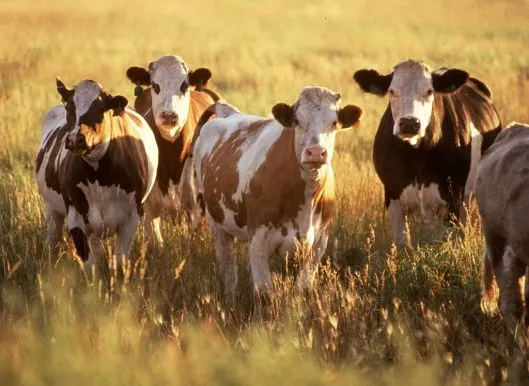
Now the essay starts out talking about horses and cows and the poets who write about them. Normally I’m not much interested in barnyard animals, but I came across this lovely line—“The names of the herd tell a story, the way a group of stars makes a constellation” —reminding me of a poem by Hayden Carruth that I fell in love with, his “Cows at Night” which I loved so much. (I’ve copied the poem below.)
Hoping Shipley’s essay on cows might provide a similar unexpected pleasure, I continued reading and found the essay morphing from a mediation on cows, to a mediation on men, or prospective husbands, to be exact.
Shipley’s musing on how some couples “pull together” in a marriage “like a pair of horses working in a synchronized pace” caught my attention.
Musing About Marriage
I’d been musing myself lately about marriage, how it goes through different stages, and how, while my husband and I still pull together in the same direction from time to time, more often than not we wander off in different directions. It’s becoming apparent how little we have in common.
While we both took early retirements, we seldom see each other and do little together. We eat at different times mostly, take walks at different times, swim at different times. We watch different shows on TV and pursue separate hobbies. Our paths cross only intermittently throughout the day, and while those crossings are pleasant enough, they are usually unplanned.
Sometimes I worry about us. Our marriage. Do we spend too much time alone? Is this healthy? Should we try to find ways to spend more time together? But then I realize: I’m quite content this way. As a writer, I like having time to myself. I like knowing he doesn’t need me or feel neglected when I’m off by myself.
We’re alone, but not lonely.
I’m coming to think of us like the lines in a sparse drawing. We rarely touch, but we cross now and then, and our crossings shape our days and our lives and fills up the space that surrounds us in meaningful and comforting ways. Spare lines and plenty of white space, but pleasantly so.
Shipley writes about all the men she met over the years who never turned out to be the husband she was looking for. She thought perhaps she was in love with the idea of love more than in wanting any particular man.
I wonder that myself sometimes. I like having a husband, I love him dearly, but I’m not “in love” with him the way I was when we first married. I am, however, “in love.” But with so much more than the man. It’s the man and the life and the kids and the cows at night and names like constellations. And the walking and swimming and writing. Just this, right here, right now. Riffing about the things I love.
Shipley’s essay ends with something similar that resonated deeply with me:
“Once I approached another heroine, former dairy farmer Gertrude Lepine, who never married or had children, but farmed with her sisters in a Vermont hinterland called, Mud City. I asked if she missed her cows. Her herd was famous, her registered Jerseys attracted buyers from as far away as California when she retired. Sure there were some favorite cows, she told me. But it’s The Land that I love the most. The Land.”
Yes! Me too.
Being in love with The Land and all it holds
Just before her essay ends, Shipley quotes a passage in Willa Cather’s O Pioneers about Alexandra, who took over her father’s Nebraska farm and coaxed it to glorious success, and who is now a single middle aged woman.
“ . . . she lay late abed . . . luxuriously idle, her eyes closed, she used to have the illusion of being lifted up bodily and carried lightly by someone very strong. It was a man, certainly, who carried her, but he was like no man she knew; he was much stronger and swifter, and he carried her easily as if she were a sheaf of wheat.”
What held her lightly “as if she were a sheaf of wheat” was something so much more than mere man.
I feel that way too sometimes. Like I’m being tenderly picked up and carried away. By life. The joy of living. These unexpected, serendipitous pleasures. By the act of writing—taking chance encounters and spinning them into something else, tossing them out into the universe, watching them drop down into a poem, a painting, a song. A blog post perhaps.
Here’s wishing you today many serendipitous pleasures that pick you up lightly and carry you away.
And now, in case none of the above made any sense, here’s a poem that makes it all so clear:
The Cows At Night
by Hayden Carruth
The moon was like a full cup tonight,
too heavy, and sank in the mist
soon after dark, leaving for light
faint stars and the silver leaves
of milkweed beside the road,
gleaming before my car.
Yet I like driving at night
in summer and in Vermont:
the brown road through the mist
of mountain-dark, among farms
so quiet, and the roadside willows
opening out where I saw
the cows. Always a shock
to remember them there, those
great breathings close in the dark.
I stopped, and took my flashlight
to the pasture fence. They turned
to me where they lay, sad
and beautiful faces in the dark,
and I counted them–forty
near and far in the pasture,
turning to me, sad and beautiful
like girls very long ago
who were innocent, and sad
because they were innocent,
and beautiful because they were
sad. I switched off my light.
But I did not want to go,
not yet, nor knew what to do
if I should stay, for how
in that great darkness could I explain
anything, anything at all.
I stood by the fence. And then
very gently it began to rain.
This is an updated version of an essay posted years ago.
Discover more from Deborah J. Brasket, Author
Subscribe to get the latest posts sent to your email.

Interesting musing on life, cows, land, and marriage Deborah.
LikeLiked by 2 people
Thank you, Brad!
LikeLiked by 2 people
WHAT a beautiful poem.
LikeLiked by 2 people
It is, isn’t it! I’m glad you thought so too.
LikeLiked by 2 people
Hayden Carruth’s poem reminded me of James Wright’s “A Blessing.” It has ponies in place of cows, mentions willows, and there’s similarly a turn at the very end.
LikeLiked by 2 people
You are right. They both speak about similar things in similar ways. There’s a sense of grace and beauty and humility in each. I love the last lines of Wright’s poem too:
Suddenly I realize
That if I stepped out of my body I would break
Into blossom.
Thank you for sharing this poem with me. You are always so generous in doing that, and I love that you do.
LikeLiked by 1 person