Tags
art, beauty, creativity, flowers, inspiration, Paintings, Philosophy, poetry, Spirituality, The Perennial Philosophy, truth
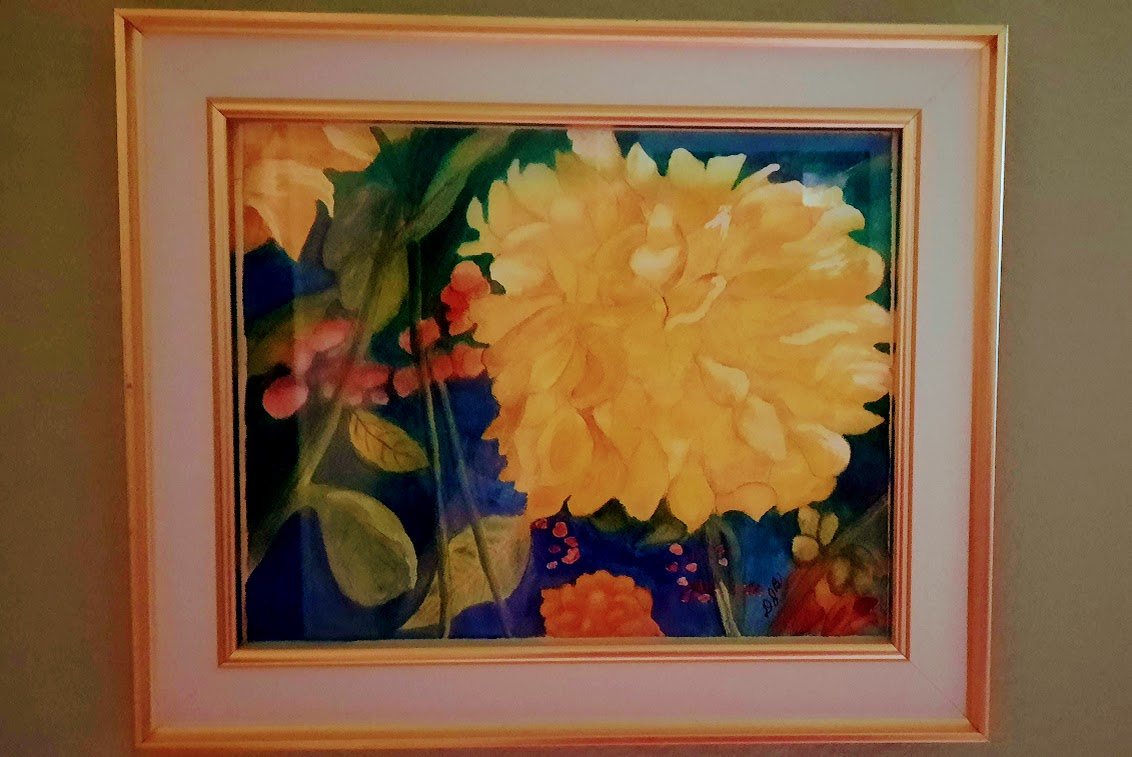
If “Beauty is truth, truth, beauty,” as Keats’ poem claims, then what do my paintings of flowers, my attempt to capture the truth of those quintessential expressions of beauty mean?
Aldous Huxley in The Perennial Philosophy interprets Keats claim as meaning either: “Beauty is the Primordial Fact, and the Primordial Fact is Beauty, the principle of all particular beauties;” or “Beauty is an immediate experience, and this immediate experience is identical with Beauty-as-Principle, Beauty-as-Primordial-Fact.”
“The experience of beauty in art or in nature,” he continues, “may be qualitatively akin to the immediate, unitive experience of the divine Ground or Godhead; but it is not the same as that experience.” Still, he asserts that the capacity of the poet or artist to arrange words or paint “in such a way that something of the quality of the graces and inspirations he has received can make itself felt to other human beings in the white spaces, so to speak, between the lines of his verse . . . is a great and precious gift.”
I know as a hobby-artist, my attempt to capture the beauty of flowers is an attempt to capture some inner essence. What is it that I find so captivating, so inspiring, in these delicate, colorful, ephemeral and fleeting creatures? Why do they speak to me in the way they do, and what are they saying?
Words can’t capture it, nor can paint. But sometimes in my quest to capture that inner essence I discover an affinity with it, perhaps in those white spaces of consciousness before brush touches paper. Or in the white spaces of the flower itself where my heart goes to ferret out the petal-deep mystery: how all the curls and swirls and rhythmic symmetry, the lush colors and heady scent come together to draw not only bees and butterflies but artists and poets and nature lovers to worship at its portal, and perhaps unlock the secrets of the universe, the Godhead, and love itself.
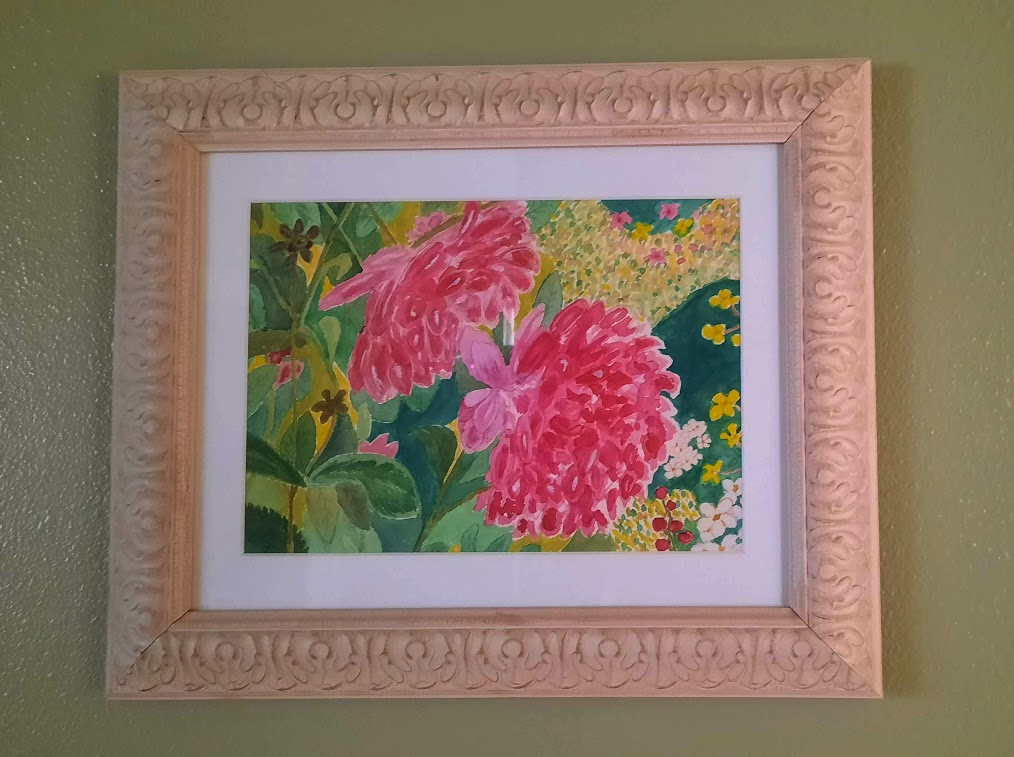
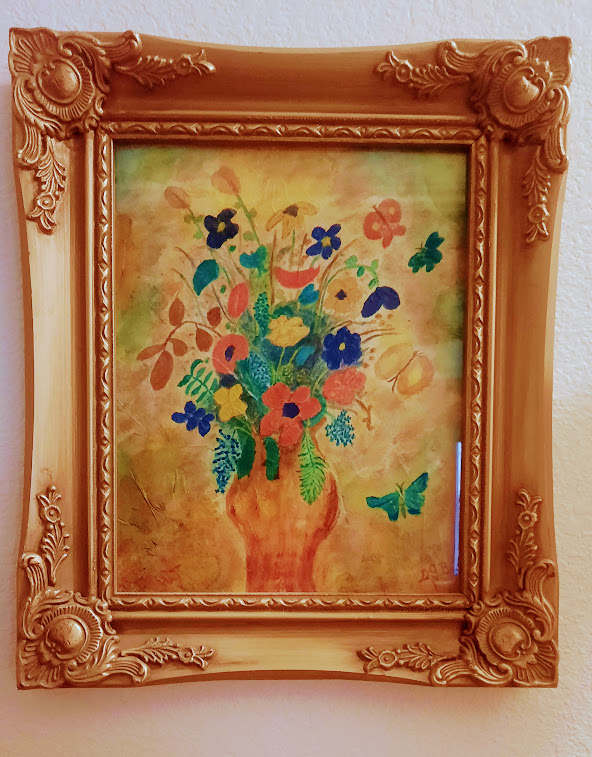
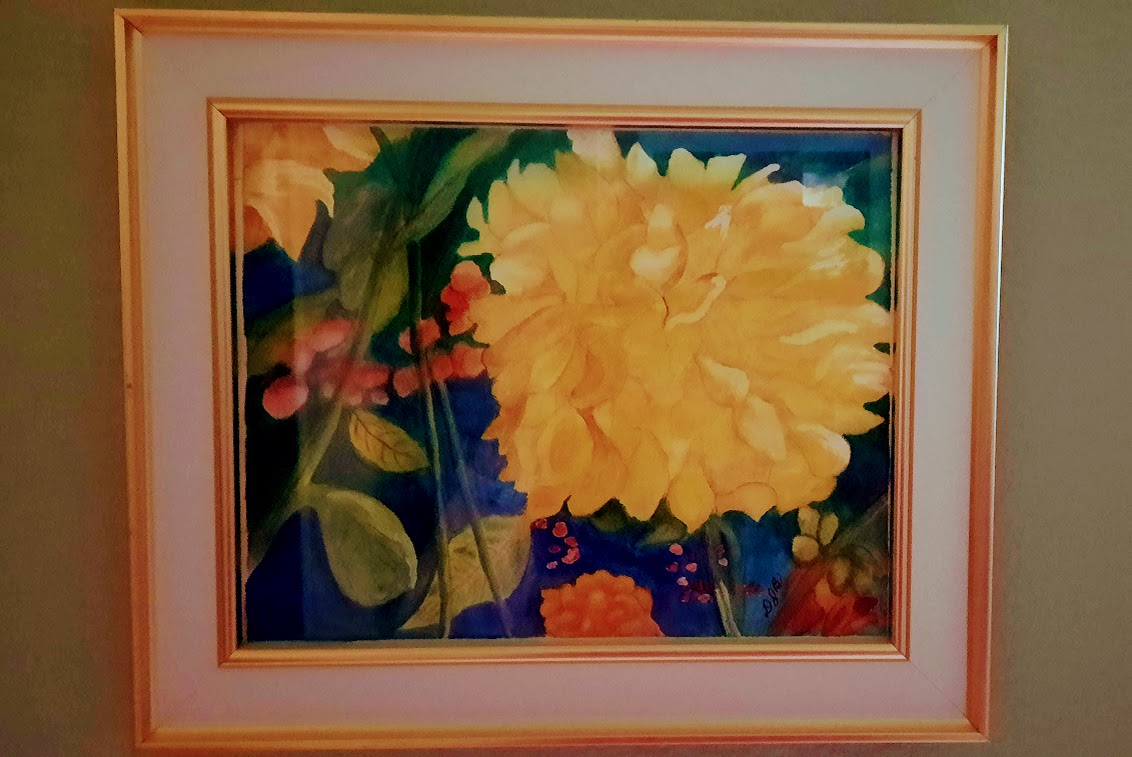
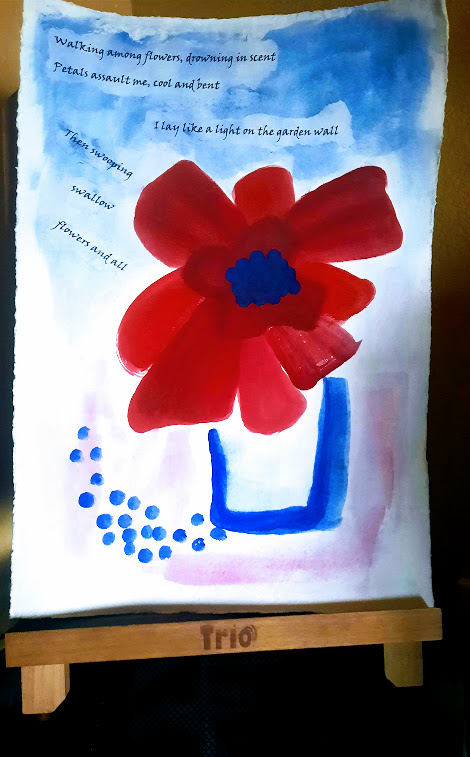
Below are a few of my feeble attempts to capture the ephemeral beauty and fragility of flowers, as well as their lush complexity, and in the last painting, the poetry as well.
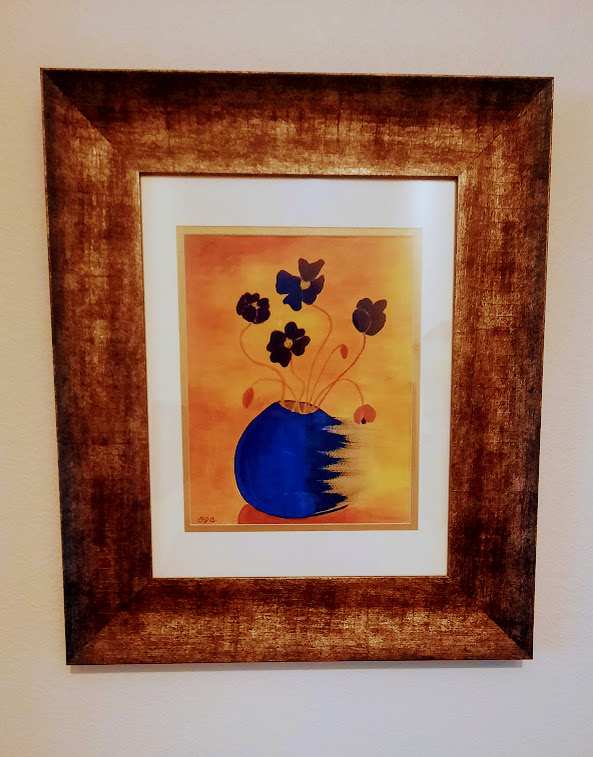
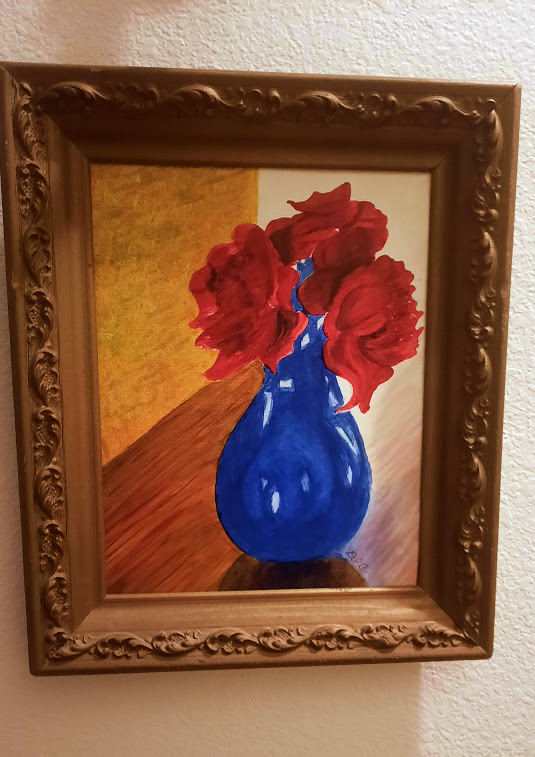
“Red Roses in a Blue Vase”, acrylic by Deborah J. Brasket
Discover more from Deborah J. Brasket, Author
Subscribe to get the latest posts sent to your email.

The first term in your phrase “hobby-artist” gave me pause, as it seemed to my mind to have imparted the negative connotation “not really an artist.” Then I looked in the 1828 Webster’s Dictionary and found several definitions of “hobby,” including this positive one: “Any favorite object; that which a person pursues with zeal or delight.”
LikeLiked by 4 people
Thank you for that, Steve. I’ve never called myself a hobby-artist before, and not sure why I did this time, perhaps just to let viewers know that I’m not a professional artist and don’t aspire to be, that I paint for myself and the pleasure it gives me. So that definition you found on being a hobbyist fits me to a T: I pursue painting with zeal and delight.
LikeLiked by 1 person
Oh, how I love this post! Thank you, Deborah. 🙂🌺
LikeLiked by 1 person
I am so glad! I love your blog so much and it gives me so much inspiration, but it didn’t dawn on me until just this moment that your own site is titled “Where Truth and Beauty Meet”—which is so true. How serendipitous!
LikeLiked by 1 person
I appreciate your kind words, Deborah. And likewise, your blog is a delight, full of all the things I love! 🙂🌺🙏
LikeLiked by 1 person
Your flowers are beautiful, and for that reason alone I’d be wary of associating them too closely with truth. I bashfully disagree with the great Aldous Huxley on this one. For me, it’s significant that Keats specifically attributes the “beauty is truth, truth beauty” lines to the urn and not the speaker of the poem. It is a sentiment the speaker wistfully longs for but cannot share … and with good reason. https://shakemyheadhollow.wordpress.com/2014/05/13/the-red-wheelbarrow-and-jungs-synchronicity-plus-keats/ (Loved yr post 🙂 )
LikeLiked by 1 person
Thank you for coming here and sharing your thoughts. I like to think that truth and beauty can be perceived in things all around us, in nature as well as in people and the things they create, speaking from a metaphysical or spiritual viewpoint. But we may be speaking the same language, as in this case the flowers or my painting of the flowers is the urn, and the beauty I perceive in the flowers and attempt to capture in paint is the harmony and symmetry, the graceful curves, the colors, the texture, etc, and how they all come together some complex and yet simple way that speaks to me, moves me, enchants me. Is it me projecting those qualities on the flower, or is there a connection between what I see in them and what is in me, or what I yearn or long for, as Keats does? I do not know, but believe there is something “truthful” about the way things are created and repeated throughout creation, a fractal similarity perhaps, or synchronicity as you refer to in your link. I’ll check it out. And thank you for prompting me to speak further on a topic that fascinates me.
LikeLiked by 1 person