Tags
Philosophy, poetry, subjective and objective experience, The Idea of Order at Key West, The Snow Man, Wallace Stevens, Winter, writing
 I fell in love with Wallace Stevens’ poetry when I first read “The Idea of Order at Key West” in a freshman literature class so long ago. I think that’s when I knew for certain I was a writer, whether I ever wrote a word or not, because I was, we all are, that woman:
She was the single artificer of the world
In which she sang. And when she sang, the sea,
Whatever self it had, became the self
That was her song, for she was the maker. . . .
. . .there never was a world for her
Except the one she sang and, singing, made.
What we experience in the world, the world as we know it, is always to some degree a creation of our own imaginations, the objective world (reality) filtered through our subjective experience of it. And there’s beauty and mystery and grace it that.
And yet, and yet . . . . There is too that “mind of winter” that Stevens also writes about. The sense that we can get at the thing in itself, without the cloud of imagination, the subjective, standing between it and us, as he writes about here in “The Snow Man”:
One must have a mind of winter
To regard the frost and the boughs
Of the pine-trees crusted with snow;
And have been cold a long time
To behold the junipers shagged with ice,
The spruces rough in the distant glitter
Of the January sun; and not to think
Of any misery in the sound of the wind,
In the sound of a few leaves,
Which is the sound of the land
Full of the same wind
That is blowing in the same bare place
For the listener, who listens in the snow,
And, nothing himself, beholds
Nothing that is not there and the nothing that is.
There’s a sense that if we cultivate “a mind of winter,” a mind stripped down, bare and essential; pristine, without artifice; the mind that is and is not at the same time; that can hold equally two opposing thoughts at the same time and rest in the still center; that “beholds nothing that is not there and the nothing that is,” then we may see things as they truly are and not as we create them to be.
But to do that, you have to become it. Become the snow man, literally, no-mind, no-thought. Leave “I” behind and become the frosted junipers. Become the night sky. Become the sea. To truly behold things as they are, we have to “behold” it—-be it and hold it at the same time.
That’s what I’m trying to do, in my life and in my writing, in whatever meager way I can. Cultivate a mind of winter, be what I behold. Be it and hold it—-all at once. And by doing that, coming to know it, for the first time.
Discover more from Deborah J. Brasket, Author
Subscribe to get the latest posts sent to your email.

A lovely way to put it, Deborah. Your blogs are always so eloquent. I am sure that the “zen” of your writing spirit will find you easily. 🙂
LikeLike
Thank you, Alex.
LikeLike
perfect for this very cold snowy day… that is so incredibly beautiful…. and i need to let go of all summative statements. thank you
LikeLike
I am so glad you enjoyed this, and left a comment. Thank you.
LikeLike
Dear Deborah,
I so enjoy your blog I nominated it for the Sunshine Award. An award created by bloggers for bloggers. See my latest post to participate.
Thanks.
Tomasen
LikeLike
Thank you, Tomasen! I am honored.
LikeLike
This was truly beautiful, Deborah. Your expressions are always such a delight, and I’m sure your writing will fall into terms with becoming part of it all.
I loved when you wrote, “To truly behold things as they are, we have to “behold” it—-be it and hold it at the same time.” Absolutely!
LikeLike
I’m delighted you liked this Gina. Thank you so much for leaving your comment.
LikeLike
Lovely Deborah. I enjoyed this very much
LikeLike
That means so much to me. Thank you.
LikeLike
I’ll be thinking about this all weekend. Thanks, Deborah!
LikeLike
Good thoughts, I hope 🙂
LikeLike
Such great lessons here. I’m constantly having to remind myself not to imagine something and make a situation more than it is. To avoid taking the objective world and adding subjectivity to it.
Thank you!
LikeLike
Thank you! So glad you stopped by and added to the conversation.
LikeLike
Tis a lofty quest, Deborah. We humans are not prone to that way of thinking. You language is more powerful that the aspired state of mind. Best, Brenda
LikeLike
So it is. That’s how we rise higher in thought, I suppose, Thanks for stopping by.
LikeLike
Pingback: A Rabbit As King Of The Ghosts By Wallace Stevens | Renard Moreau Presents
Pingback: Reading “The Snow Man,” by Wallace Stevens | The Dad Poet
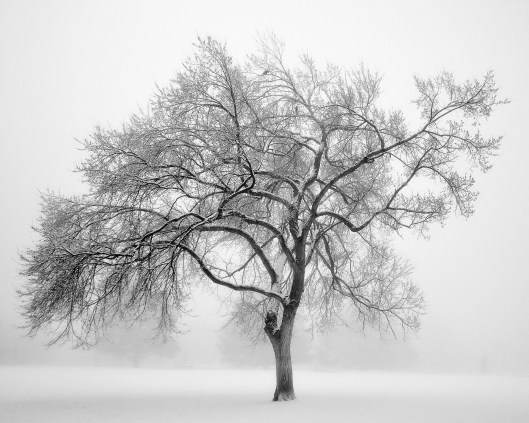
I like your interpreation of this poem and I love the perfect picture you chose to illustrate this post. I too got the sense of “entering into” the essence of the thing. Thanks for pointing me to this!
LikeLike
You are welcome! I’ve been enjoying your blog so much, I thought you might find this interesting.
LikeLike