Tags
Economic Justice, Economics, Labor Day, March on Washington for Jobs and Freedom, Martin Luther King, Politics, Power and love, The unequal distrubution of wealth
 I used to write a labor column for the Santa Maria Times back in the late 90’s. The theme was economic justice. Our nation’s prosperity was booming then, and never had workers’ productivity been so high.
And yet while corporations’ profits were booming and CEO pay packets were skyrocketing, the average wage of workers was steadily declining. How could this be?
And if it continued, how could our nation as a whole continue to prosper? Would we become a two-class society of the rich and the poor, those who wielded power and profit, and those whose sole purpose was to serve them?
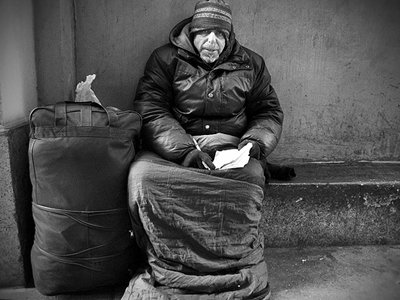 Since the 90’s this disparity between the rich and poor in America has only grown and deepened, and eventually led to the collapse of our economy in 2008. The housing crisis was caused by greedy bankers and people who desperately wanted a piece of the American dream but could no longer afford it.
The columns I wrote in the 90’s are as relevant today as they were then. Below is an excerpt from one of these columns that speaks strongly to the issues we face today. It is also a tribute to Martin Luther King Jr. whose march on Washington and “I have a dream” speech celebrated its 50th anniversary last week.
I’ll post excerpts from another column later this week that examines the cause of this disparity and how to end it.
Martin Luther King Jr. on Economic Justice
When Martin Luther King Jr. was assassinated in 1968, he had begun to turn his attention away from the civil rights movement to what he considered to be an even more compelling problem, since it at once crossed the color barrier and helped to enforce it. He had discovered that the major divisive force in America was not color, but class. He had found that people who were rich and powerful, whether black or white, shared the same interest in keeping the races segregated, in keeping the poor oppressed, in maintaining the status quo.
He believed that the unequal distribution of wealth was tearing America apart and threatening to make it a two-class society. . . . . He wanted to help build the kind of America that would not tolerate poverty within its borders, that would not allow one class to exploit another, that would not allow the powerful to abuse the powerless.

“There is nothing essentially wrong with power,” he explained. “The problem is that in America power is unequally distributed.”
He said: “Power without love is reckless and abusive. Love without power is sentimental and anemic. Power at its best is love implementing the demands of justice. Justice at its best is love correcting everything that stands against justice . . . It is the collusion of immoral power with powerless immorality that constitutes the major crisis of our times.”
This is probably more true today than it was even then.
Dr. King saw that this kind of economic responsibility is not only good business, but a good investment in our future prosperity. He said: “In a sense all of this is interrelated. The agony of the poor impoverishes the rich. The betterment of the poor enriches the rich. We are inevitably our brother’s keeper because we are our brother’s brother. Whatever affects one affects all indirectly.”
“Ultimately, a great nation is a compassionate nation,” he wrote. ” No individual or nation can be great if it does not have a concern for the least of these. The first step in a worldwide war against poverty is passionate commitment.”
This is Martin Luther King Jr.’s legacy to us, and his challenge: To end poverty and economic injustice by wedding power with love.
Discover more from Deborah J. Brasket, Author
Subscribe to get the latest posts sent to your email.

Wonderful post, Deborah. Thinking of the fast food workers who went on strike.
And there are many others, of course.
LikeLike
Thank you. Yes, I was thinking about them today too. It’s wonderful and especially brave of them to do that. I hope they keep it up. This may be the time to gain some momentum of the issue.
LikeLike
“Whatever affects one affects all indirectly.” That is very similar to the Dalai Lama’s words this year on the 50th anniversary of Dr. King’s speech.
LikeLike
Thanks for coming by Helen. They are both men of peace and love and courage.
LikeLike
I love your quote from MLK, especially how love and power both need each other to have the proper impact. Great post, Deborah!
LikeLike
Thank you Christi. He was an amazing man.
LikeLike
I really admire this post, Deborah, on so many different levels. The quotes you chose by Dr. King are incredible and remind us how important it is for love and power to not only be wedded, but balance each other out. I have worked for an insanely rich family for almost a decade now. I’ve seen their wealth grow in ways that most Americans can only dream about. I’ve also witnessed the changes in people that come along with such privileges. In my opinion, it is very hard for the rich to understand and cope with issues that the middle class and poorer families face each day. Sad, but true. However, this shouldn’t deter anyone from doing their best to help contribute to a better society by living out to their dreams and rising to one’s potential. Powerful post.
LikeLike
Thank you, Gina. Sounds like you’ve been in a unique situation to understand more of what’s going on. I wish MLK had lived longer to work more on helping to change this. His kind of wisdom and leadership is sorely needed.
LikeLike
Excellent post! I very much enjoyed hearing all the stories surrounding the 50th Anniversary of the march in DC … and in hearing them, was reminded of how often he spoke about economics and poverty
LikeLike
Thank you. I was inspired too, couldn’t decide whether to post about the anniversary or Labor Day and found this way to do both.
LikeLike
This post is awesome! At the end of my book, “Red Clay and Roses”, there is an afterword and my last sentence was, “Oppression, poverty, and ignorance are our greatest foes.” We live in a futuristic world compared to my grandparent’s world, and yet socially we have so far to travel.
LikeLike
Thank you so much! A rousing ending to your book. I love your title too.
LikeLike