Tags
aesthetics, architecture, art, healing, Mayo Clinic, public spaces
 This summer my brother took me on an art tour of the Mayo Clinic in Minnesota and I captured a few of my favorites in photos.
I was impressed with how well they integrated art and music and places to rest and contemplate into their public spaces, recognizing how beauty, harmony, balance, and color comfort and inspire and enhance healing.
I think of all the people who go there experiencing pain and suffering and fear, for themselves and their loved ones, and how they are silently, gently, uplifted by the soaring ceilings, comf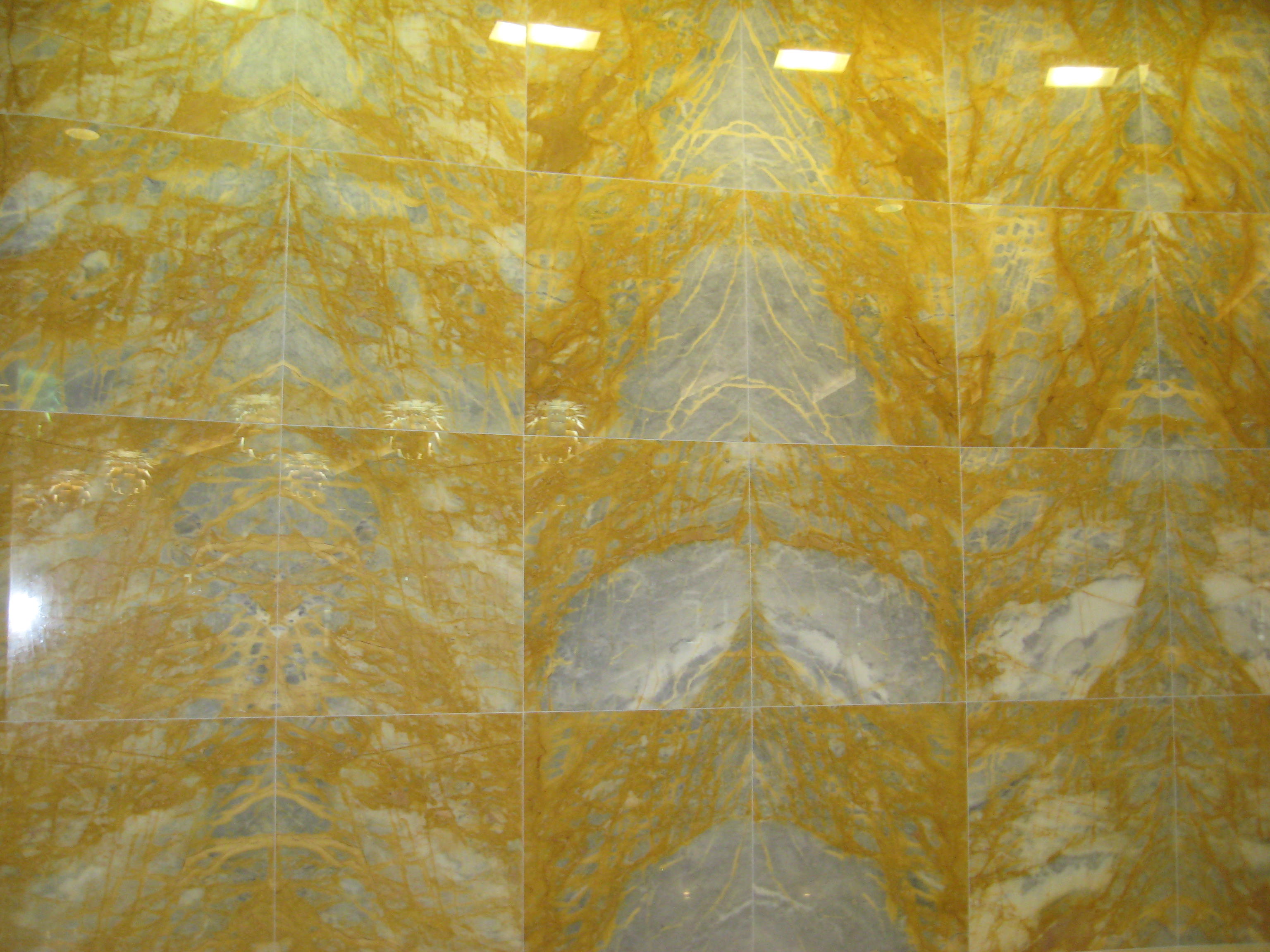 orted by the richness of the marble walls, inspired by the light flowing through windows and the gracefully curved spaces, perhaps without even being aware of how these visual and spatial elements give solace.
These elements could be found both within the clinic and in the plazas and streets surrounding it.
Below is the view from one of the plazas surrounding the Mayo buildings. Here you see a glimpse of the Plummer Building, one of the oldest and most beautiful buildings in the area, sandwiched between gleaming modern towers.

Here’s a view of the Plummer Building from inside the clinic, a long wall of glass with comfortable chairs for visitors to sit and view the city below.

Here are the bronze doors, created by Charles (Carlo) Brioschi, leading into the building. Each door is 16 feet high and weigh 4000 pounds. The doors are beautifully detailed, as can be seen in the following photos.


Across the plaza from these doors are on the side of the Mayo Clinic building is a sculpture relief titled “Man and Work” by William Zorach.

One of my favorite artworks on the tour was a magnificent seven-foot bronze statue by Auguste Rodin. It was a study for his most famous sculpture “The Burghers of Calais,” which tells the story of how six citizens during France’s Hundred Year War with England volunteered to sacrifice themselves to save the town. The sculpture shows the pain and suffering, self-doubt and determination of the men as they are led away to captivity.
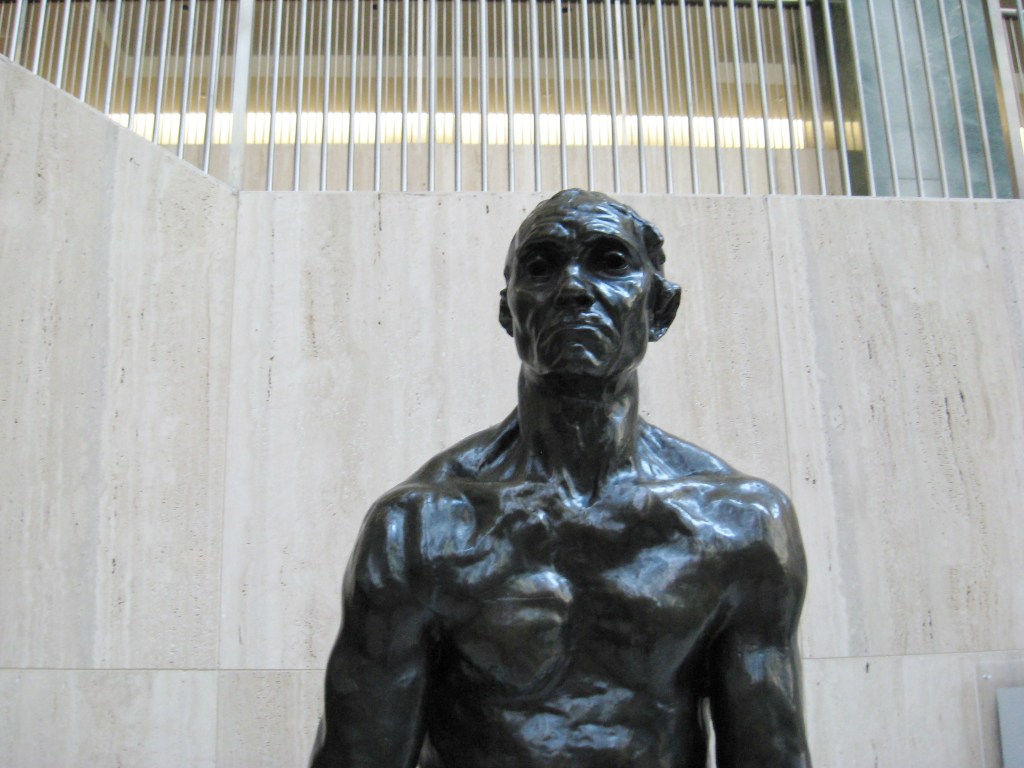
What’s remarkable about this study is how open and accessible it is to
the public, placed where it can be touched and admired all around.


Some of the artwork was delightfully whimsical, like this series of lithographs by Joan Miro . . .

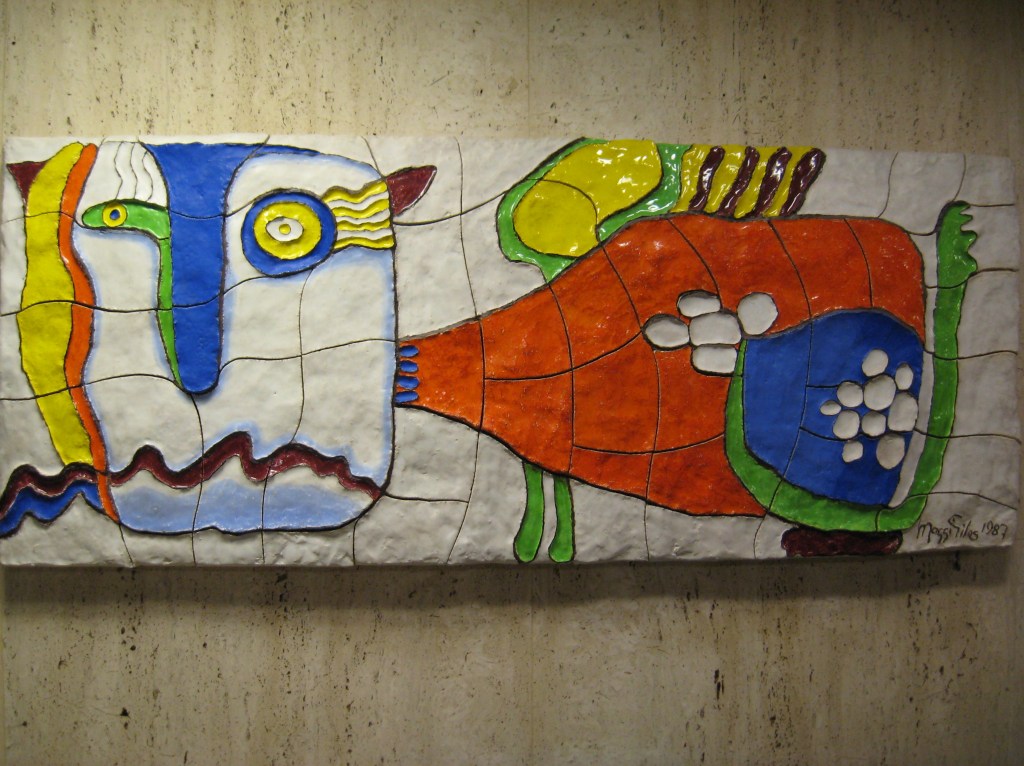
. . . or this cat made of tiles called “Off On His Own” by Maggi Giles . . .
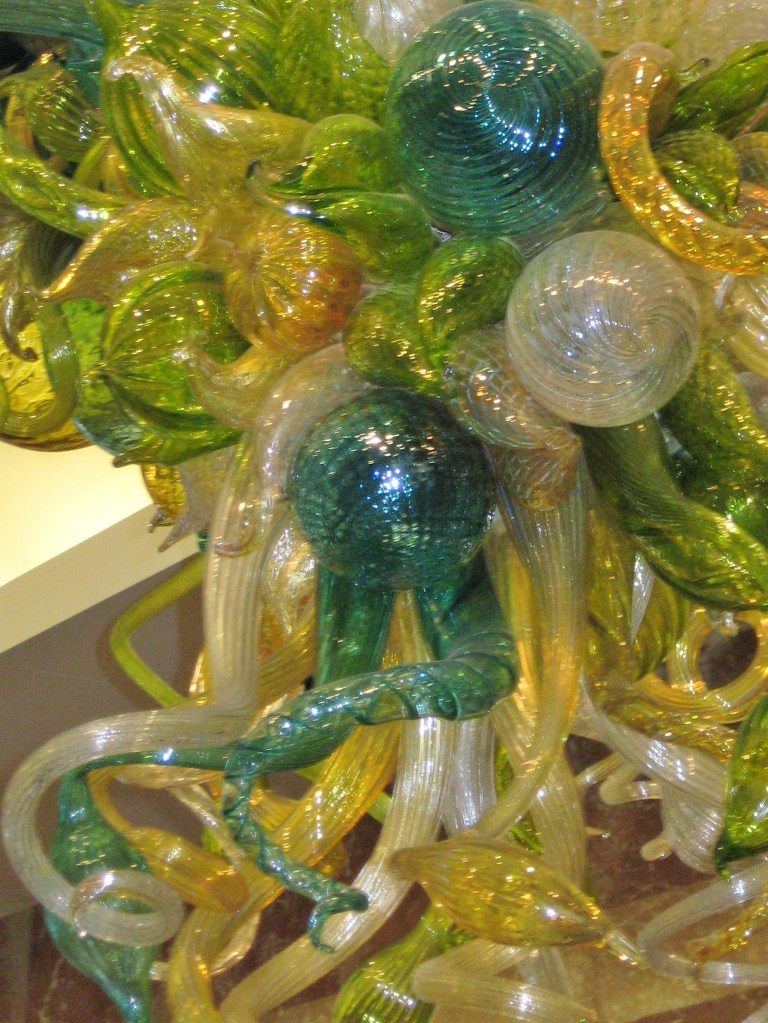
. . . or these wonderful glass chandeliers by Dale Chihule. Looking up at them from the ground floor, you have a sense of being undersea, looking up at fantastic sea creatures.

Looking out at them from the second floor you can see how complex and brilliant they are.
Art inspires and comforts, and often does so by recognizing and depicting both the tragedy of human existence as well as our capacity for spiritual reconciliation and joyful rejuvenation. As one artist puts it:
“We artists must be reconciled with life, and passing through sorrow and pain, know it in all its forms. Upon the ruins of our life, we must build for others the temple of hope and faith: this is our duty.” – Marrianne Werefkin
Discover more from Deborah J. Brasket, Author
Subscribe to get the latest posts sent to your email.

These are some great images, Deborah!
LikeLike
Thank you, Quanie!
LikeLike
Funny…just as I am pursuing the question of how writing can help us grow and heal, I keep running into posts like this one, or hearing of events on the topic of how art can be a conduit in as we seek to become whole. I’m doing a talk on writing and healing at the end of the month, and I may refer to the clinic and this post!
LikeLike
Yes, I think this is a fascinating subject. There’s much on how participating in the creative arts can be healing (art and dance therapy, etc) but not a lot about how being the recipient, the observer, of an artwork, can be healing. I was surprised at how little I found on this in my research. Wish I could hear your talk, and flattered you may refer to this post!
LikeLike
Thanks, Deborah! I’ll blog about the event. So glad this topic is in the air now.
LikeLike